
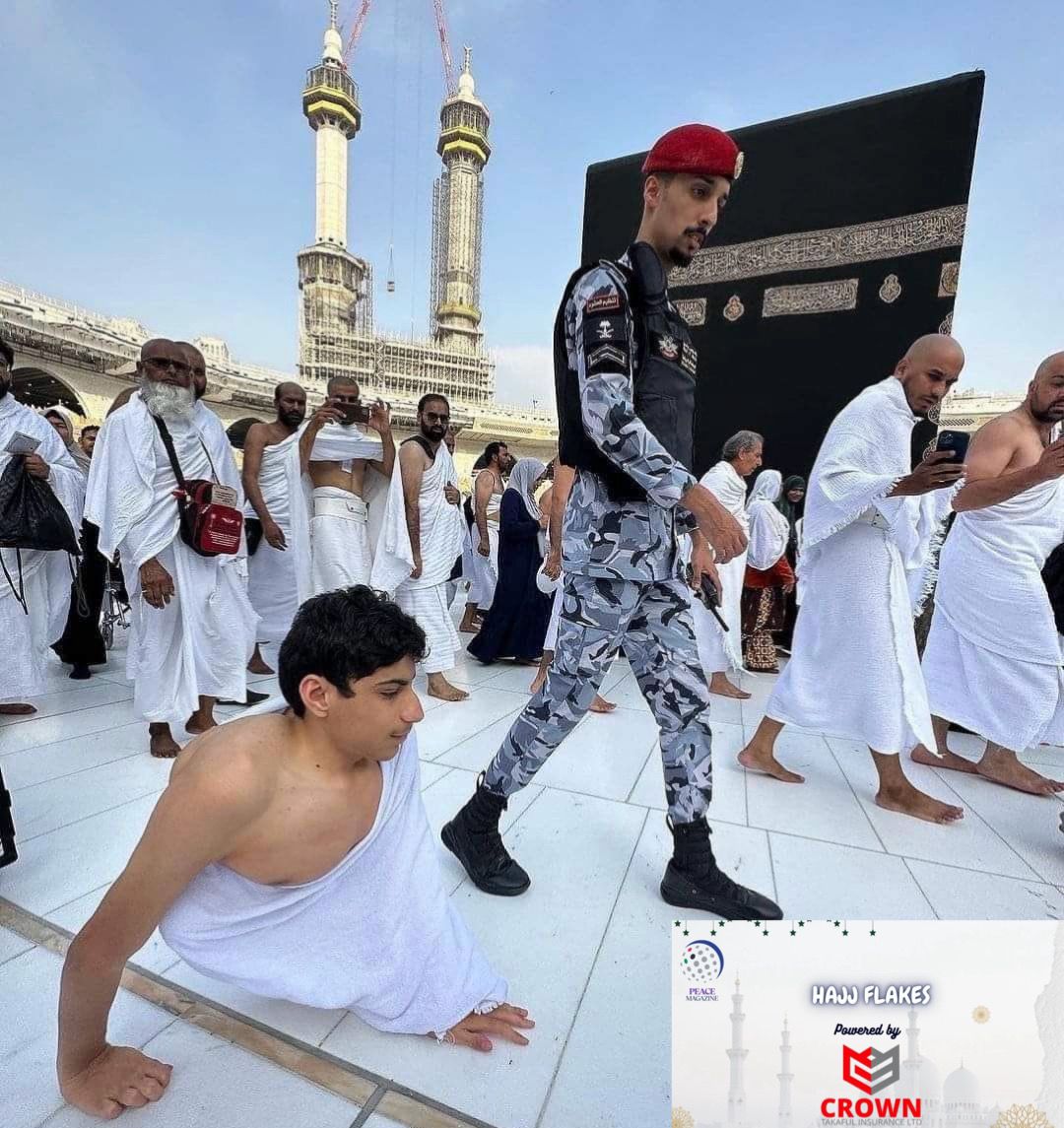
Hajj Flakes – 20 Dhu al-Qadah 1447 AH
By Abdullahi Yusuf
- Nigeria’s 2026 Hajj airlift entered Day 5 with expanding operations across more departure centres, as Kwara pilgrims departed for Madinah at 2:06am carrying 556 pilgrims.
- According to the National Hajj Commission of Nigeria, a cumulative 9,013 Nigerian pilgrims have now been airlifted across 21 flights since operations commenced on May 3.
- Governor Bala Mohammed bid farewell to 2,090 Bauchi pilgrims, urging them to serve as good ambassadors of both the state and Nigeria throughout the pilgrimage.
- The Federal Capital Territory Muslim Pilgrims Welfare Board has distributed travel documents, Basic Travel Allowance, and Nusuk cards to intending pilgrims on its first flight, warning against loss of any official documents.
- Kenya has intensified preparations for Hajj 2026 with the rollout of the Nusuk digital system to coordinate and protect about 4,500 Kenyan pilgrims expected to participate this year.
- Kenyan Hajj authorities say the Nusuk platform supported by QR-coded smart cards, AI-powered crowd monitoring, and coordinated movement scheduling, is central to improving safety and reducing overcrowding risks during Hajj.
- Saudi Arabia has tightened Hajj and Umrah visa regulations for Indian pilgrims, reducing single-entry Umrah visa validity from three months to one month and enforcing stricter penalties for unauthorized stay during Hajj season.
- Indian pilgrims are now required to complete accommodation and transport bookings through the Nusuk platform before visa approval, while mandatory polio and meningitis vaccinations have been tied directly to boarding clearance.
- The Executive Secretary of the Niger State Pilgrims Welfare Board, Sheikh Muhammad Awwal Aliyu, has charged operational officials and medical teams deployed for Hajj to uphold professionalism, discipline, and pilgrims’ welfare in Saudi Arabia.
- Ghana has commenced its Hajj airlift from Tamale, with over 6,000 pilgrims expected to travel to Saudi Arabia through 19 scheduled flights operated from Tamale and Accra.
- Egyptian authorities have finalized plans for 277 outbound Hajj flights to transport about 67,000 pilgrims, while expanding airport services and introducing direct luggage delivery systems for pilgrims arriving in Madinah and Jeddah.
- Morocco has confirmed that more than 34,000 pilgrims will participate in the 1447 Hajj season, including 22,200 under the official state arrangement and 11,800 through licensed travel agencies.
- Moroccan authorities say pilgrims will receive digital information cards and structured guidance sessions as part of broader reforms to improve organization and pilgrim support services.
- Pakistan has so far airlifted more than 44,000 pilgrims through 176 flights, with authorities confirming uninterrupted operations ahead of the formal Hajj rites.
- Saudi Arabia has reiterated stricter enforcement measures for the 2026 Hajj season, warning that violators may face fines of up to SAR20,000, deportation, and a 10-year entry ban.
- British authorities and UK-based Hajj operators have also advised pilgrims to avoid unofficial travel arrangements and rely strictly on the official Nusuk Hajj platform.
- The growing adoption of Nusuk and other digital systems across multiple countries highlights Saudi Arabia’s continued push toward technology-driven Hajj management under Vision 2030 reforms.
Did You Know?
- Nusuk has evolved into one of the most comprehensive digital pilgrimage management systems in modern Hajj history.
- QR-enabled smart cards are now becoming mandatory for access to major Hajj ritual sites including Mina, Arafat, and Muzdalifah.
- Countries such as Indonesia, Pakistan, Egypt, and Nigeria manage some of the world’s largest annual Hajj contingents.
- Hajj logistics now involve advanced technologies including AI-powered crowd monitoring, digital movement scheduling, and real-time tracking systems.
- Saudi Arabia’s Vision 2030 reforms continue reshaping Hajj operations with greater emphasis on digital coordination, safety, and regulated access to the holy sites.
- There are five main Miqat points designated for pilgrims coming from different directions. Crossing the Miqat without Ihram is not allowed unless a penalty is paid.
- Pilgrims often change into Ihram mid-flight. Airlines announce when to make intention before reaching Miqat, especially important for flights entering through Jeddah.
- Ihram for Women is More Flexible: There’s no fixed garment shape, but the principles of modesty and simplicity still apply
- For men, exposing the right shoulder during Tawaf al-Qudum (arrival circumambulation) is a Sunnah act, not mandatory.

SPONSORED

SPONSORED

SONSORED
