

Gateways to Masjid Al-Haram (Series 1)
By Abdullahi Yusuf
At the heart of Mecca, the Masjid al-Haram sprawls in solemn majesty, its architecture a dialogue between centuries, its expansion a testament to the enduring pull of pilgrimage. Today, over 260 gates pierce the marble perimeter of the world’s largest mosque, offering millions of pilgrims pathways into the holiest space in Islam. Each gate is more than a passage; it is a threshold between the temporal and the divine.
Following the monumental expansion under the reign of King Abdullah, the Sacred Mosque now boasts 262 gates, 13 of which are reserved for pilgrims with disabilities, reflecting the mosque’s increasingly inclusive design. While five gates function as the mosque’s primary arteries, channeling the tide of worshippers from every corner of the world, dozens of others—smaller, quieter, steeped in lesser-known histories—serve as witnesses to evolving cityscapes and sacred memory.
The names etched above the arches reflect a mosaic of Islamic heritage: prophets and companions, valleys and battles, moments and martyrs. Some gates pay tribute to political figures of modern Saudi Arabia, while others preserve memories from the earliest centuries of Islam. Yet, it wasn’t always this way. In the Prophet Muhammad’s time, pbuh, Masjid al-Haram was an open sanctuary. What we now call “gates” were once simple pathways, often named after the tribes who lived nearby.
Over time, necessity and devotion carved order into this sacred chaos. As Mecca grew and crowds surged, the mosque adapted, transforming entrances into structured portals. By the 10th century, scholars such as al-Maqdisi noted 19 named gates, with Bab Bani Shaybah standing out as a lone arch of note east of the Ka‘bah. Today, the figure is tenfold—but the story remains the same: the call of the Haram, and the countless ways to answer it.
In this series, we take a closer look at these gates—not just as architectural features, but as storied thresholds. Below are the first ten:

Bab Malik ‘Abdulaziz (Gate no. 1)
The latest reconstruction of Malik abd ul-Aziz Gate is located at the Yemenite corner of the Masjid al-Haram complex, opposite Ajyad Street. The recent reconstruction of the gate is a drastic deviation from the typical architecture of the Masjid al-Haram, and incorporates more modern architectural elements. The gate has distintly square-features as compared to its predecessor, and displays a more modern look rathern than familiar Saudi architecture which evolved from the Ottoman architecture of the Great Mosque. This gate provides direct access to the outer Mataf area for the people with disabilities, and wheelchair usage.
2.
Bab Ajyad (Gate no. 5)
The Bab Ajyad is named after the two valleys of Ajyad, situated south-east of the Masjid al-Haram. It is one of the smaller, single portal gates of the mosque complex. Gates no. 7 and 8 are also part of the same group, providing electrical escalator facilities to access the upper part of the Haram. Built as part of the first Saudi expansion, it is located on the south-eastern side of the main Mataf-area.
3.
Bab Bilal (Gate no. 6)
The Bab Bilal is located on the southern flank of Masjid al-Haram. It is named after the nobel companion and Muazzin of Prophet Muhammad Bilal ibn Rabaha, also known as the Bilal al-Habashi, referring to his origins of Habashah. Located on the south-eastern side, it was built in its current form as part of the first Saudi expansion and renovation program of the Haram.
4.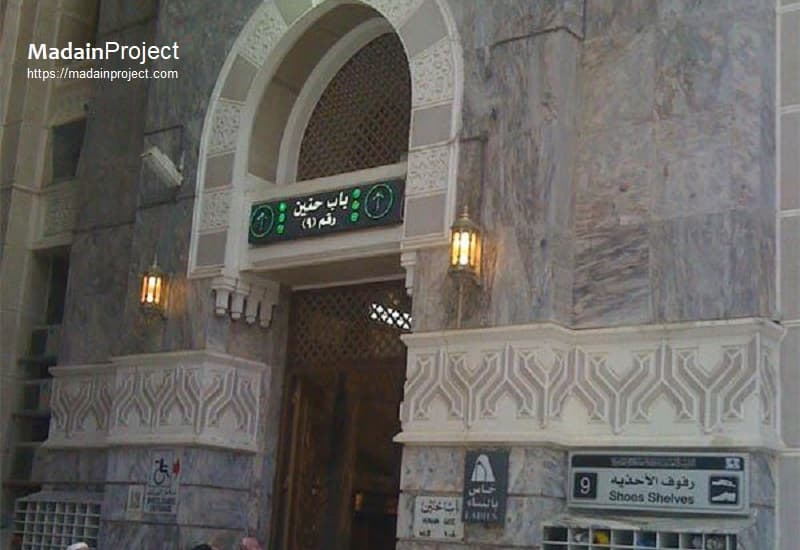
Bab Hunain (Gate no. 9)
The Bab Hunain, is located in the southern facade of the Masjid al-Haram. It is named after the town of Hunayn, which is located close to the city of Tai’f in modern day Saudi Arabia. The Bab Hunayn is located between Bab Bilal and Bab Ismael. Today it is only partially visible since, the Bab Ajyad escalators are located directly in front of it.
5.
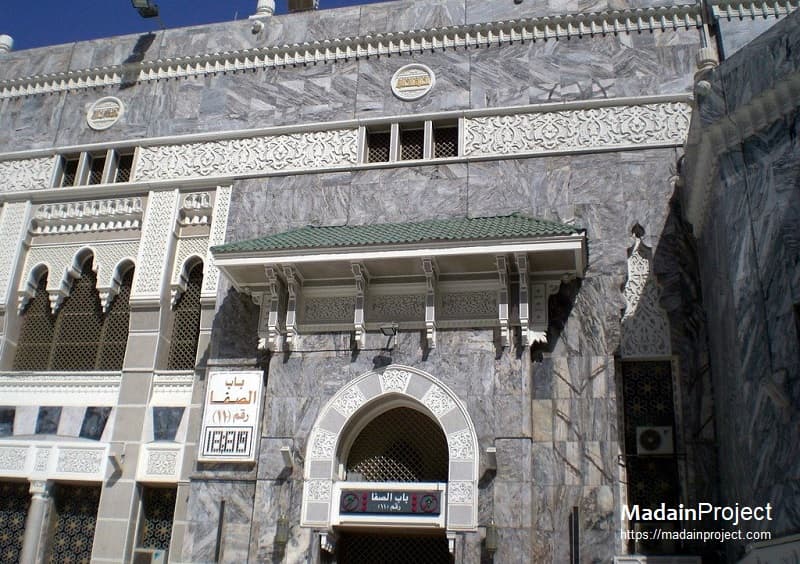
Bab Safa (Gate no. 11)
The Bab Safa is on of the five major Gates of Masjid al-Haram. It is located on the northern side of the Masjid Haram complex. Modern day Bab e Safa provides direct access to the start of the Masa’a area. Modern day bab e Safa also provides access to upper floors of the Masa’a starting point. Close to the starting point of Jabl e Safa, a scooter service is also available for the elderly who cannot perform Sai on foot.
The 12th gate of Masjid al-Haram in Makkah is named after Hazrat Hamza, the paternal uncle of Prophet Mohammad. He is called the lion of Allah and was martyred in the Battle of Uhud.
Bab Qubais of Masjid al-Haram is named after the name of Mount Qubais. Whenever you enter this gateau will see the Mountain of Safa. It is called the first mountain created by the almighty Allah.
9.
Bab an-Nabi (Gate no. 14)
The Bab an-Nabi is named for Prophet Muhammad. The gate of the prophet is located on the eastern flank of the great mosque of Mecca, between the Bab Abi Qubais and Bab ‘Ali. It is located close to the al-Safa area. Bab an-Nabi Bridge gate no 15, which is located south of the lower Bab Nabi provides access to the upper floors.
Bab an-Nabi Bridge, gate number. 15, located south of the lower Bab Nabi, gives access to the higher levels. This modern bridge, named after the Prophet, allows for seamless travel near the area of al-Safa, strengthening both the ease and spiritual value of the sacred pilgrimage within Masjid Al-Haram.
To be continued…
In the next entry, we continue our journey through the portals of the Haram, uncovering the stories and symbolism etched into the next ten gates, as each doorway reveals another dimension of the mosque’s evolving history.
SPONSORED
SPONSORED

SPONSORED

SPONSORED
