
Europe’s First Public Islamic Theology Faculty Opens in Germany
University of Münster says new faculty will combine Islamic scholarship with academic research, teacher training and interfaith dialogue as demand for Islamic education grows across Germany.
By Abdullahi Yusuf
The University of Münster has become the first public university in Europe to establish an independent Faculty of Islamic Theology, a landmark development that scholars say could reshape Islamic higher education, teacher training and religious scholarship across Europe and beyond.
The new faculty, formally established on 1 July, elevates Islamic theology to the same academic standing as Catholic and Protestant theology within the German university system, granting it the authority to award doctoral degrees, appoint professors independently and expand its research programmes.
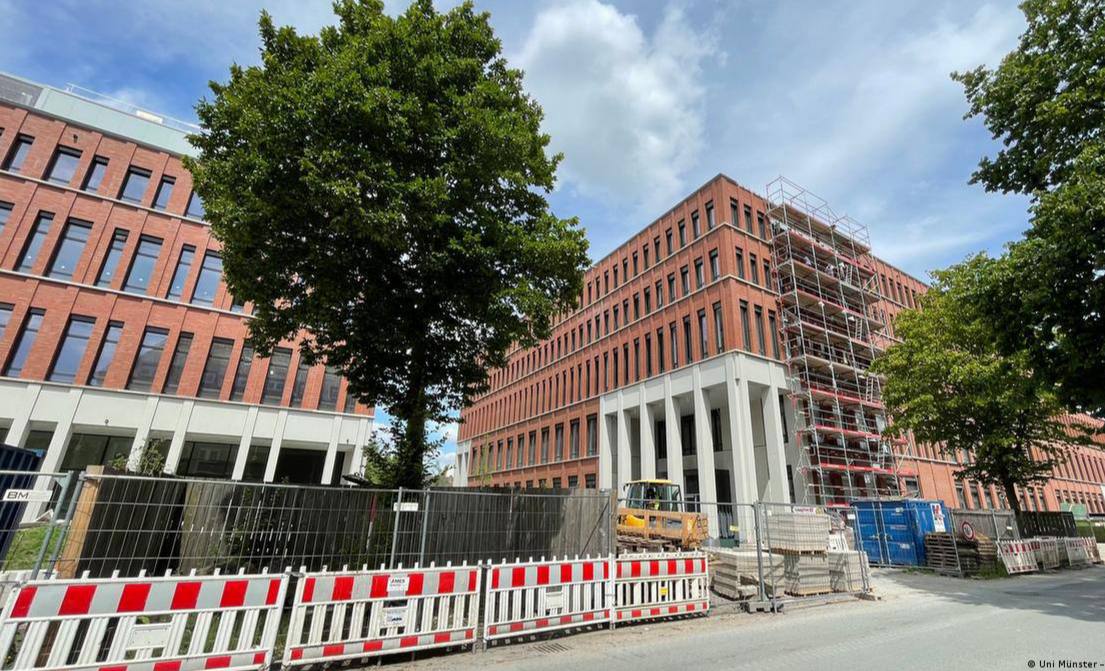
The development comes as construction continues on Münster’s ambitious Campus of Religions, a project expected to open in 2027 that will bring together the university’s Catholic, Protestant and Islamic theology faculties alongside its Department of Religious Studies in a single academic complex.
University officials say the project is intended to strengthen academic cooperation, encourage interfaith dialogue and reinforce the role of religion within modern university scholarship.
The founding dean of the new faculty, Mouhanad Khorchide, described the moment as historic, saying it represented the culmination of more than a decade of work to establish Islamic theology as a fully recognised academic discipline within Germany’s public university system.
Reflecting on his years at Münster, he said the achievement carried both privilege and responsibility, expressing hope that the faculty would promote what he described as an open, enlightened understanding of Islam rooted in scholarship and capable of contributing to debates within Europe and the wider Muslim world.
Until now, Islamic theology at Münster operated through the university’s Centre for Islamic Theology, established in 2012 with just 15 students and three members of staff. Over the past decade, it has expanded significantly, employing eight professors and more than 50 academic and administrative staff, while student enrolment is expected to exceed 500 in the coming years.
PEACE Magazine gathered that the transition from a centre to a fully independent faculty represents far more than an administrative restructuring. Under German university regulations, faculty status gives Islamic theology equal institutional standing with other major academic disciplines, enabling it to supervise doctoral research independently, secure greater research funding and develop long-term academic programmes without relying on another faculty for statutory approval.
The move also comes amid growing demand for qualified Islamic religious education teachers in Germany.
Across several German states, Islamic religious instruction has increasingly been incorporated into public school curricula, creating significant demand for professionally trained teachers.
In North Rhine-Westphalia, where Münster is located, authorities estimate that around 3,000 Islamic religious education teachers are needed, although only about 330 are currently available, presenting substantial employment opportunities for future graduates.
Looking ahead, the faculty plans to introduce a master’s programme in Islam and Social Workbeginning in 2027, designed to prepare graduates for roles in youth services, hospitals, prison chaplaincy, elderly care and other social welfare institutions where religious literacy is increasingly required.
The faculty has also adopted guiding principles affirming that Islamic faith and democratic values are compatible, while promoting contemporary scholarship, interfaith engagement and critical academic inquiry.
Its founding charter explicitly rejects extremism, antisemitism, Islamism and every form of religiously motivated violence, while encouraging responsible engagement with both classical Islamic scholarship and contemporary society.
University spokesperson Norbert Robers said Münster has long enjoyed a strong reputation in theological education, noting that the decision to bring Islamic, Catholic and Protestant theology together within the same campus carries significant symbolic importance.
Beyond sharing academic facilities, including a common library and cafeteria, he said the arrangement reflects a broader commitment to dialogue between religious traditions within a modern university environment.
Although faculties of Islamic theology exist elsewhere, including in Sarajevo, observers note that Münster’s faculty is the first to operate as an independent faculty within a public university anywhere in Europe, giving the development particular academic and institutional significance.
Former German Education Minister Annette Schavan, who played a prominent role in introducing Islamic theology into German universities, described the new faculty as a milestone for higher education, arguing that it strengthens theological scholarship generally and is likely to gain recognition across Europe.
With authority to award its own doctorates and develop independent research programmes, the new faculty begins a chapter that university officials hope will shape Islamic scholarship in Germany and contribute to wider academic debates across Europe.
With additional information from Deutsche Welle News
SPONSORED
SPONSORED

SPONSORED

SPONSORED
