
ASEAN Integration Opens New Markets for Muslim Businesses
The bloc’s expanding single market is creating new avenues in halal trade, small business and cross-border commerce for the region’s 240 million Muslims.
By Abdullahi Yusuf
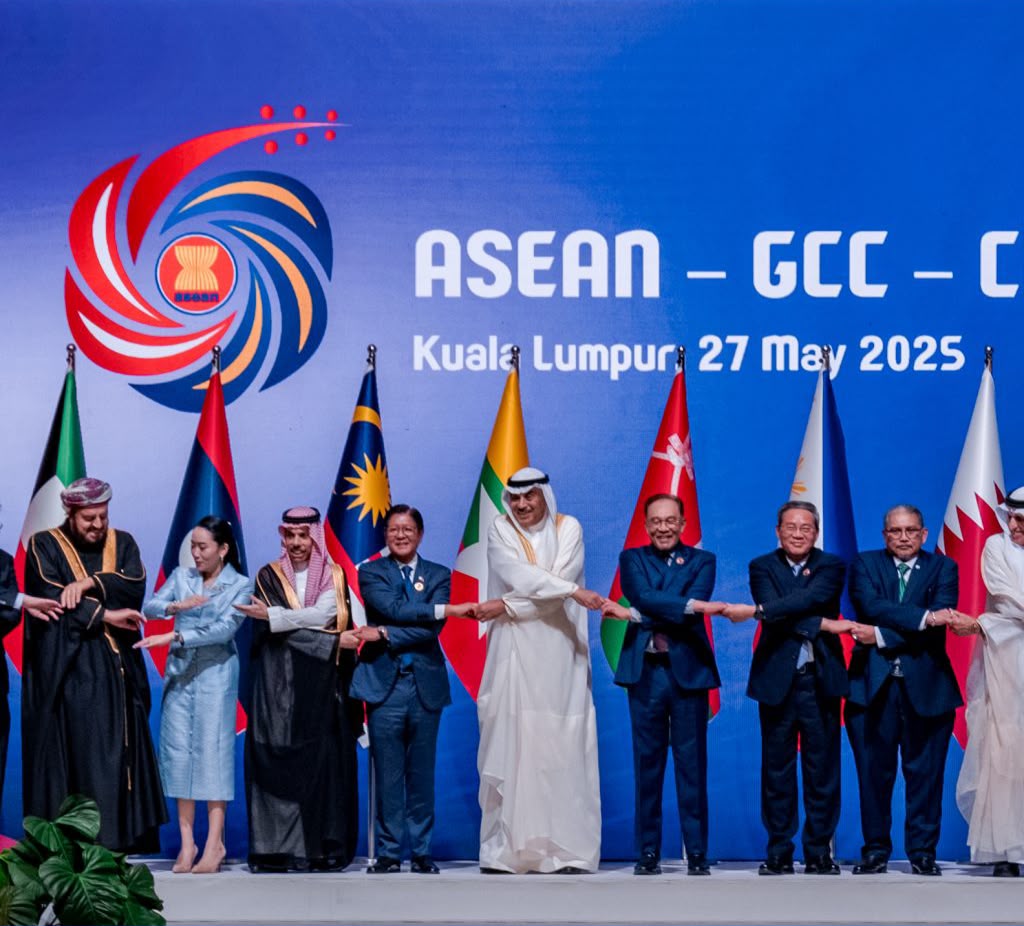
For Southeast Asia’s estimated 240 million Muslims, deeper economic integration within the Association of Southeast Asian Nations (ASEAN) is opening new opportunities in halal trade, small business and cross-border commerce, as the regional bloc moves towards a more closely connected single market.
The expansion of regional trade links is creating opportunities for Muslim-owned businesses to reach consumers beyond their home markets, while the growth of the halal economy is providing new avenues for entrepreneurs across the region.
Melinda Martinus, a research fellow at the ASEAN Studies Centre of the ISEAS-Yusof Ishak Institute in Singapore, said ASEAN’s development had been built on sustained dialogue and cooperation despite the political, economic and cultural diversity of its member states.
“Since its establishment in 1967, ASEAN has evolved from an association of five countries into a comprehensive regional community of eleven member states,” Martinus told MNTV.
The bloc was established against the backdrop of Cold War tensions and territorial disputes in Southeast Asia, with peace and regional stability among its central objectives. Over the decades, regular summits and ministerial meetings have provided mechanisms for dialogue and confidence-building among member states.
Economic integration has since become one of ASEAN’s defining achievements.
The ASEAN Free Trade Area has significantly reduced tariffs on goods traded between member states, while the ASEAN Economic Community seeks to deepen economic integration by developing Southeast Asia as a single market and production base.
The Regional Comprehensive Economic Partnership, which brings ASEAN members together with major economies across the Asia-Pacific, has further strengthened the region’s trading links and is regarded as the world’s largest free trade agreement.
ASEAN’s cooperation extends beyond commerce. Through the ASEAN Socio-Cultural Community, member states collaborate in areas including education, cultural exchange, public health, disaster management and labour migration.
For Muslim communities, those structures offer opportunities that extend beyond religious and cultural participation.
Although ASEAN has no dedicated institution for religious affairs, Martinus said Muslims could play a greater role in regional community-building while benefiting from the economic and social opportunities created by integration.
“Muslim communities in Southeast Asia can play an important role in regional community-building by actively participating in and benefiting from the opportunities that ASEAN provides,” she said.
She said Muslim communities could contribute to peacebuilding and humanitarian efforts, including initiatives aimed at preventing violent extremism through education and community engagement, as well as regional responses to humanitarian crises and natural disasters.
The economic opportunities, however, could prove particularly significant for Muslim-owned businesses.
Small and medium-sized enterprises can use lower trade barriers and greater regional economic integration to expand beyond domestic markets, while the growing halal economy provides an additional route into regional commerce.
The halal economy encompasses goods and services produced in accordance with Islamic principles, ranging from food and beverages to finance, tourism, pharmaceuticals, cosmetics and other consumer sectors.
For Muslim entrepreneurs, the expansion of halal production and trade across Southeast Asia offers the prospect of reaching a large consumer market while building businesses that can operate across national borders.
Martinus also highlighted the role of Muslim women, saying greater participation in entrepreneurship and regional trade could make the benefits of economic integration more inclusive and sustainable.
Yet ASEAN’s progress comes amid significant challenges.
The bloc continues to navigate geopolitical competition, territorial and maritime disputes, climate change and differences in levels of economic development among its member states.
Its consensus-based approach can make regional decision-making gradual, particularly when member states have competing national interests.
Even so, economic connectivity remains at the centre of ASEAN’s regional project.
As the bloc approaches its sixth decade, deeper integration could give Southeast Asia’s Muslim communities a larger role in the region’s commercial future, from small businesses and halal trade to entrepreneurship, cross-border commerce and investment.
The challenge, however, will be ensuring that the opportunities created by regional integration are accessible beyond the region’s largest economies and established businesses.
For Southeast Asia’s Muslims, the next phase of ASEAN integration could therefore be measured not only by the volume of goods crossing borders, but by how effectively its expanding markets translate into opportunities for entrepreneurs, women and communities across the region.
SPONSORED

SPONSORED

SONSORED
