
World Halal Summit: Türkiye, Vietnam, Kyrgyzstan, Saudi Arabia and Qatar Sign Five Cooperation Deals
The five agreements cover halal standards, accreditation and industry development, as signatories seek to strengthen cross-border cooperation and expand opportunities across the global halal economy.
By Abdullahi Yusuf
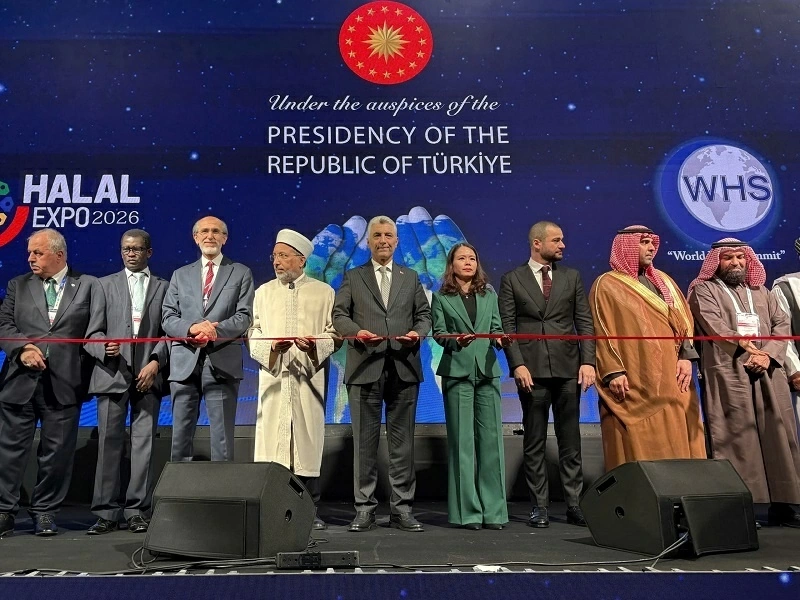
Five international cooperation agreements have been signed at the 12th World Halal Summit in Istanbul, bringing together institutions from Türkiye, Vietnam, Kyrgyzstan, Saudi Arabia and Qatar in efforts to strengthen cooperation across the global halal industry.
The agreements, signed on Wednesday at the sidelines of the World Halal Summit and Organisation of Islamic Cooperation (OIC) Halal Expo 2026, involve halal accreditation, standards, certification and industry development, reflecting growing institutional cooperation in the sector.
Türkiye’s Halal Accreditation Agency (HAK) signed an agreement with Vietnam’s Commission for Standards, Metrology and Quality, while the Standards and Metrology Institute for Islamic Countries (SMIIC) also signed a separate agreement with the Vietnamese standards authority.
SMIIC further signed an agreement with the Center for the Development of the Halal Industry under the Kyrgyz Republic’s Ministry of Economy and Commerce. The Saudi Halal Center and Kyrgyzstan also concluded a cooperation agreement, while the Qatar Chamber of Commerce and the World Halal Summit Council signed another arrangement.
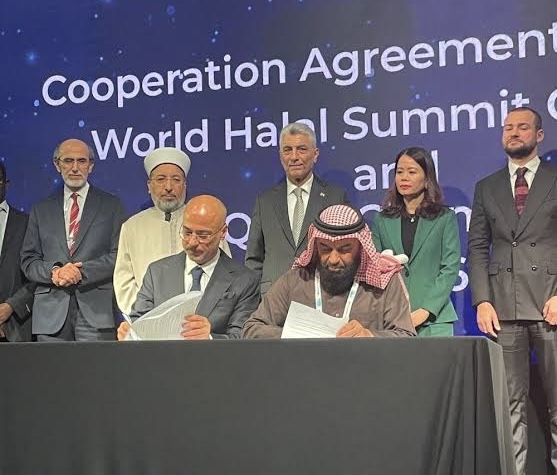
Vietnamese authorities confirmed that the agreements with HAK and SMIIC were intended to strengthen cooperation in standards, metrology and conformity assessment, laying the groundwork for closer collaboration in halal certification and access to Muslim markets.
The summit opened at the Istanbul Expo Center under the auspices of President Recep Tayyip Erdoğan, with 225 companies from 25 countries participating, according to Anadolu Agency.
Organised by Discover Events in collaboration with SMIIC and Lokman Hekim University, the summit is themed “Sustainable Halal Economy: Eliminating Waste, Empowering Growth” and runs through November 27, while the accompanying Halal Expo continues until November 28.
Addressing the opening ceremony, Developing-8 (D-8) Organization for Economic Cooperation Secretary-General Ambassador Sohail Mahmood called for stronger international cooperation to harness the halal economy’s potential for sustainable growth, investment, trade and employment.
He highlighted the Islamic principles of halal and tayyib, alongside the prohibition of wastefulness, as foundations for an economic model that balances commercial prosperity with environmental responsibility and social development.
Mahmood argued that reducing waste was not merely an environmental concern but also an economic imperative, particularly in the context of global food waste and resource inefficiency.
He said the halal economy was increasingly becoming a strategic priority for the D-8, citing the bloc’s inaugural Halal Expo held in Indonesia in July 2026 and Indonesia’s intention to prioritise the sector during its incoming chairmanship.
In pursuit of the D-8’s target of $500 billion in intra-bloc trade by 2030, Mahmood reiterated proposals for an Integrated D-8 Halal Trade Corridor, a Digital Halal Marketplace and Investment Platform, and a D-8 Halal Economy Cooperation Secretariat.
He said the proposals, alongside the D-8 Preferential Trade Agreement and closer collaboration with SMIIC, could improve market access, strengthen supply chains and encourage investment and industrial innovation among member countries.
Mahmood outlined three priorities for advancing the halal economy: strengthening standards, certification and mutual recognition; developing sustainable value chains through digital transformation, responsible artificial intelligence and circular-economy solutions; and mobilising investment and Islamic finance to support micro, small and medium-sized enterprises, young people and women entrepreneurs.
He urged businesses and investors to move beyond certification towards partnerships capable of delivering tangible economic outcomes.
Figures cited by Türkiye’s Trade Ministry put global Muslim spending outside Islamic finance at $2.6 trillion in 2024, with projections of $3.56 trillion by 2029, while Islamic finance assets were estimated at $6 trillion.
SMIIC has published 81 standards across its member and observer countries, including 21 directly related to the halal sector, while HAK has authorised 147 bodies overseeing approximately 3,000 halal certificates, according to figures reported by Anadolu Agency.
SPONSORED
SPONSORED

SPONSORED

SPONSORED
