
The Two Types of People in Hellfire
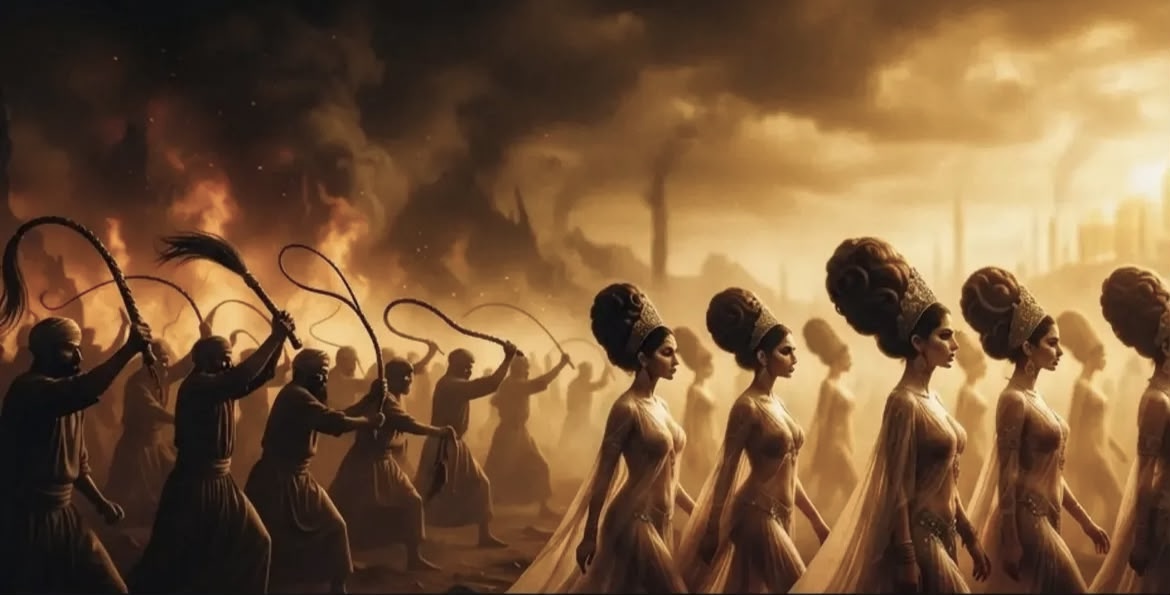
“Two are the types of the denizens of Hell whom I did not see: people having flogs like the tails of the ox with them and they would be beating people, and the women who would be dressed but appear to be naked, who would be inclined (to evil) and make their husbands incline towards it. Their heads would be like the humps of the Bukht camel inclined to one side. They will not enter Paradise and they would not smell its odour whereas its odour would be smelt from such and such distance.” Prophet Muhammad (peace and blessings be upon him), Sahih Muslim 2128.
By Abdullahi Yusuf
Some warnings in the teachings of Prophet Muhammad (peace be upon him) are particularly striking because of the severity of the conduct they describe and the consequences attached to it. In one such narration, the Prophet identifies two categories of people associated with the Fire, declaring that he had not seen them.
The two descriptions are markedly different. One concerns people who use physical force to oppress others; the other describes women whose appearance and conduct depart from the standards of modesty and righteousness. Together, they present a sobering account of wrongdoing in both the exercise of power and the use of personal influence.
Abu Hurairah (may Allah be pleased with him) reported that the Messenger of Allah (peace be upon him) said: “There are two types of the people of Hell whom I have not seen: people who have whips like the tails of cattle and use them to beat people, and women who are clothed yet naked, who incline towards evil and cause others to incline towards it. Their heads are like the leaning humps of camels. They will not enter Paradise nor smell its fragrance, even though its fragrance can be detected from a great distance.” (Sahih Muslim 2128).
The opening statement is significant. The Prophet was describing two categories whose appearance and conduct he had not witnessed, but whose emergence he foretold. The narration is not merely an observation about future appearances; it is a warning about behaviour and its consequences.
The first category concerns people who carry whips resembling the tails of cattle and use them to beat others. The image evokes intimidation, cruelty and oppression. A whip in the hands of someone exercising authority can become an instrument of injustice when used to punish, threaten or inflict suffering on people.
Authority, in itself, is not condemned. Societies require people entrusted with responsibilities to maintain order and protect others. But when power becomes a means of intimidation, humiliation or abuse, it departs from the justice and restraint expected of those who exercise it.
The warning therefore extends beyond the physical act of beating. It draws attention to the abuse of power and the suffering inflicted when authority is exercised without justice. Those entrusted with the security and welfare of others are not exempt from accountability for how they treat them.
The second category is described through the Arabic expression kāsiyāt ʿāriyāt, meaning women who are clothed yet naked. Islamic scholars have offered several explanations of this description. It includes women whose clothing fails to provide proper covering, whether because it is transparent, excessively revealing or so tight that it outlines the body.
The Prophet further describes them as māʾilāt mumīlāt. Scholars have explained these expressions as referring to women who turn away from righteousness and lead others away from it. Some interpretations also relate the expressions to conduct and mannerisms intended to attract attention.
The description of their heads resembling the leaning humps of camels has likewise been explained in relation to hairstyles in which the hair is gathered or raised to produce that appearance.
These details should not be reduced to a discussion of fashion alone. The hadith addresses modesty, conduct and the influence people exert on others. Its warning encompasses both outward appearance and behaviour that departs from Islamic principles, particularly where that conduct encourages others towards the same direction.
The two categories may appear unrelated, but both descriptions involve conduct that affects other people. The first concerns the use of physical power to inflict harm; the second addresses appearance, behaviour and influence in relation to righteousness. One is an abuse of authority, while the other concerns the example a person sets and the direction in which they lead others.
The severity of the Prophet’s closing words is equally important. He warns that these people will neither enter Paradise nor smell its fragrance, despite its fragrance being detectable from a great distance. This is a grave warning about the consequences of the conduct described, not a matter to be dismissed as a difference in personal preference or lifestyle.
The hadith presents two markedly different images: the whip raised against another person and the outward appearance associated with a departure from modesty and righteousness. One concerns the misuse of power; the other, the misuse of personal influence. Yet both appear in the same warning from the Prophet (pbuh).
Its significance lies in the severity of the consequences attached to these descriptions. Conduct that society may tolerate, excuse or even normalise is not necessarily free of moral or spiritual consequence. The Prophet’s words leave little room to treat oppression, immodesty and leading others away from righteousness as trivial matters.
And Allah knows best.
SPONSORED
SPONSORED

SPONSORED

SPONSORED
