
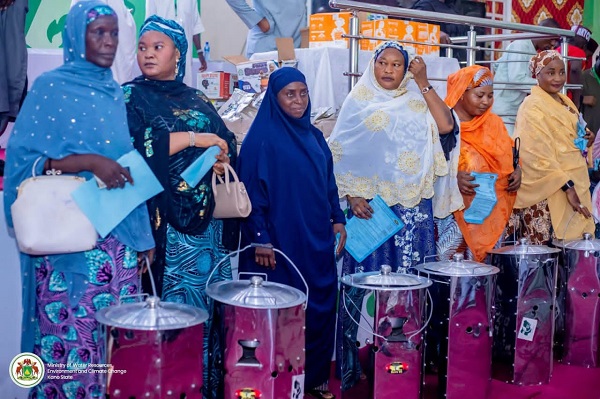
Kano Begins 3,400-Stove Drive to Cut Firewood Smoke, Support Women
The intervention has so far reached 800 women, each receiving a clean cooking stove and ₦25,000 to support their livelihoods.
By Abdullahi Yusuf
The Kano State Government has begun a clean-cooking intervention that combines the distribution of cleaner cooking stoves with direct financial support for vulnerable women, as authorities seek to reduce household exposure to firewood smoke and strengthen livelihoods.
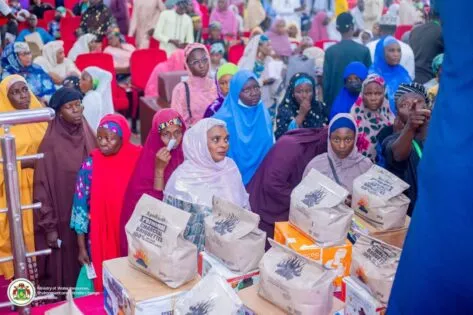
The initiative involves 3,400 clean cooking stoves donated to Kano by the Federal Ministry of Environment. At the inauguration of the distribution in Kano on Sunday, Commissioner for Water Resources, Environment and Climate Change, Dr Dahir Hashim, said 800 women had so far received the stoves.

Each of the 800 beneficiaries also received ₦25,000 from the state government following support approved by Governor Abba Kabir Yusuf, providing an economic component to an intervention primarily aimed at reducing dependence on traditional cooking fuels.
Hashim said the programme was intended to address both the environmental and health consequences of firewood use, particularly among women who are frequently exposed to smoke from traditional cooking methods.
He said prolonged exposure to household smoke could contribute to respiratory problems and other health risks, making the transition to cleaner cooking technologies an important public-health measure.

The scale of the challenge extends beyond Kano. The World Health Organisation estimates that household air pollution contributed to 2.9 million premature deaths globally in 2021, while about 2.1 billion people continue to cook with polluting fuels and technologies. Women and children are among those most exposed to the resulting household air pollution.
Hashim said the distribution therefore formed part of the state’s wider climate-change response, with the government seeking to reduce emissions while improving the health and living conditions of vulnerable residents.
He urged the beneficiaries to use the stoves responsibly and make effective use of the support provided to them.
The commissioner also disclosed that Kano was pursuing other clean-energy projects, including the solarisation of street lights and several Ministries, Departments and Agencies (MDAs).
He said the solar projects were intended to reduce reliance on conventional energy sources and contribute to the state’s emissions-reduction efforts.
Hashim commended the Federal Government for allocating the stoves to Kano and acknowledged the governor’s support for the beneficiaries, saying programmes that combine environmental protection with economic empowerment could have wider benefits for vulnerable communities.
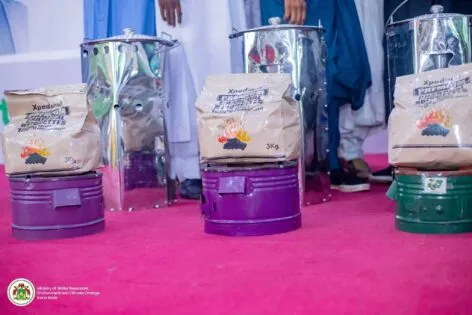
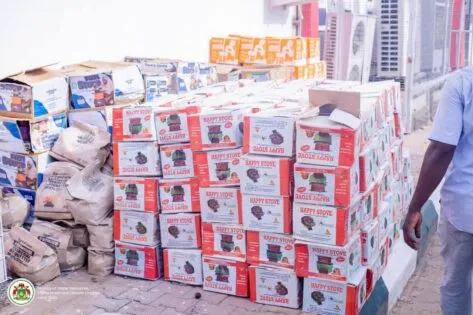
With 800 of the 3,400 allocated stoves already distributed, the intervention leaves 2,600 units still to be distributed as the state continues its clean-cooking programme.