
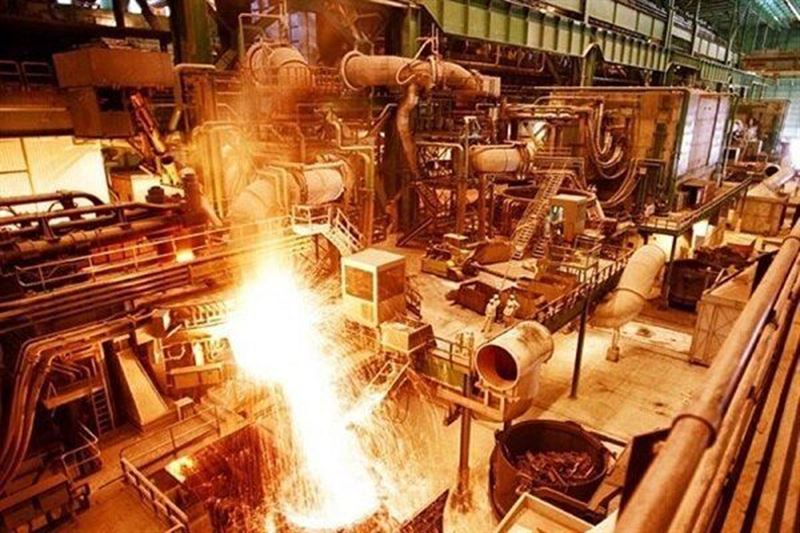
Iran claims global top-10 steel ranking despite war damage
Officials say the country produced 7.26 million tonnes of steel in early 2026 despite attacks on major industrial facilities and critical infrastructure.
By Abdullahi Yusuf
Iran says it has retained its position as the world’s tenth-largest steel producer despite damage inflicted on key industrial facilities during the recent war with the United States and Israel, as officials moved to challenge international data suggesting the country had slipped in the global rankings.
Iranian industry authorities say the country produced 7.26 million tonnes of steel during the opening quarter of 2026, a figure they argue keeps Tehran ahead of several competitors and firmly within the world’s top ten steel-producing nations.
The claim directly contradicts figures published by the World Steel Association, which reported that Vietnam had overtaken Iran after recording 6.4 million tonnes of output during the same period.
Iranian officials insist the assessment is flawed.
Mehdi Mohammadi, head of the Iranian Alloy Steel Producers Association, described the report as “categorically untrue,” arguing that the production figures attributed to Iran were inaccurate and failed to reflect the country’s actual industrial capacity during the period under review.
According to Iranian industry estimates, the country remained behind Brazil, which produced 8.1 million tonnes but ahead of Vietnam and other competitors, thereby preserving its long-held tenth-place position in the global steel market.
The dispute comes against the backdrop of a wider confrontation that has increasingly targeted strategic economic infrastructure inside Iran.
On April 7, major steel facilities, including Mobarakeh Steel and Khuzestan Steel, were hit during a wave of U.S.-Israeli strikes that Iranian officials said were aimed at weakening the country’s industrial backbone.
The attacks reportedly damaged sections of critical infrastructure, including blast furnace systems and industrial support facilities, prompting concerns about prolonged disruption to one of Iran’s most important non-oil sectors.
Steel production forms a major pillar of Iran’s industrial economy and is regarded by Tehran as strategically important both for domestic manufacturing and export revenues, particularly under sanctions pressure.
Despite the strikes, Iranian officials insist production has continued.
Nader Soleimani, executive chairman of the Iranian Steel Producers Association, rejected suggestions that the attacks had crippled the sector, saying reports of widespread shutdowns or major production failure were exaggerated.
He acknowledged that some facilities had sustained damage but argued that Iran’s long-standing emphasis on domestic engineering and locally manufactured industrial components had reduced dependence on foreign supply chains.
That experience, he said, would allow damaged infrastructure to be rebuilt relatively quickly.
Iran has spent years attempting to localise parts of its industrial sector in response to sanctions and restrictions on imports, particularly in heavy manufacturing and metallurgy. Officials now argue that strategy has helped cushion the impact of wartime disruption.
The steel sector has become one of several fronts in the broader economic dimension of the conflict, with attacks increasingly extending beyond military targets to include industrial production, energy facilities and transportation networks.
Analysts say the disagreement over steel output also reflects a wider battle over economic perception, resilience and strategic messaging as Tehran seeks to project stability despite sustained external pressure.
While uncertainty remains over the full scale of the damage inflicted on industrial facilities, Iranian authorities maintain that production targets remain achievable and that reconstruction efforts are already underway.
With additional information from MNTV
SPONSORED

SPONSORED

SONSORED
