
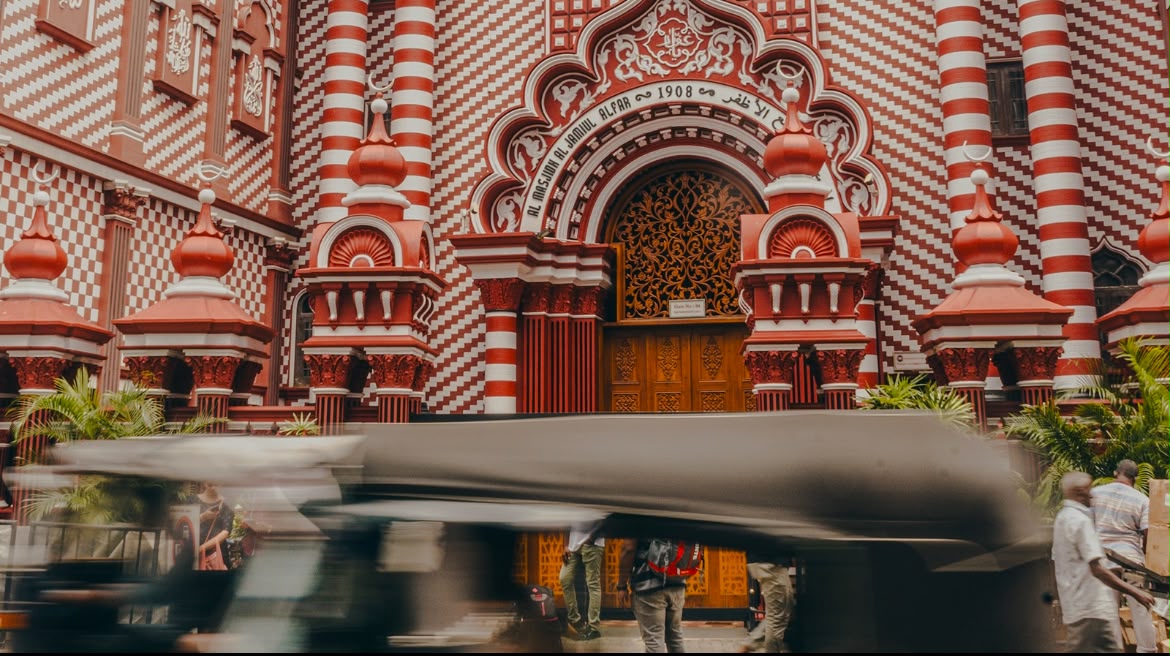
Inside the Mosque Sri Lanka Opened to a Curious Public
An unusual open-day initiative in Negombo invited people from Buddhist, Christian and other communities to witness Islamic worship, ask questions and encounter Muslim life beyond familiar misconceptions.
By Abdullahi Yusuf
A mosque in Sri Lanka has opened its doors to people of other faiths, giving non-Muslims an opportunity to observe Islamic worship and learn about the faith in an initiative aimed at challenging misconceptions and strengthening understanding between religious communities.
The “Welcome to Our Mosque” initiative was organized by the Centre for Islamic Studies in Periyamulla in the Negombo area, according to AsiaNews.
Rather than limiting the mosque to its traditional role as a Muslim place of worship, organizers turned it into a space for dialogue, inviting Buddhists, Christians and members of other communities to enter, ask questions and encounter Islamic beliefs and practices directly.
Visitors were taken on guided tours of the mosque, where they were shown how Muslims pray and introduced to the layout and functions of different parts of the building. Guides also explained the Islamic understanding of God and discussed the historical presence and contributions of Muslims in Sri Lanka.
“We are conducting this programme” to build “coexistence and understanding,” guide Ahmed Ayyash said.
Visitors were also given free Sinhala translations of the Qur’an and other literature, allowing them to learn about Islam in Sri Lanka’s majority language. The event included introductions to elements of Muslim cultural life, including henna and traditional food.
For some participants, it was their first time inside a mosque despite having lived alongside Muslims for decades.
Kokila Sumudumali, a Sinhalese Buddhist university student, said she joined after seeing an announcement on Facebook because she had long wondered what happened inside mosques, how Muslims worshipped and why Muslim women’s participation in mosques differed from men’s.
She said the visit gave her an opportunity to have her questions and doubts addressed directly.
Another Buddhist visitor, Kapila Induruwage, said he had lived near Muslims for about 60 years but had never previously had an opportunity to enter the mosque. Allowing people from different religions and ethnic communities to visit and learn from one another was important, he said.
Participant Alex Fonseka said such programs should be expanded because misconceptions about Islam were not confined to young people.
“There is a great lack of understanding of Islam among adults in our society,” he said, arguing that similar initiatives could help eliminate misunderstandings.
Muslims are a minority in Buddhist-majority Sri Lanka and have periodically faced religious tensions and anti-Muslim hostility.
Against that backdrop, mosque open days provide communities with an opportunity to learn about Islam directly from Muslims rather than through stereotypes or misinformation, while turning a religious space into a platform for broader interfaith engagement.
SPONSORED

SPONSORED

SONSORED
