
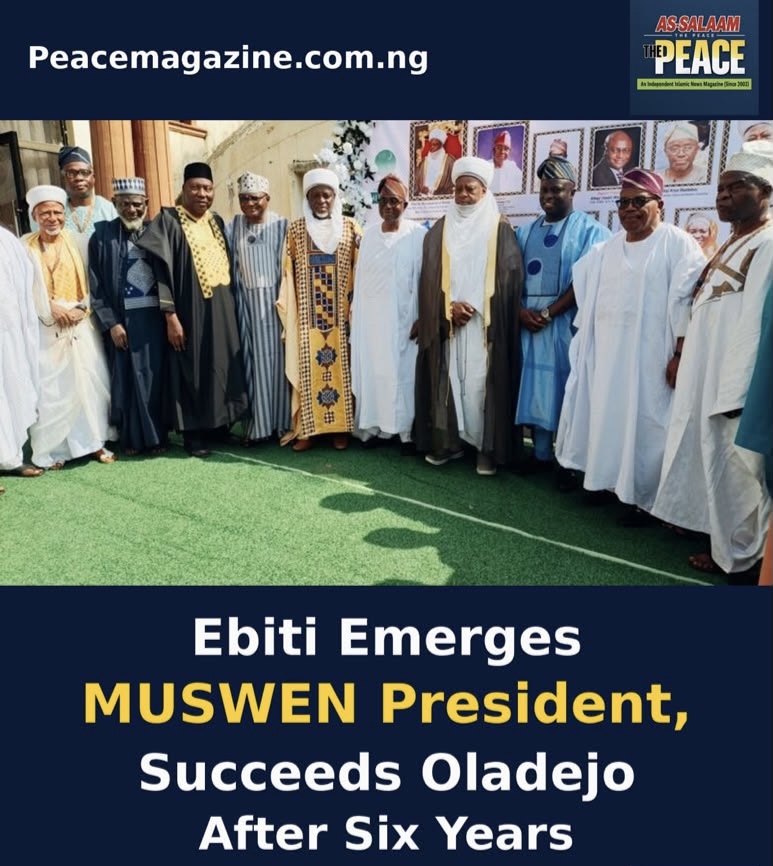
Ebiti Emerges MUSWEN President, Succeeds Oladejo After Six Years
The new president pledges inclusive leadership and expanded educational opportunities, inheriting an organisation with a ₦437 million endowment fund and an extensive institutional development agenda.
By Abdullahi Yusuf
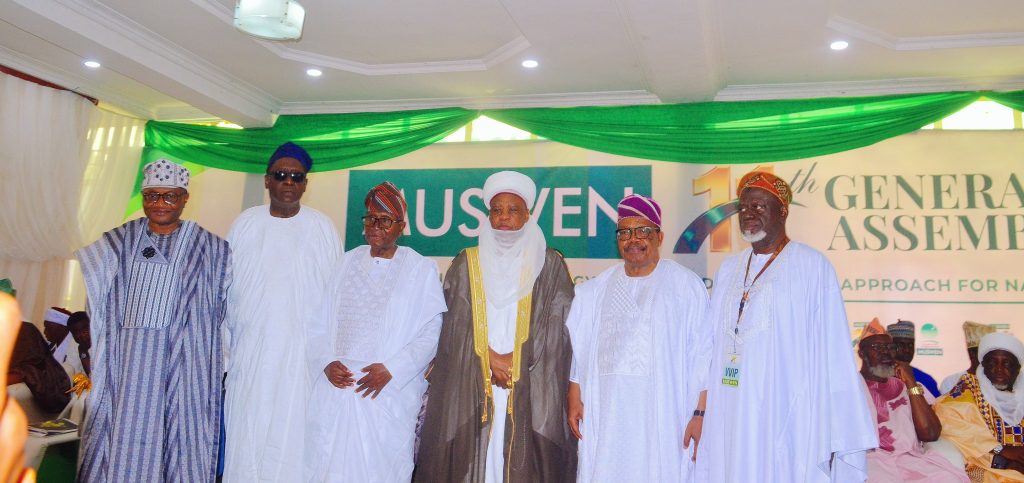
Alhaji Rafiu Adisa Ebiti, FCA, has emerged as the new President of the Muslim Ummah of South West Nigeria (MUSWEN), succeeding Alhaji Rasaki Oladejo, FCS, whose six-year tenure ended at the organisation’s 11th General Assembly in Ibadan on Sunday, November 15.
The leadership transition took place at the University of Ibadan Central Mosque Auditorium, where Ebiti outlined an agenda centred on education, institutional development, economic empowerment and greater participation of Muslims in national affairs.
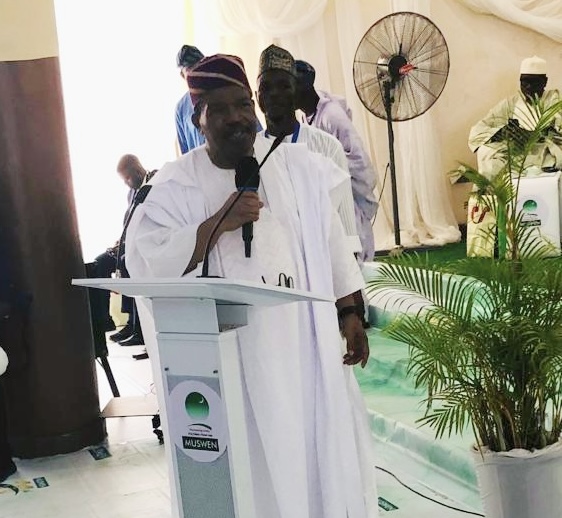
In his acceptance speech, the new president described the responsibility entrusted to him as an amanah, a sacred trust, pledging an inclusive, transparent and accountable administration.
He called for a stronger connection between Islamic scholarship and professional excellence, arguing that Muslim institutions must equip young people with the knowledge and skills required to respond to contemporary challenges. He specifically identified fields such as science, medicine, engineering, artificial intelligence and robotics as areas deserving greater attention.
Education featured prominently in his address. Ebiti promised to work with Crescent University, Fountain University, Al-Hikmah University and Summit University to expand scholarship opportunities, teacher training and digital literacy.
He stressed that financial circumstances should not prevent capable young people from accessing education.
“Poverty must never block a talented child,” he said, pledging particular attention to indigent students, girls and persons with disabilities.
The incoming president also promised to strengthen the MUSWEN Endowment Fund and promote Zakat and Waqf as instruments of sustainable community development. His proposed approach places emphasis on building the organisation’s capacity to support educational and social interventions beyond short-term donations.
On political participation, Ebiti urged Muslims to obtain their Permanent Voter Cards and take an active, peaceful part in the 2027 general elections. He cautioned against vote-buying, hate speech and electoral violence, calling on Muslims to contribute constructively to the country’s democratic process.
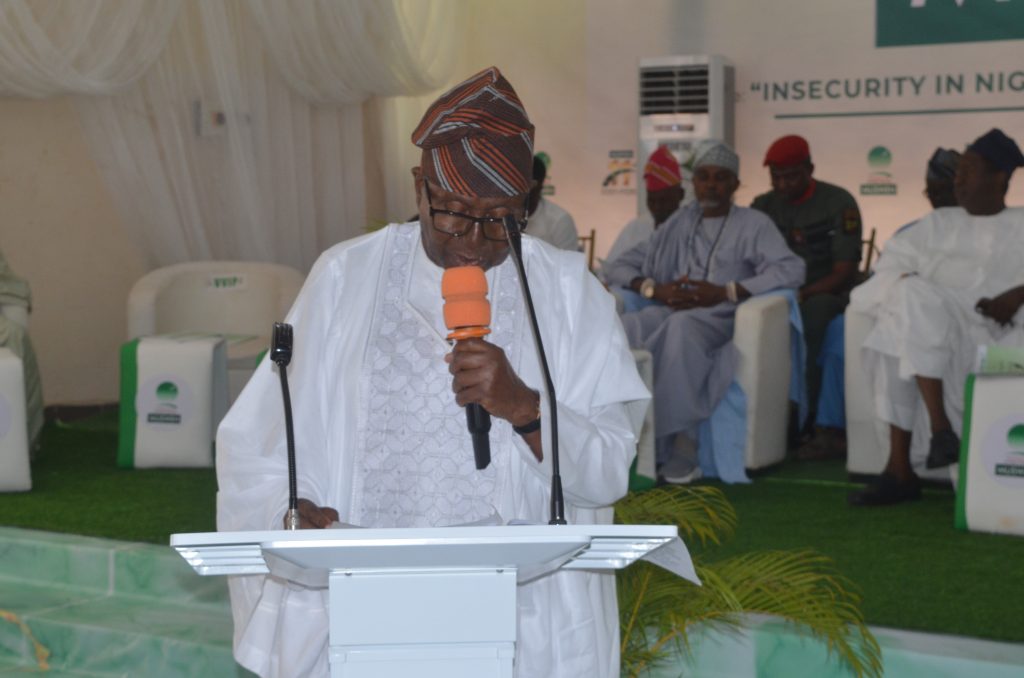
He also condemned terrorism, kidnapping and mob justice, while expressing support for intelligence-driven, constitutionally grounded decentralised policing. He called for peaceful coexistence and stronger understanding among religious communities.
Oladejo’s Six-Year Record
Ebiti assumes leadership after an administration that placed emphasis on strengthening MUSWEN’s financial base, developing its infrastructure and expanding its humanitarian and educational interventions.
Presenting his administration’s account, Oladejo disclosed that the organisation’s Endowment Fund had grown to ₦437 million as of October 21, 2026. Launched in September 2022, the fund is intended to provide a sustainable financial foundation for MUSWEN’s activities. Oladejo expressed the hope that the incoming leadership would grow it to ₦1 billion.
The organisation also recorded a financial surplus of ₦52.963 million in 2025, compared with ₦44.443 million in 2024, representing an increase of about 19 per cent. The improvement was attributed to member contributions, prudent financial management and investment returns.
On infrastructure, Oladejo reported the modernisation of MUSWEN’s headquarters at 46 Iwo Road, the development of Taibat Ali Mall at Agbeni and the reconstruction of the organisation’s donated property in Lugbe, Abuja.
His administration also secured and fenced MUSWEN’s site in Agodi GRA, including the construction of a gatehouse, while outlining plans for a new headquarters and income-generating partnerships to strengthen the organisation’s financial independence.
The outgoing president also highlighted the organisation’s humanitarian intervention in Borno State, where MUSWEN contributed ₦50 million towards assistance for victims of the 2024 floods.
In education, he highlighted the Sultan Abubakar Female Medical Student Scholarship Scheme, designed to support 12 female medical students, with two beneficiaries from each of the six South-West states.
MUSWEN is also planning to award 120 bursaries in 2027, with a longer-term ambition of supporting 600 students annually.
Beyond financial and educational interventions, the organisation undertook mediation efforts in disputes affecting Muslim communities and institutions in Inisha, Osun State, Ikare-Akoko in Ondo State and Lagos, including issues surrounding the Lagos Central Mosque.
Sultan Pledges Closer Cooperation
The Sultan of Sokoto and President-General of the Nigerian Supreme Council for Islamic Affairs (NSCIA), Alhaji Muhammad Sa’ad Abubakar III, pledged closer cooperation with MUSWEN under Ebiti’s leadership.
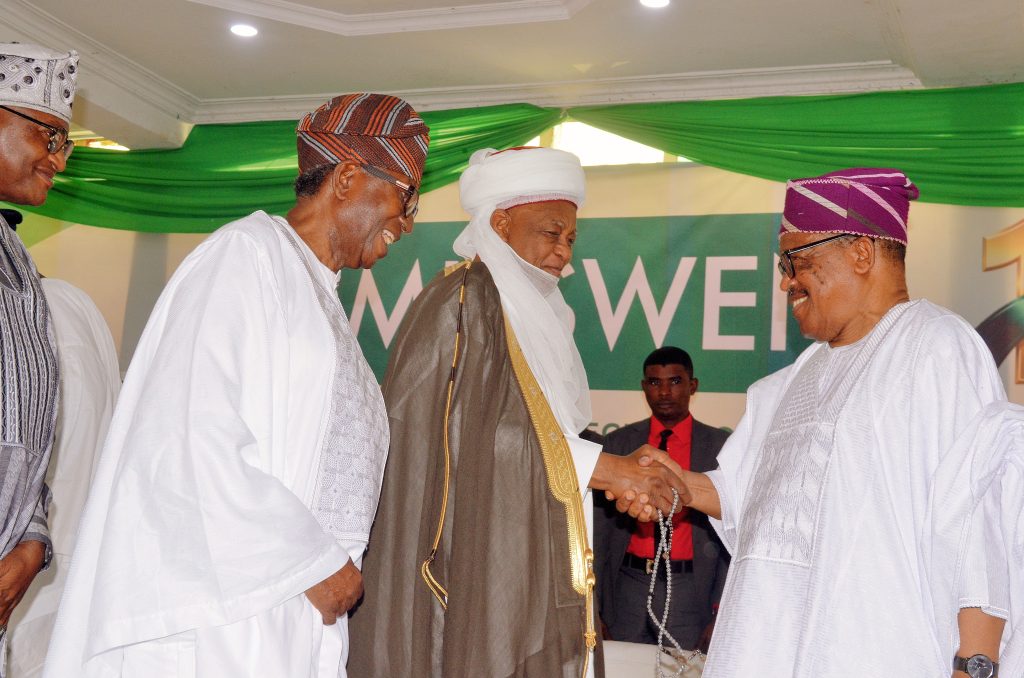
The Sultan commended Oladejo for his service and recalled his longstanding association with the organisation, saying he had attended its general assemblies since 2008.
His remarks underscored the importance of cooperation between Muslim organisations and the need to sustain institutional relationships across the country.
Chairman of the MUSWEN Board of Trustees, Dr Wale Babalakin, SAN, also called for a stronger culture of collective financial responsibility among Muslims, arguing that the organisation should not depend excessively on a small number of wealthy philanthropists.
He proposed regular grassroots contributions of ₦1,000, ₦2,000 and ₦5,000 from members, saying that modest donations, when combined, could provide a dependable source of funding.
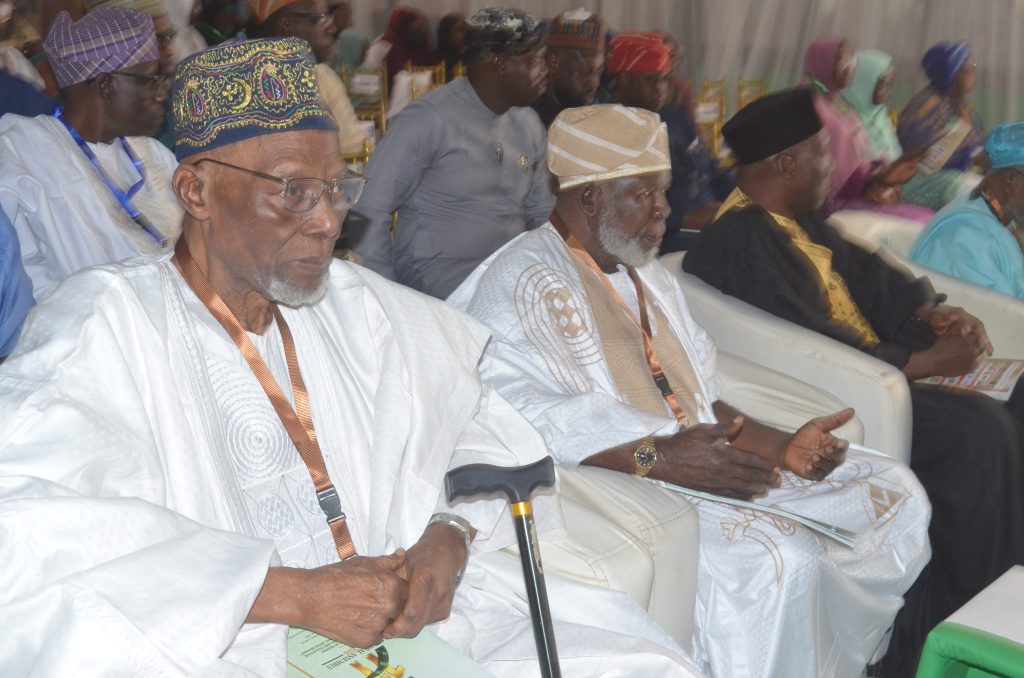
Babalakin cited an alumni fundraising effort that raised ₦5 billion as an example of what organised collective contributions could achieve. He argued that waiting for major donors could expose institutions to uncertainty, particularly when wealthy supporters become less able or willing to give.
“Waiting for the big donors, they may have donor fatigue, and you may not get all the money you require,” he said, emphasising that transparency and accountability would be essential to sustaining members’ confidence.
New Leadership Team
The assembly also produced changes in MUSWEN’s deputy leadership.
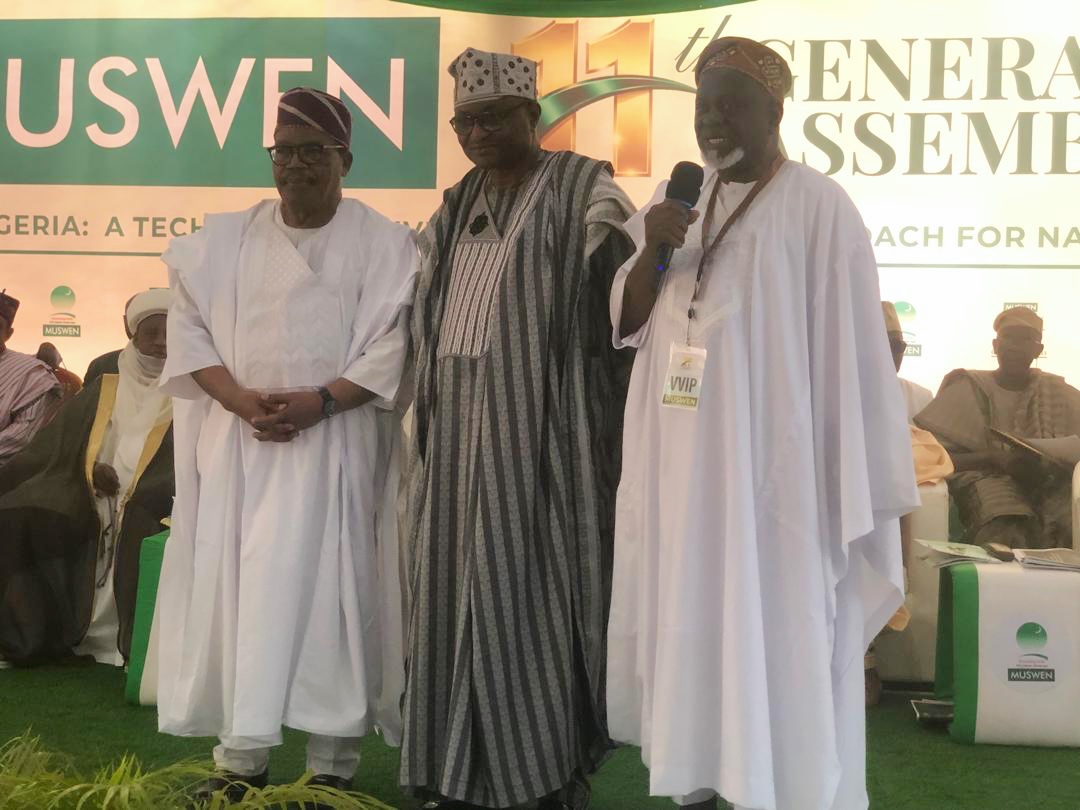
Alhaji Thabit Wale Sonaike, FCIB, moved from Deputy President II to become Deputy President I, while Alhaji Jamiu Ekungba, FCA, assumed the position of Deputy President II.
The gathering was attended by the Sultan of Sokoto; former JAMB Registrar and NSCIA Secretary-General, Professor Is-haq Oloyede; former minister Alhaji Adebayo Shittu; Galadiman Garin Sokoto, Aliyu Attahiru Galadanci; Olowu of Owu, Oba (Professor) Saka Adelola Matemilola; Alara of Ilara, Oba Folarin Olukayode Ogunsanwo; and other Muslim leaders, traditional rulers and government representatives.
Ondo State Governor Lucky Aiyedatiwa was represented by Engr Adam Zikrullah Chandy, while Oyo State Governor Seyi Makinde was also represented.
With Oladejo’s tenure concluded and the new leadership in place, Ebiti inherits an organisation with an established endowment fund, ongoing infrastructure projects and educational and humanitarian commitments. Sustaining these gains while delivering on his proposed agenda will shape the direction of MUSWEN under his leadership.
SPONSORED
SPONSORED

SPONSORED

SPONSORED
