
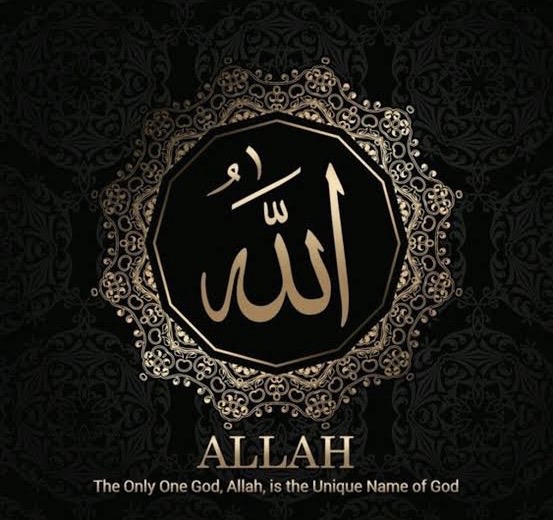
The Theological Difference Between Allah’s Names Al-Wāḥid and Al-Aḥad
By Huseyn Zakaria
By the grace and favour of Allah, I recently encountered a short video by a young graduate of al-Azhar who attempted to explain the difference between the Divine Names al-Wāḥid (The One) and al-Aḥad (The Absolutely One). Though brief, as visual media inevitably are, it contained the seed of an important discussion. Yet such topics demand a fuller exposition grounded firmly in the Qur’an, Sunnah, and the explanations of the leading scholars of Ahl al-Sunnah.
The purpose of this article is to present a clear, and theologically robust treatment of the distinction between these two Names, drawing on the major exegetical, Hadith, and theological authorities of the classical tradition.
1. Qur’anic Usage: A Textual Entry Point
The Name al-Aḥad occurs only once in the Qur’an, in the chapter regarded as the essence of monotheistic purity: “Say: He is Allah, the One (al-Aḥad).”¹
Its placement in Sūrat al-Ikhlāṣ reflects its theological gravity: a proclamation of a singularity beyond all conceptual division or equivalence.
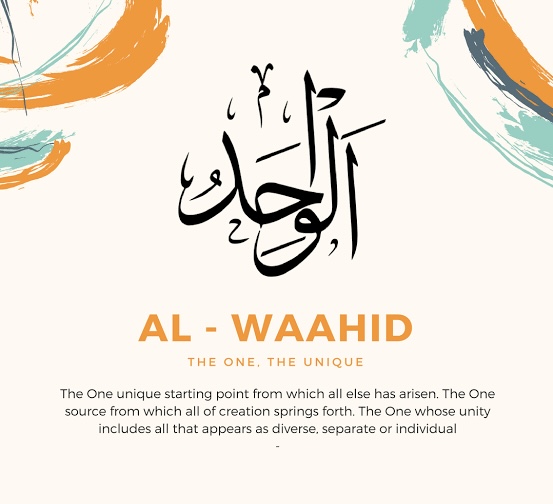
By contrast, al-Wāḥid appears repeatedly across the Qur’anic discourse: “And your God is One God.”
“He is the One, the Irresistible.”
Where al-Aḥad asserts singularity at the level of essence, al-Wāḥid reaffirms the singularity of divinity and worship.
2. Perspectives of the Major Classical Commentators: Imām al-Ṭabarī (d. 310 AH)
Al-Ṭabarī explains that al-Aḥad indicates an undivided, incomparable essence, whereas al-Wāḥid denotes that He alone is the true deity worthy of worship.
Imām al-Bukhārī (d. 256 AH)
In Kitāb al-Tawḥīd, he draws attention to the emphatic nature of al-Aḥad as a descriptor of Allah’s incomparable essence, while al-Wāḥid underscores His exclusive divinity.
Imām Ibn Kathīr (d. 774 AH)
Ibn Kathīr distinguishes between the two by stating that al-Aḥad affirms “a uniqueness that admits neither division nor likeness”, while al-Wāḥid negates partnership in divinity.
Imām al-Qurṭubī (d. 671 AH)
He notes that al-Aḥad relates to the singular essence of Allah, and al-Wāḥid expresses His singularity in attributes and actions.
3. Additional Foundational Authorities of Ahl al-Sunnah: To deepen the analysis further, the explanations of the major imams of creed and theology must be incorporated. Ibn Taymiyyah (d. 728 AH)
In Majmū‘ al-Fatāwā, he writes: “Al-Wāḥid affirms that He alone deserves worship, while al-Aḥad affirms that none resembles Him in His essence or attributes.”
He further clarifies: “The Name al-Aḥad indicates a singularity that cannot be shared, divided, imagined, or conceived in terms resembling creation.”
Here, Ibn Taymiyyah locates al-Aḥad in the domain of Tawḥīd al-Ṣifāt, and al-Wāḥid in Tawḥīd al-Ulūhiyyah. Ibn al-Qayyim (d. 751 AH)
In Badā’i‘ al-Fawā’id, he states: “Al-Aḥad refers to the One whose essence has no equal or peer; al-Wāḥid refers to the One who alone is worthy of all worship.”
In al-Nūniyyah, he beautifully expresses: “His being al-Aḥad negates likeness; His being al-Wāḥid negates partnership.” Imām al-Bayhaqī (d. 458 AH)
In his authoritative work al-Asmā’ wa al-Ṣifāt, al-Bayhaqī writes: “Al-Aḥad is He who is singular in His essence, not composed of parts and not resembling anything; al-Wāḥid is He who alone is the true God without partner.”
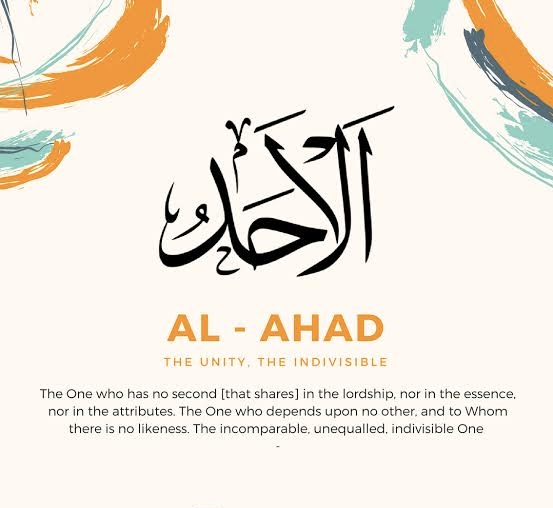
He also notes that al-Aḥad is never used for creation in an absolute sense. Imām al-Ash‘arī (d. 324 AH)
In al-Ibānah, Imām al-Ash‘arī explains: “Allah is al-Aḥad in His essence—without composition, form, or likeness; and He is al-Wāḥid in that none shares His divinity, rule, or right to worship.”
This reflects the foundational Ash‘arī principle:
— al-Aḥad negates physicality, resemblance, and division
— al-Wāḥid negates polytheism and association.
4. Synthesised Theological Understanding
From the collective explanations of the classical authorities, the following distinctions emerge:
• al-Aḥad: The Uniqueness of Essence
— No likeness
— No division
— No composition
— No equal in any attribute
— Absolute singleness
• al-Wāḥid: The Uniqueness of Divinity
— Only one deity to be worshipped
— No partners
— No rivals
— No associates in rule, decree, or authority
Combined Meaning
Together, these two Names provide a comprehensive affirmation of Tawḥīd:
• al-Aḥad refutes anthropomorphic conceptions and theological resemblance.
• al-Wāḥid refutes all forms of polytheism, idolatry, and rivalry.
They thus form two inseparable aspects of monotheism—unity of essence and unity of worship.
5. Prophetic Emphasis
The Prophet (pbuh) described Sūrat al-Ikhlāṣ, which contains the Name al-Aḥad, as equal to one-third of the Qur’an.
And he urged the believers to know and reflect upon the Names of Allah: “Allah has ninety-nine Names; whoever enumerates them shall enter Paradise.”
Hence, understanding the difference between al-Wāḥid and al-Aḥad is not merely an academic exercise—it is an act of devotion that deepens faith and enlightens the heart.
Conclusion
The scholarly distinction between al-Wāḥid and al-Aḥad reveals the extraordinary precision and depth of Islamic theology. While both Names affirm divine singularity, each highlights a different dimension: one philosophical and essential (al-Aḥad), the other practical and devotional (al-Wāḥid).
By integrating the insights of the Qur’an, the Sunnah, and the major exegetical and theological authorities—from al-Ṭabarī and Ibn Kathīr to Ibn Taymiyyah, Ibn al-Qayyim, al-Bayhaqī, and Imām al-Ash‘arī—this article aims to provide a clear, elegant, and academically responsible presentation of this profound topic.
Footnotes and Scholarly References
• Qur’an 112:1. Qur’an 2:163. Qur’an 13:16; 38:65. Al-Ṭabarī, Jāmi‘ al-Bayān, vol. 30, p. 221. Ibid., vol. 1, p. 233. Al-Bukhārī, Ṣaḥīḥ, “Kitāb al-Tawḥīd”, vol. 9, p. 124. Ibn Kathīr, Tafsīr al-Qur’ān al-‘Aẓīm, vol. 8, p. 508. Ibid., vol. 8, p. 509. Al-Qurṭubī, al-Jāmi‘ li Aḥkām al-Qur’ān, vol. 20, p. 246.
Additional Requested Sources:VIbn Taymiyyah, Majmū‘ al-Fatāwā, vol. 3, p. 104. Ibid., vol. 6, p. 98. Ibn al-Qayyim, Badā’i‘ al-Fawā’id, vol. 1, p. 163. Ibn al-Qayyim, al-Nūniyyah, lines 2938–2942. Al-Bayhaqī, al-Asmā’ wa al-Ṣifāt, pp. 47–48. Imām al-Ash‘arī, al-Ibānah, pp. 14–15. Muslim, Ṣaḥīḥ, no. 811. Al-Bukhārī, Ṣaḥīḥ, no. 2736; Muslim, Ṣaḥīḥ, no. 2677.
بسم الله الرحمن الرحيم
التمييز بين اسم الله “الواحد” واسم الله “الأحد”: دراسة عقدية شاملة
من فضل الله وتوفيقه أننى اطّلعتُ قبل مدة على مقطع مرئي لأحد الشباب من خرّيجي جامعة الأزهر، يتحدّث فيه عن الفوارق بين اسمه تعالى الواحد واسمه الأحد. وقد وجدت فيما قاله لمحة علمية نافعة، غير أنّ طبيعة المواد المرئية تجعل فائدتها سريعة الزوال ومحصورة فى وقت المشاهدة، بينما الموضوع فى ذاته من أهم مباحث العقيدة، ويستوجب توضيحًا راسخًا مستندًا إلى القرآن الكريم والسنة النبوية وشروح كبار الأئمة من أهل السنّة والجماعة.
وتهدف هذه المقالة إلى تقديم عرض وافٍ، إنسانى فى صياغته، قويّ فى بنائه، جامع لأقوال المفسّرين والمحدّثين والأئمة المتكلمين، فى بيان الفرق بين اسم الله الواحد واسم الله الأحد.
أولًا: المدخل النصّي من القرآن الكريم
يَرِدُ اسم الله الأحد مرة واحدة فقط فى القرآن العظيم، وذلك فى سورة تعدّ جوهر التوحيد ونقاؤه:
{قُلْ هُوَ اللَّهُ أَحَدٌ}¹
جاء هذا الاسم المفرد فى سياق تقرير التفرد المطلق الذى لا يُتصوّر معه تعدّد أو تجزئة أو شبيه.
أما اسم الواحد فيرد كثيرًا فى القرآن، ومنها قوله تعالى:
{وَإِلَٰهُكُمْ إِلَٰهٌ وَاحِدٌ}²
{وَهُوَ الْوَاحِدُ الْقَهَّارُ}³
فإذا كان الأحد يتعلق بتفرّد الذات الإلهية، فإن الواحد يتعلق بالتوحيد فى الألوهية والعبادة.
ثانيًا: تفسيرات كبار المفسرين
الإمام الطبري (ت 310هـ)
يرى الطبري أن الأحد يدل على تفرد الذات الذى لا يقبل الشركة، بينما الواحد يدل على انفراده تعالى بالألوهية المستحقة للعبادة.⁴⁻⁵
الإمام البخاري (ت 256هـ)
أشار فى كتاب التوحيد إلى أن الأحد صفة تفرد الذات، والواحد نفي الشركاء فى الألوهية.⁶
الإمام ابن كثير (ت 774هـ)
فرّق ابن كثير بينهما بأن الأحد هو المتفرّد الذى لا نظير له، والواحد هو المنفرد بالألوهية بلا شريك.⁷⁻⁸
الإمام القرطبي (ت 671هـ)
بيّن أن الأحد يرجع إلى الذات، والواحد إلى الصفات والأفعال.⁹
ثالثًا: إضافات عقدية من كبار أئمة أهل السنّة
ابن تيمية (ت 728هـ)
يقول فى مجموع الفتاوى:
“الواحد: هو المنفرد بالألوهية المستحقة للعبادة،
والأحد: هو الذى لا نظير له فى ذاته ولا صفاته.”¹⁰
ويقول أيضًا:
“اسم الأحد يدل على تفرد لا يُتصوّر معه تقسيم أو تركيب أو مشابهة للمخلوقات.”¹¹
ابن القيم (ت 751هـ)
يقول فى بدائع الفوائد:
“الأحد: الذى لا نظير له فى ذاته،
والواحد: الذى لا شريك له فى عبادته.”¹²
ويقول فى النونية:
“كونه أحدًا نفى المماثل …
وكونه واحدًا نفى الشريك والمثال.”¹³
الإمام البيهقي (ت 458هـ)
فى الأسماء والصفات كتب:
“الأحد: هو المنفرد بالذات الذى لا تركيب فيه ولا شبيه له.
والواحد: هو المنفرد بالألوهية المستحق للعبادة وحده.”¹⁴
الإمام الأشعرى (ت 324هـ)
فى الإبانة قال: “الله أحدٌ فى ذاته لا يقبل تجزئة ولا تركيبًا ولا مشابهة،
وهو واحدٌ فى ألوهيته لا شريك له فى الملك ولا فى استحقاق العبادة.”¹⁵
رابعًا: التحليل العقدى الجامع
• معنى اسم “الأحد”
يختص بإثبات:
— تفرد الذات
— تنزيه الله عن التركيب
— نفى النظير والمثيل
— نفى التجزئة والحدود
— عدم إمكان تصور مشابهة له
• معنى اسم “الواحد”
يركز على:
— انفراده بالألوهية
— نفى الشركاء
— نفى الأنداد
— انفراده بالحكم والخلق والأمر
• النتيجة العقدية
يجتمع الاسمان ليشكلا كمال التوحيد:
الأحد = وحدة الذات وتنزيهها
الواحد = وحدة العبادة والألوهية
خامسًا: التأكيد النبوي
ورد فى الحديث الصحيح أن سورة الإخلاص تعدل ثلث القرآن لما تحويه من تقرير اسم الأحد.¹⁶
وفى الحديث الآخر: “إن لله تسعةً وتسعين اسمًا، مَن أحصاها دخل الجنة.”¹⁷
ما يدل على أهمية معرفة دقائق معانى أسمائه الحسنى.
الخاتمة
تكشف دراسة الفرق بين اسمي الله الواحد والأحد عن عمق العقيدة الإسلامية ودقتها. فكلاهما يدل على الوحدة، ولكن أحدهما يثبت وحدة الذات (الأحد)، والآخر يثبت وحدة الألوهية (الواحد).
ومن خلال إشراك أقوال كبار العلماء—من الطبري والبخاري، إلى ابن كثير والقرطبي، ثم ابن تيمية وابن القيم والبيهقي والأشعري—تظهر لنا وحدة أصول الاعتقاد مع ثراء الشروح والتفصيلات.
هذا البيان لا يخدم الجانب العلمي فحسب، بل يفتح بابًا للتدبر واليقين، ويزيد العبد معرفة بربه وخالق وجوده.
الهوامش والمراجع
• سورة الإخلاص، الآية 1.
• سورة البقرة، الآية 163.
• سورة الرعد، الآية 16؛ سورة ص، الآية 65.
• الطبري، جامع البيان، 30/221.
• المرجع السابق، 1/233.
• البخاري، صحيحه، كتاب التوحيد، 9/124.
• ابن كثير، تفسير القرآن العظيم، 8/508.
• المرجع نفسه، 8/509.
• القرطبي، الجامع لأحكام القرآن، 20/246.
المراجع الإضافية المطلوبة:
10. ابن تيمية، مجموع الفتاوى، 3/104.
11. المرجع نفسه، 6/98.
12. ابن القيم، بدائع الفوائد، 1/163.
13. ابن القيم، النونية، الأبيات 2938–2942.
14. البيهقي، الأسماء والصفات، ص47–48.
15. الأشعري، الإبانة، ص14–15.
16. مسلم، صحيحه، رقم 811.
17. البخاري، صحيحه، رقم 2736؛ مسلم، رقم 2677.
3.
The Distinction Between al-Wāḥid and al-Aḥad in the Names of Allah: A Comprehensive Theological Study
By: Huseyn Zakaria
I recently encountered a short video by a young graduate of al-Azhar University, Cairo, discussing the difference between the Divine Names al-Wāḥid (The One) and al-Aḥad (The Absolutely One). Although brief, it contained the seed of an important discussion. I immediately became interested and instantly thought of developing it into writing document for posterity. Thus, this article develops that insight into a complete scholarly exposition grounded in the Qur’an, Sunnah, and classical authorities of Ahl al-Sunnah.
1. Qur’ānic Usage: Textual Evidence
Qur’an:
﴿ قُلْ هُوَ اللَّهُ أَحَدٌ ﴾¹
“Say: He is Allah, the One (al-Aḥad).” (Qur’an 112:1)
This verse establishes absolute singularity, an indivisible, incomparable oneness.
Qur’an (Arabic):
﴿ وَإِلَٰهُكُمْ إِلَٰهٌ وَاحِدٌ ﴾²
﴿ وَهُوَ الْوَاحِدُ الْقَهَّارُ ﴾³
“And your God is One God.” (Qur’an 2:163)
“And He is the One, the Irresistible.” (Qur’an 13:16)
Here, al-Aḥad affirms singularity of essence, while al-Wāḥid affirms singularity of divinity and worship.
2. Classical Exegetical Perspectives
Imām al-Ṭabarī (d. 310 AH)
“الأحد: يدل على الذات المتفردة التى لا نظير لها،
والواحد: يدل على التفرد بالألوهية المستحقة للعبادة.”⁴⁻⁵
“Al-Aḥad indicates the singularity of the divine essence that admits no equal, and al-Wāḥid indicates His uniqueness as the only one worthy of worship.”
Imām al-Bukhārī (d. 256 AH)
“الأحد: صفة تفرد الذات،
والواحد: نفى الشركاء فى الألوهية.”⁶
“Al-Aḥad describes the uniqueness of Allah’s essence, while al-Wāḥid negates partners in divinity.”
Imām Ibn Kathīr (d. 774 AH)
“الأحد يؤكد التفرد الذى لا يقبل النظير،
والواحد ينفي الشريك فى الألوهية.”⁷⁻⁸
“Al-Aḥad affirms a singularity that admits no equal, and al-Wāḥid negates any partner in divinity.”
Imām al-Qurṭubī (d. 671 AH)
“الأحد يدل على تفرد الذات،
والواحد يدل على التفرد فى الصفات والأفعال.”⁹
“Al-Aḥad refers to the singularity of Allah’s essence, while al-Wāḥid refers to His singularity in attributes and actions.”
3. Additional Authorities from Ahl al-Sunnah:
Ibn Taymiyyah (d. 728 AH)
“الواحد: هو المنفرد بالألوهية المستحقة للعبادة،
والأحد: هو الذى لا نظير له فى ذاته ولا صفاته.”¹⁰
“Al-Wāḥid affirms that He alone deserves worship, and al-Aḥad affirms that none resembles Him in His essence or attributes.”
“اسم الأحد يدل على تفرد لا يمكن تقاسمه أو تقسيمه أو تصوره على مثال المخلوقات.”¹¹
“The Name al-Aḥad indicates a singularity that cannot be shared, divided, or imagined like created beings.”
Ibn al-Qayyim (d. 751 AH)
“الأحد: الذى لا نظير له فى ذاته،
والواحد: الذى لا شريك له فى عبادته.”¹²
“Al-Aḥad refers to the One whose essence has no equal; al-Wāḥid refers to the One alone deserving worship.”
“كونه أحدًا نفى المماثل، وكونه واحدًا نفى الشريك والمثال.”¹³
“Being al-Aḥad negates likeness; being al-Wāḥid negates any partner or equivalent.”
Imām al-Bayhaqī (d. 458 AH)
“الأحد: المنفرد بالذات الذى لا تركيب فيه ولا شبيه له،
والواحد: المنفرد بالألوهية المستحق للعبادة وحده.”¹⁴
“Al-Aḥad is the One singular in essence, without composition or likeness; al-Wāḥid is the One alone deserving worship.”
Imām al-Ash‘arī (d. 324 AH)
“الله أحدٌ فى ذاته لا يقبل تجزئة ولا تركيبًا ولا مشابهة،
وهو واحدٌ فى ألوهيته لا شريك له فى الملك ولا فى استحقاق العبادة.”¹⁵
“Allah is al-Aḥad in His essence—without division, composition, or likeness; He is al-Wāḥid in His divinity, without partner in His sovereignty or right to be worshipped.”
4. Synthesised Theological Understanding
• Al-Aḥad: Uniqueness of Essence
• No likeness
• No division
• No composition
• No equal in any attribute
• Absolute singularity
• Al-Wāḥid: Uniqueness of Divinity
• Only one worthy of worship
• No partners
• No rivals
• Sole in command, decree, and authority.
• Combined Meaning
• Al-Aḥad refutes anthropomorphism.
• Al-Wāḥid refutes polytheism and association.
•
Together, they form a comprehensive affirmation of Tawḥīd—unity of essence and unity of worship.
5. Prophetic Emphasis
Hadith:
«قُلْ هُوَ اللَّهُ أَحَدٌ تُعَدُّ ثُلُثَ الْقُرْآنِ»¹⁶
“The Prophet ﷺ said that Sūrat al-Ikhlāṣ is equivalent to one-third of the Qur’an.”
Hadith:
«إِنَّ لِلَّهِ تِسْعًا وَتِسْعِينَ اسْمًا، مَن أَحصاها دَخَلَ الجَنَّةَ»¹⁷
“Allah has ninety-nine Names; whoever enumerates them shall enter Paradise.”
Reflection on the Names, especially al-Aḥad and al-Wāḥid, is therefore an act of devotion and certainty-enhancing contemplation.
Conclusion:
The distinction between al-Aḥad and al-Wāḥid demonstrates the depth of Islamic theology:
• Al-Aḥad = uniqueness of essence (Tawḥīd al-Ṣifāt)
• Al-Wāḥid = uniqueness of divinity (Tawḥīd al-Ulūhiyyah)
The integration of Qur’anic evidence, Prophetic guidance, and classical authorities (al-Ṭabarī, Ibn Kathīr, Ibn Taymiyyah, Ibn al-Qayyim, al-Bayhaqī, al-Ash‘arī) produces a comprehensive, humanised, and academically rigorous understanding suitable for scholarly study, teaching, and spiritual reflection.
Footnotes and References:
• Qur’an 112:1
• Qur’an 2:163
• Qur’an 13:16; 38:65
• al-Ṭabarī, Jāmi‘ al-Bayān, 30/221
• al-Ṭabarī, 1/233
• al-Bukhārī, Ṣaḥīḥ, Kitāb al-Tawḥīd, 9/124
• Ibn Kathīr, Tafsīr al-Qur’ān al-‘Aẓīm, 8/508
• Ibn Kathīr, 8/509
• al-Qurṭubī, al-Jāmi‘ li Aḥkām al-Qur’ān, 20/246
• Ibn Taymiyyah, Majmū‘ al-Fatāwā, 3/104
• Ibn Taymiyyah, 6/98
• Ibn al-Qayyim, Badā’i‘ al-Fawā’id, 1/163
• Ibn al-Qayyim, al-Nūniyyah, lines 2938–2942
• al-Bayhaqī, al-Asmā’ wa al-Ṣifāt, 47–48
• al-Ash‘arī, al-Ibānah, 14–15
• Muslim, Ṣaḥīḥ, no. 811
• al-Bukhārī, Ṣaḥīḥ, no. 2736; Muslim, no. 2677.
SPONSORED

SPONSORED
