

The call for Muslim lawyers’ unity is timely and necessary – Yusuf Ali
Call on Muslim lawyers to serve as moral guides in society, uphold justice as a divine mandate, and leave a legacy anchored on unity, discipline, and service.
By Abdullahi Yusuf
The 2025 Law Week of the Muslim Lawyers’ Association of Nigeria (MULAN), FCT chapter, opened in Abuja with a strong call for unity, ethical revival and renewed commitment to professional integrity within the Bar.
Delivering the keynote address on the theme “One Ummah, One Bar,” foremost legal scholar and Senior Advocate of Nigeria, Prof. Yusuf O. Ali, charged Muslim lawyers across the country to rebuild trust in the legal profession and use their collective influence to strengthen justice delivery in Nigeria.

Prof. Ali, who spoke through Prof. Mubarak T. Adekilekun, said the legal profession was facing pressure from moral decline, weak mentorship structures and rising inequality, noting that the call to unity among Muslim lawyers had become both timely and necessary.
According to him, the Ummah is bound by shared values and a shared destiny, and Muslim lawyers must project these values through their conduct in courtrooms, chambers and public life.

He stressed that integrity, fairness and service remain the pillars of both Islamic ethics and the legal profession, insisting that a lawyer’s worth is ultimately measured by moral impact, not professional titles.
Prof. Ali also urged senior lawyers to take deliberate steps to mentor younger colleagues, warning that the future of MULAN and the profession depends on sustained knowledge transfer, discipline and character.
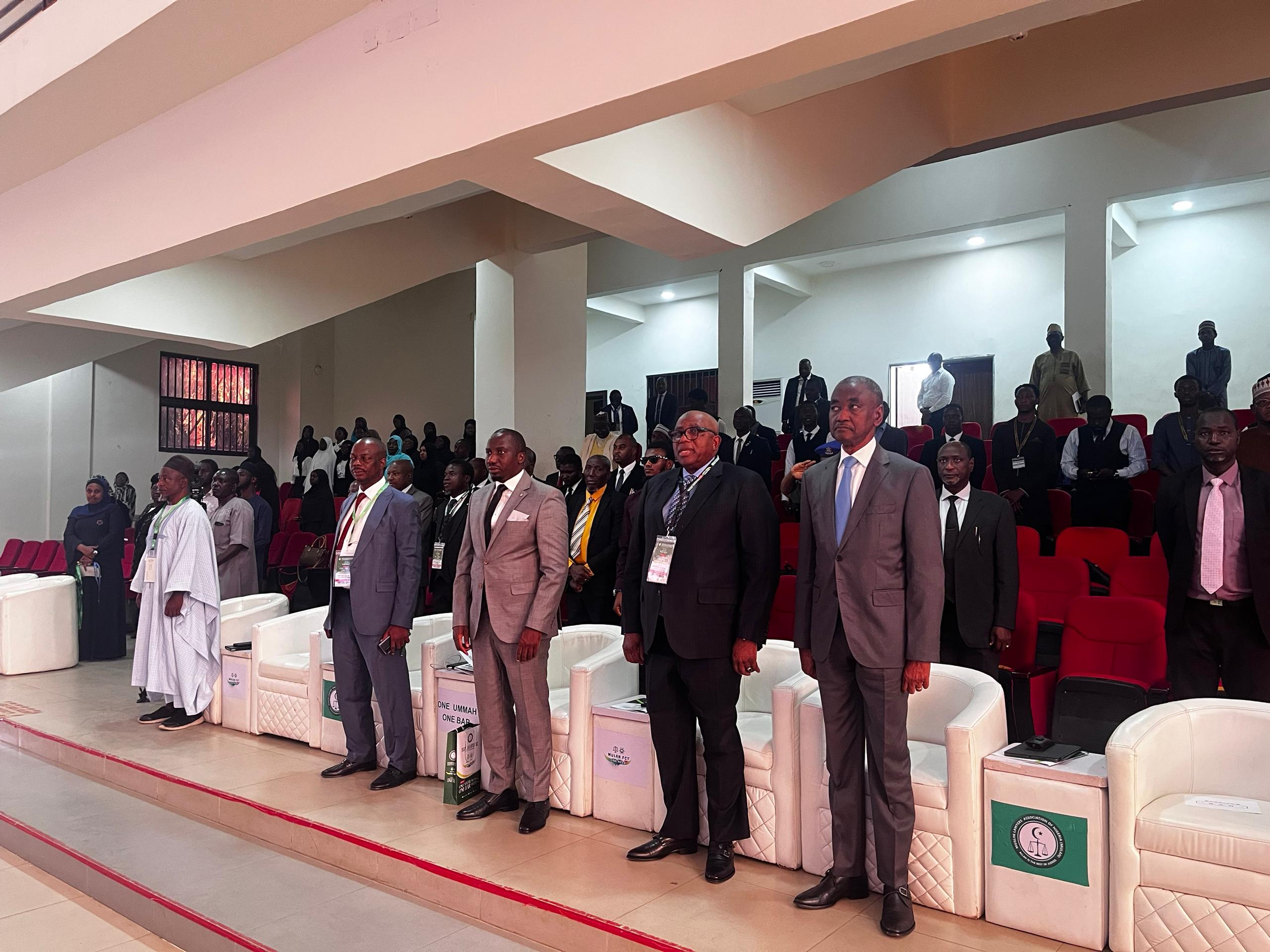
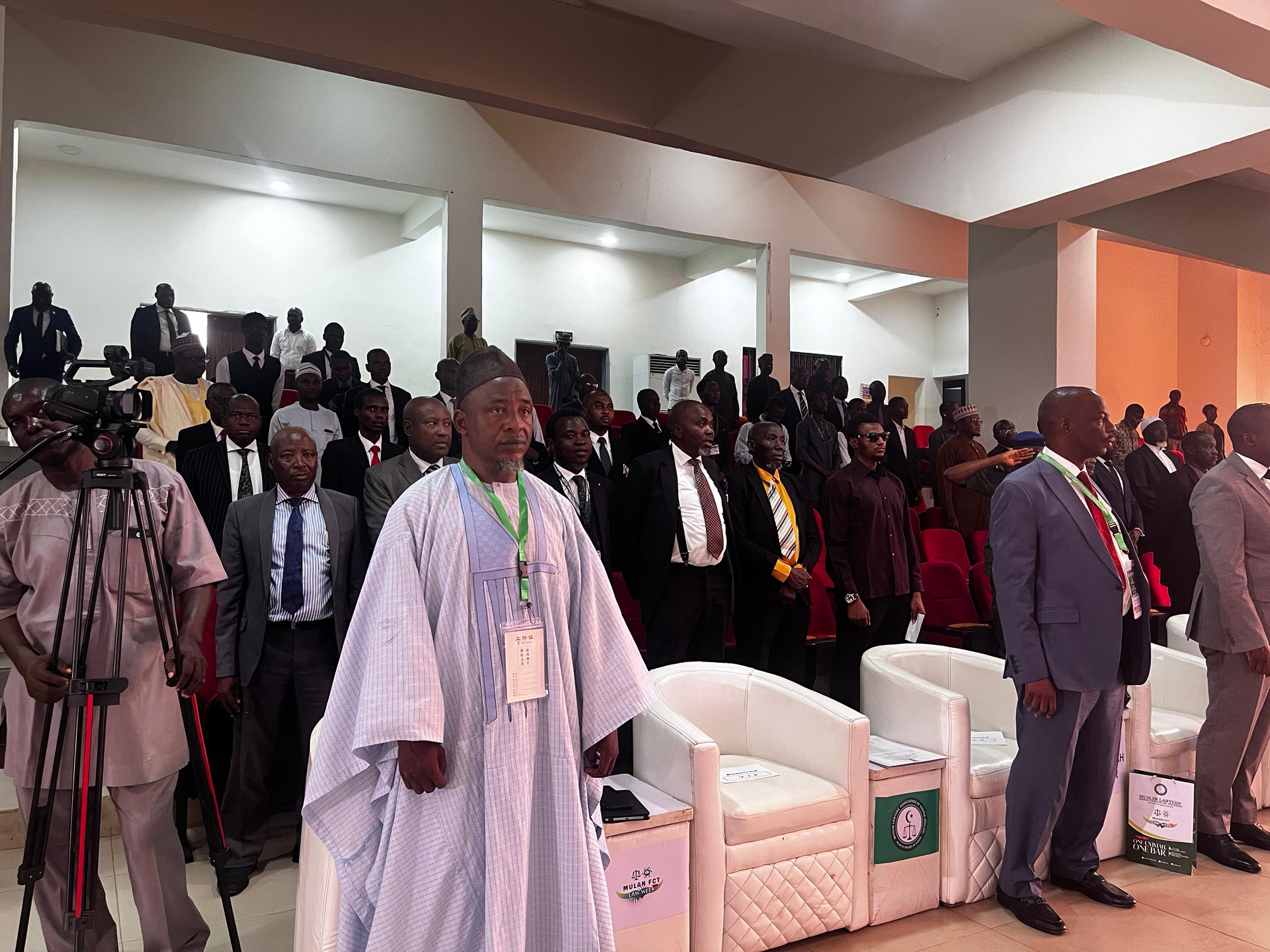
He further called for stronger cooperation, mutual respect and ethical conduct within the Bar, noting that rivalry should produce excellence and not hostility.
The keynote rounded off with a charge for Muslim lawyers to serve as moral guides in society, uphold justice as a divine mandate and leave a legacy anchored on unity, discipline and service.
FULL ADDRESS BELOW:
“ONE UMMAH, ONE BAR”
A Keynote Address Delivered by Prof. Yusuf Ali, SAN, FCIArb, 1st Kuliyan Gari of Ilorin Emirate at the MULAN FCT Abuja Week, 2025
Bismillahir-Rahmanir-Rahim.
“Hold fast together to the cable of Allah83 and be not divided. Remember the blessing that Allah bestowed upon you: you were once enemies then He braught your hearts together, so that through His blessing you became brothers. You stood on the brink of a pit of fire and He delivered you from it.84 Thus Allah makes His signs clear to you that you may be guided to the right way” Quran 3: 103
Distinguished Colleagues at the Bar and the Bench, respected Elders and Members of the Muslim Lawyers’ Association of Nigeria (MULAN), invited Guests, brothers and sisters in Islam, Assalãmu ‘Alaikum wa Rahmatullähi wa Barakätuh.
It gives me great pleasure and profound gratitude to stand before this distinguished gathering at the commencement of the MULAN FCT Abuja Week, to speak on a theme that is as timely as it is timeless “One Ummah, One Bar.”
What Does “One Ummah, One Bar” Really Mean?
This theme, though simple in phrasing, carries deep significance. It asks us to reflect on who we are, not just as legal professionals, but as members of a global faith community bound by divine law, moral responsibility, and a collective mission of justice.
The Arabic word “Ummah” does not merely describe a group of people who share a religion; it connotes a community with shared purpose, shared values, and a shared destiny.
In Islam, the Ummah is bound together by faith (imãn), by mutual compassion, and by collective duty. When the Qur’an says in Surah Al-Anbiya, 21:92
“Indeed, this community of yours is one community, and I am your Lord, so worship Me.”
This verse reminds us that unity is not optional, it is foundational to our identity.
When we link this divine principle to the Bar, we are reminded that our profession too is built upon shared ideals of integrity, justice, service, and the defence of the weak.
Thus, “One Ummah, One Bar” challenges us to see the convergence between our faith and our calling. It invites us to live out our profession as an extension of our deen as an act of ibädah, of worship, to uphold justice because it is a command from Allah, not merely a professional rule.
“One Ummah, One Bar” in Today’s Nigeria We cannot speak of unity without acknowledging the challenges that test it. Today’s Nigeria is a Nation grappling with inequality, insecurity, corruption, tribalism and moral drift.
In our Courts and Institutions, the rule of law is often over shadowed by the rule of convenience. Integrity once the hallmark of the legal profession is under siege. Many young lawyers struggle to find mentors who embody both competence and conscience.
Within this environment, the call to “One Ummah, One Bar” becomes a moral compass. It reminds us that unity among Muslim lawyers is not about forming an enclave, it is about building a bastion of ethical leadership. It is about standing together to reaffirm that the law must remain a tool for justice, not a weapon for privilege. The Prophet Muhammad (SAW) said:
“The most beloved of people to Allah are those who are most beneficial to others.” (al-Mu’jam al-Awsat, hadith 6192)
It emphasizes that a key way to earn Allah’s love, is by helping other people.
We must therefore ask ourselves: how beneficial are we as Muslim lawyers to our Nation, to our communities, to the cause of justice? Are we known for fairness and humility, or for rivalry and indifference?
Our relevance, as a community of Muslim lawyers, will be measured not by our numbers, but by our moral impact.
How Unity Among Muslim Lawyers Strengthens the Bar and Society
True unity is not built on slogans or Associations; it is built through shared value and action.
Imagine what could happen, if Muslim lawyers across Nigeria came together not only for conferences or celebrations but to collectively champion ethical reform, community legal aid, and the protection of vulnerable citizens.
Unity gives us strength. It allows MULAN to be more than an identity group, it becomes a platform for influence within the Nigerian Bar Association, the judiciary, and policy spaces.
When we speak with one voice, guided by the Qur’an, the Sunnah, and the ethics of the legal profession, we amplify our impact. We show that being a Muslim lawyer is not a limitation but a higher call to serve our Deen and humanity.
Let us therefore strive to demonstrate through our unity that Islamic ethics and professional excellence can coexist, that faith can inspire the finest form of professionalism.
“Help one another in righteousness and piety, and do not help one another in sin and transgression.” Surah Al-Mã’idah (5:2)
When we support one another in uprightness in our Chambers, our Bar associations, and our public engagements, we strengthen both the Ummah and the Bar.
Upholding Integrity, Fairness, and Service: The Heart of Our Profession, Our noble profession rests on three pillars: integrity, fairness, and service. Each of these is also a core Islamic virtue.
Integrity (amänah) is the foundation of trust. Fairness (‘adl) is the foundation of justice. Service (khidmah) is the foundation of leadership.
The Qur’an instructs us in Surah An-Nisã’ (4:58): “Indeed, Allah commands you to render trusts to whom they are due and when you judge between people, to judge with justice.”
For the Muslim lawyer, every brief, every argument, every judgment is an opportunity to fulfil that command. Our advocacy must be marked by truth. Our counsel must be honest, not strategic deceit. Our fees must fair, not exploitative.
We must remember that success without integrity is failure in disguise.
Let our conduct reflect the hadith of the Prophet (SAW) in (Tirmidhi, 1209): “The truthful and trustworthy merchant will be with the Prophets, the truthful, and the martyrs.”
By analogy, the truthful and trustworthy lawyer too will share in that honour.
Let us make integrity the defining mark of Muslim lawyers, that when others see us, they think immediately of fairness, humility, and credibility.
Mentorship and Leadership: Building the Next Generation Every generation of Muslim lawyers must prepare the next, for the tasks ahead. Leadership in the legal profession is not inherited, it is transmitted through mentorship. It must be earned not bestowed.
Our young colleagues are watching us.
They see how we argue in court, how we treat clients, how we speak of colleagues, and how we manage our career. They are
learning, consciously or unconsciously, what it means to be a lawyer. If we fail to mentor them, we will not only lose the future of MULAN, we will lose a generation of moral advocates.
Let our Senior Members take deliberate steps and make conscious efforts to guide the young, to teach them not only how to win cases, but how to live ethically, to serve humanity, and to honour Allah in their professional choices.
“Each of you is a shepherd, and each of you will be asked about his flock.”
(Sahih al-Bukhari, 893; Sahih Muslim, 1829)
Let this hadith echo in our Chambers, our associations, and our hearts.
We must also create mentorship programs within MULAN, that is pairing young lawyers with experienced advocates and judges, so that experience and faith flow from one generation to another.
Cooperation, Mutual Respect, and Ethical Conduct Within the Profession
Unity does not mean we will never differ. It means we will differ with respect. In our professional space, rivalry can be healthy when it drives excellence, but destructive when it breeds arrogance. The Bar thrives when members uplift one another, not when they undermine each other.
Let us nurture a culture of ukhuwah (brotherhood and sisterhood) within MULAN and the larger Bar.
Let Senior members be approachable, let juniors be respectful. Let women lawyers find equal respect and recognition. Let us defend one another’s dignity, for the Prophet (SAW) said: “The Muslim is the brother of another Muslim. He does not oppress him, nor abandon him, nor despise him.” (Sahih Muslim, 2564)
When we embody this ethic, the Bar becomes a reflection of the Ummah, a place where character and competence coexist.
Conclusion: One Faith, One Duty, One Legacy My brothers and sisters,
“One Ummah, One Bar” is more than a theme. It is a call to unity of purpose, to moral excellence, and to faithful service.
We are custodians of both the law of man and the trust of God. Our dual identity as Muslims and as lawyers demands a higher discipline and commitment to the ideals of our Deen.
Let us be lawyers that bring light into the courtrooms, who serve with conscience, who judge with compassion, and who lead with humility.
Let us leave a legacy that future generations of Muslim lawyers will be proud to inherit, a legacy of unity, discipline, and purposeful service.
May Allah continue to bless MULAN, strengthen our bonds, guide our leaders, and make us instrument of justice and mercy in Nigeria and beyond.
AMEEN. Thank you.
Wa Assalãmu’Alaikum wa Rahmatullähi wa Barakätuh.
SPONSORED
SPONSORED

SPONSORED

SPONSORED
