

Gateways to Masjid Al-Haram (Series 3)
By Abdullahi Yusuf
With each successive entry in this series, the perimeter of Masjid al-Haram becomes more than just a physical boundary, it transforms into a living archive of history. This third installment continues the clockwise traversal of the Haram’s many access points.
These gates, some ancient in name and others modern in form, represent the rhythm of a mosque that never sleeps, a sanctuary in motion, open day and night to believers from every corner of the globe.
Together, they form a circle of memory around the Ka‘bah. Here, we arrive at the next series of gates that blend the historical with the contemporary.
Bab e Fatah (Gate no. 45) is the gate of Masjid al-Haram located in the southern part of the masque. Fatah means victory. Some people claim that Prophet Mohammad entered the holy city of Makkah at this gate after the Makkah conquest. That’s why it is called Bab e Fatah.
This gate is named after Umar Farooq, the second caliph of Islam. The Bab Umar, Omer Gate is one of the spectacular gates of Masjid al-Haram. It was renovated during the Malik ‘Abdullah Expansion, mimicking the Bab Malik layout and providing direct access to the Mataf area from the northwest. This gate acts as a moving entry point, connecting worshippers to the historical event of Prophet Muhammad’s final Umrah.
Bab al-Quds is located in Masjid al-Haram in Makkah and is known as the Gate of Jerusalem. This titled gate has spiritual significance, representing a connection to the Holy City. Bab al-Quds, which serves as an entry point into the mosque complex, enhances the spiritual experience of attendees at Masjid al-Haram.
Bab Medina is named after the city of Medina, which is located in the same direction. This beautifully located gate provides pilgrims with direct access to the mosque’s center, signifying a spiritual journey similar to the Prophet’s voyage. Bab e Madinah, as part of Masjid Al-Haram, is historically significant, connecting tourists to Islam’s valued past.

Bab Umrah (Gate no. 63)
The old Bab al-Umrah (Umrah Gate) of Masjid al-Haram, according to a tradition prophet Muhammad entered into Mecca for the purpose of Umrah (his last Umrah), in April of year 629 CE. During the Malik ‘Abdullah Expansion of the mosque it is one of the gates to be renovated, on the pattern of Bab Malik. It allows direct access to the Mataf area from north-west.
Ammar Bin Yasser was one of the first sahabis to embrace Islam. Bab Ammar Bin Yasser was named after Ammar Bin Yasser. He and his parents suffer most at the hands of the Quraish.
Bab Moaaz Bin Jabal was named after the name of Moaaz Bin Jabal, one of the companions of Prophet Mohammad. He is one of the most knowledgeable people during this period.
Amro Bin al Ass is another companion of Prophet Mohammad. This beautiful 69th gate of Masjid al-Haram was named after the name of Amro Bin al Ass. He fought against Islam in the battle of Badr and Uhud. He is one of the commanders of Islam after embracing Islam.
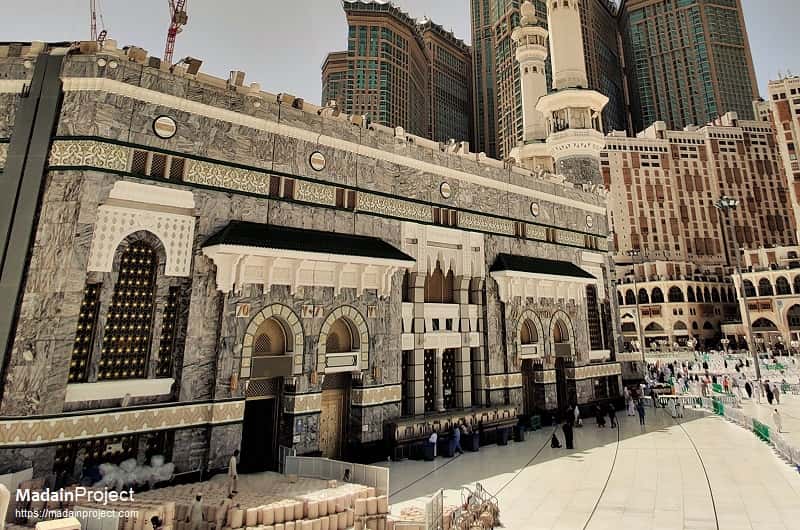
Bab Aiesha, Bab Asma, Bab Shabeikah and Bab Yarmouk (Gate no. 70, 71, 72 and 73)
There are four gates on the smaller facade facing the west direction. The first one, gate no. 70 is named after one of the wives of prophet Muhammad and daughter of first caliph of Islam Abu Bakr, Aiesha. Second, gate no. 71, is named after the elder daughter of Abu Bakr, Asma. The fourth one, gate no. 73, is named after; either the Battle of Yarmouk or the area of Yarmouk. These four gates belong to the second Saudi expansion of the Masjid al-Haram.
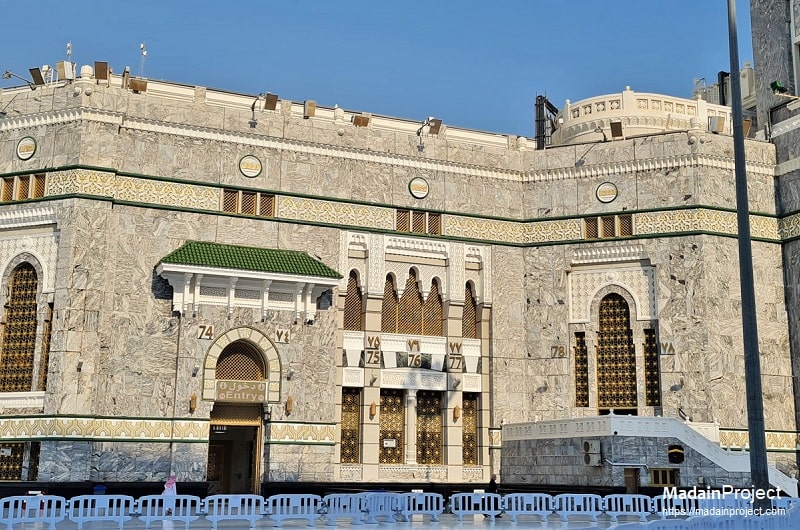
Bab Abu Bakr and Bab Malik Fahad Stairs(Gate no. 74 and 78)
The single portal gate no. 74 is named after the first caliph of Muslims Abu Bakr, who was also one of the closest companions of the Prophet Muhammad and father of Aiesha, the wife of of prophet Muhammad. Gate no. 78 provides stairs’ access to the upper floors of the great mosque and is named after the Saudi monarch of Arabia, King Fahad.
To be continued…
As we pass through yet another sequence of sacred entrances, the Masjid al-Haram reveals itself not only in architecture, but in meaning layer upon layer, gate after gate. In our next instalment, we continue charting these hallowed thresholds, unearthing the stories embedded in stone, space, and sanctity. The journey through the gates of the Haram is far from over.
SPONSORED

SPONSORED
