
Concern Coalition Breaks Silence on Walida: says
DSS cannot be a judge in a case directly involving her officer
By Sadiq Abdulfatah
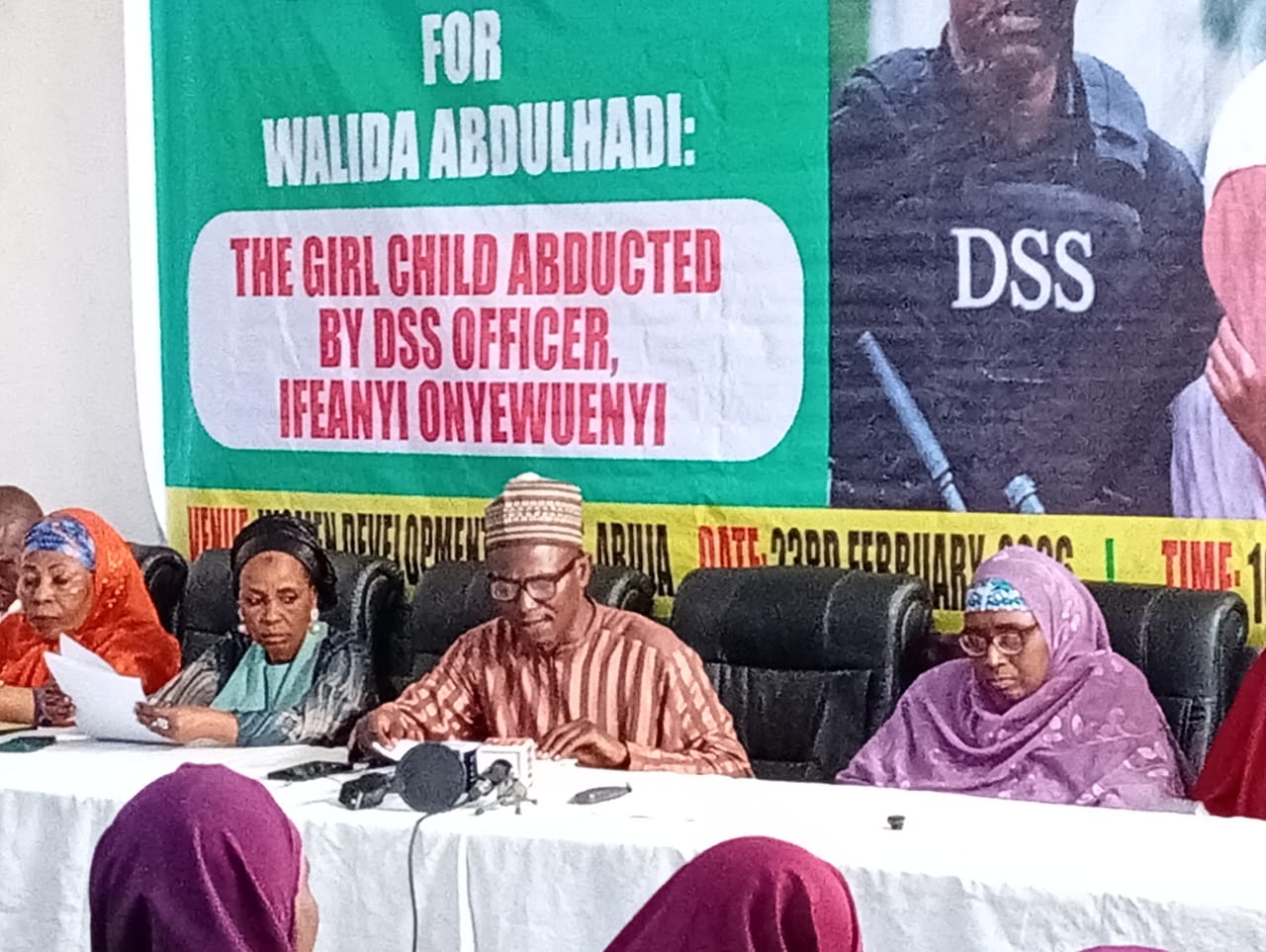
In a call for humanity, justice and constitutional order, a concern coalition of Muslim organisations, for Justice for Walida Abdulhadi, has raised an alarm on the current well-being of Walida, a 16 year old girl from Hadejia, Jigawa State, who was abducted from her parents’ home in 2023 and later traced to an officer of the Department of State Service (DSS),Ifeanyi onyewuenyi, also known as Ifeanyi Festus, stating that the issue has become a serious matter of public concern which demands a transparent, lawful and independent scrutiny.
Speaking at a world press conference, in Abuja, Ustaz Yunus Salahudeen, one of the coordinators for the Coalition for Justice for Walida Abdulhadi, explained that the disappearance of the young lady, for more than 2 years, had caused her family unimaginable distress, leading to her father conclusion that she was dead. Only to be later found alive in unstable mental condition in a residence in Abuja, where she was reportedly found but already, forcibly married, impregnated, given birth and also forced to change her religion, from Islam to Christianity.
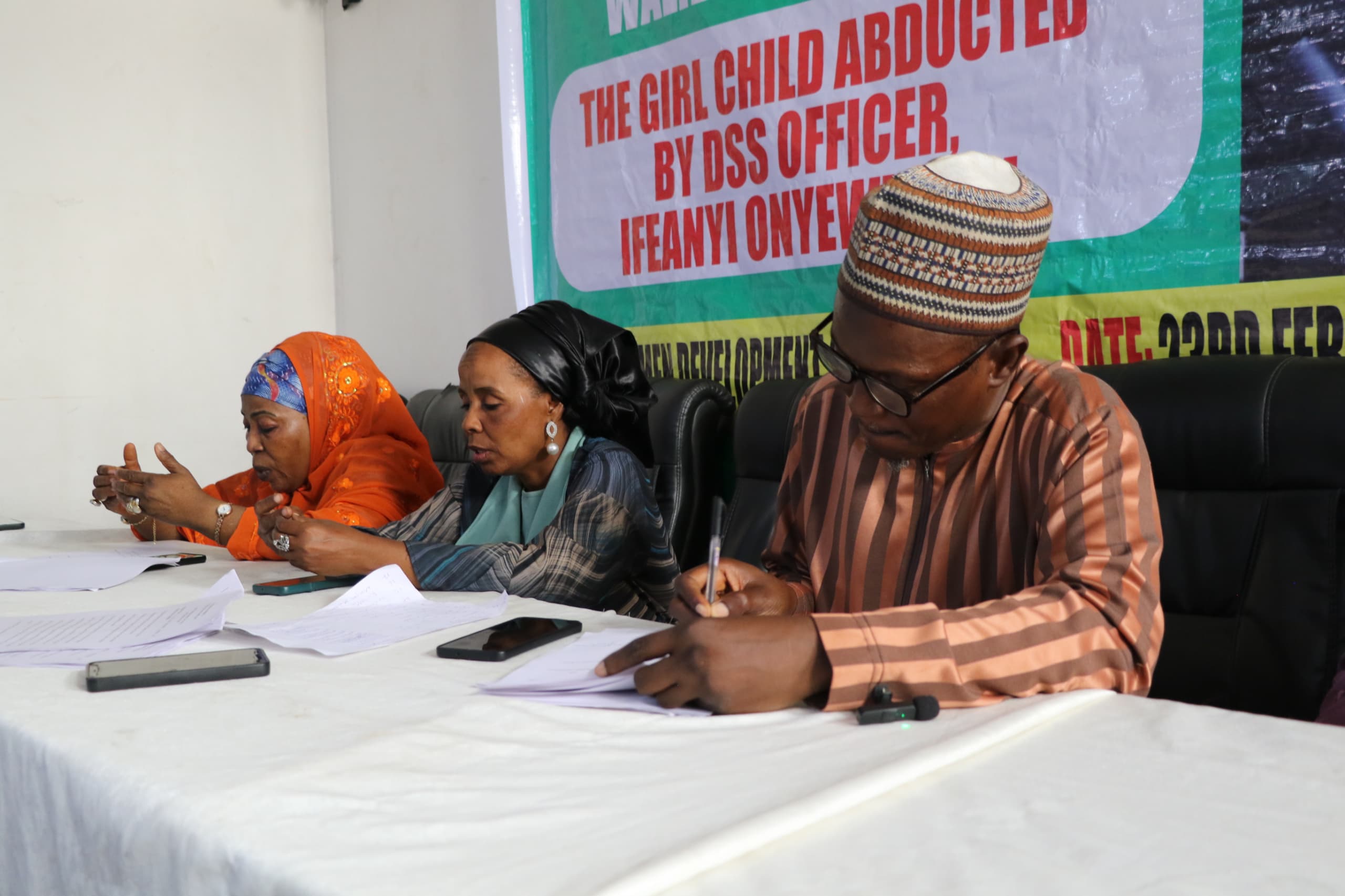
The coalition noted some red flags in her case that require clarity which includes: her movement across different locations, prolonged custodial arrangements, circumstances surrounding her pregnancy and childbirth, allegation suggesting possible coercion and the need to trace her first Trafficker to Jigawa and Abuja.
The collation, also raises concern for her not been granted access to unite with her family, rather still being held within the premises of the DSS headquarters, while the DSS seems covering up for its staff that commit such atrocity. The collation wants to understand why DSS will want to be a Judge in a case directly involving its Staff. It also seek to understand why NAPTIP was not included in the constituted committee that review and investigate the matter and why Maryam a lady reported to be involved in walida’s initial movement was not invited for clarification. It also asked, if it is constitutionally permitted for government agency to override a valid order of a court of competent jurisdiction, why it has been difficult to grant access of unification between a father and his minor daughter, and why a broad investigation by neutral authority is been resisted? Ustas Yunus on behalf of the collation, stated that all the above questions are not mere allegations, but legitimate questions arising from a situation that has deeply unsettled the public Conscience, humanity and all parents whose milk of kindness run in their breasts.
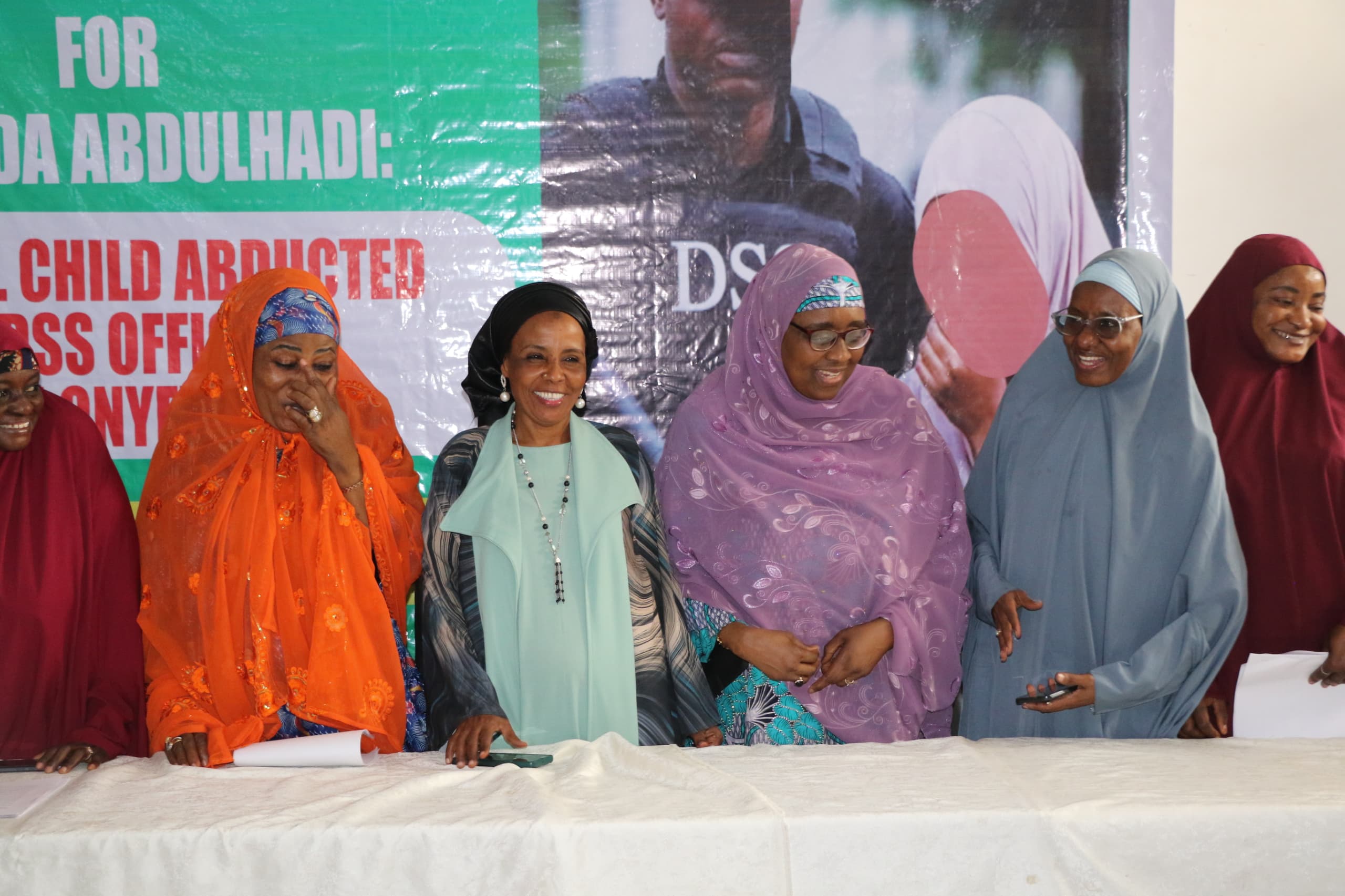
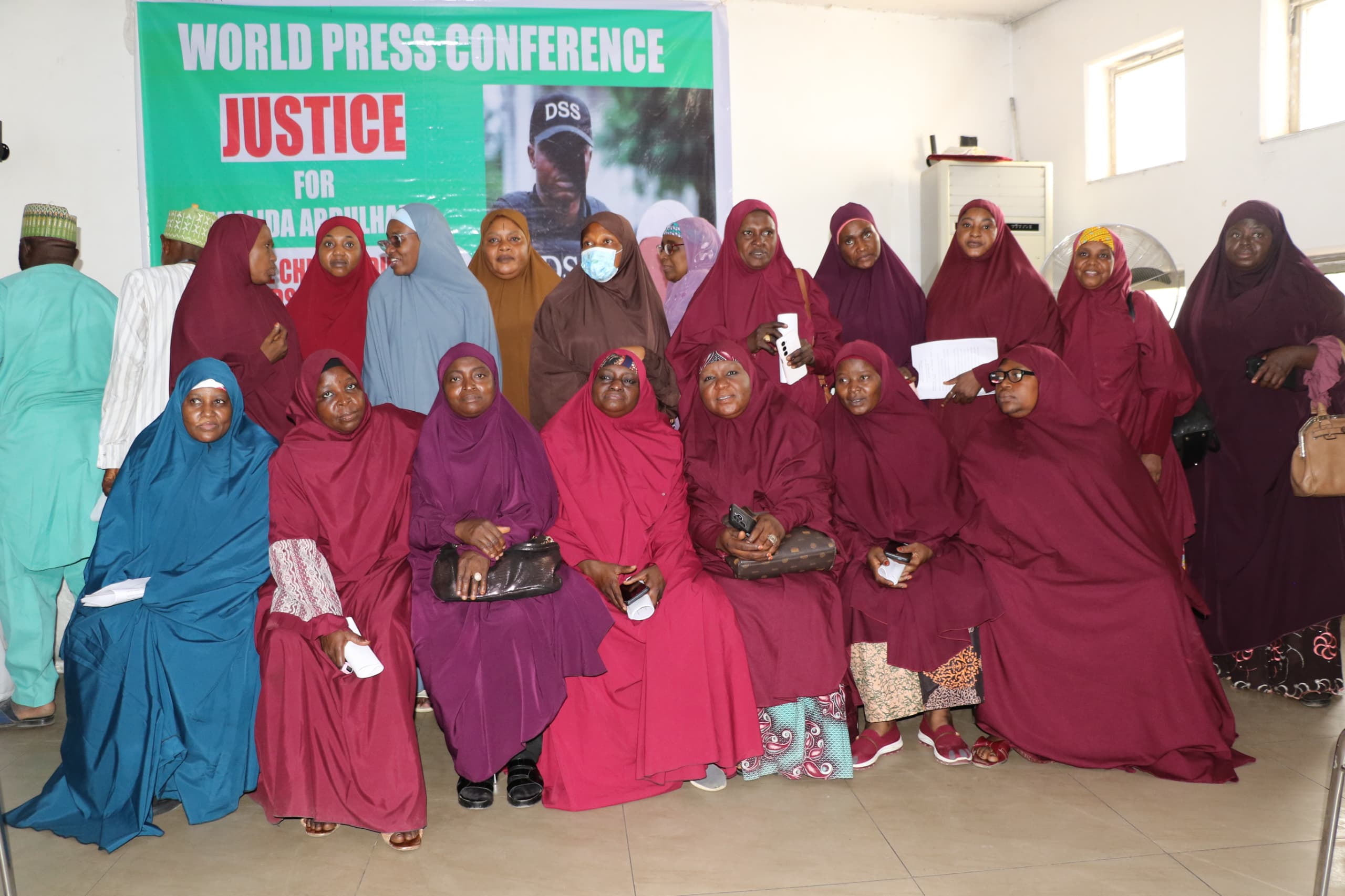
The coalition therefore urges all relevant authorities to fully comply with judicial directives, permit independent and transparent investigation, ensure lawful access between the minor and her family in accordance with court guidance, independently verify all documentary issues, including age, prioritize the welfare and dignity of the young girl and her child adding that until justice is served, the coalition will continue to partner with more organizations to get to the root cause of the case.
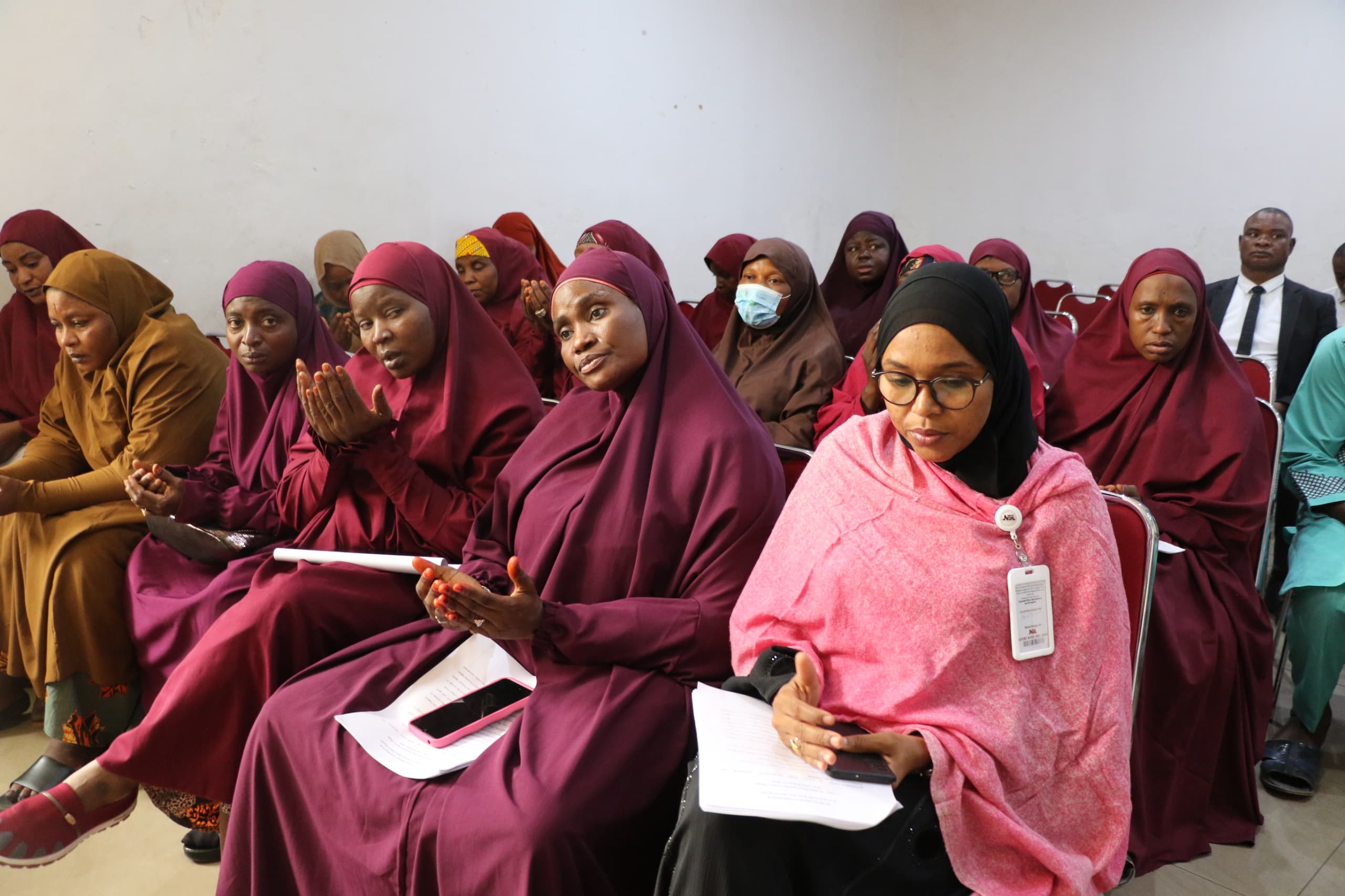
It concluded, “Let due process take its lawful course, let truth emerge through constitutional mechanisms, let justice be pursued without fear or favour, this matter is a test not of religion but of our collective commitment to Justice, Humanity, and the Rule of Law”.
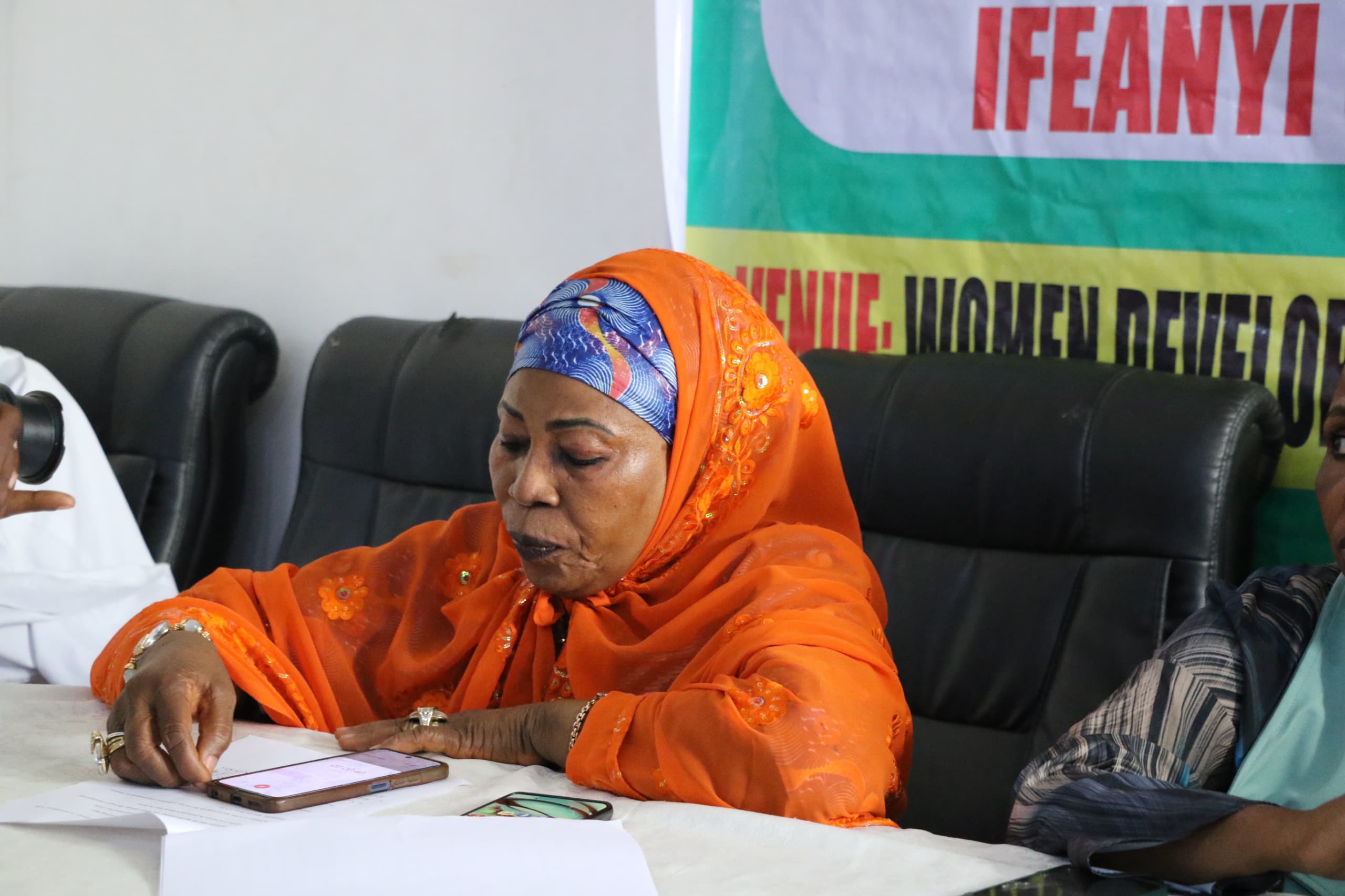
In a commentary at the press conference, a participant, Mr. Kenneth Chidi lambast the action of the DSS officer, saying if the man is found guilty to have abducted and forcibly marry the minor, he has committed a heinous crime, because: “Marriage without due process is not allowed in the Southeast. And as a man from southeast, I would not stand this crime committed by a fellow Igbo man, he should face the full wrath of law.”
Find below the full text of the press conference.
WORLD PRESS CONFERENCE
JUSTICE FOR WALIDA ABDULHADI!
Venue: Women Development Centre, Abuja
Date: 23rd February, 2026
INTRODUCTION: A CALL FOR HUMANITY, JUSTICE AN CONSTITUTIONAL ORDER
Distinguished Members of the Press,
Respected Leaders of Civil Society,
Representatives of Faith Communities, and Fellow Nigerians,
We address you today, on a matter that transcends religious identity and speaks directly to our shared humanity, our constitutional democracy, and our collective moral responsibility as a nation.
The issue before us concerns Walida Abdulhadi, a 16-year-old girl from Hadejia, Jigawa State, whose disappearance caused her family unimaginable distress for more than two years. Her father, overwhelmed by uncertainty and grief, reportedly performed funeral rites believing his daughter was no longer alive.
Subsequent developments have indicated, that she was allegedly found in the custody of an officer of the Department of State Services (DSS) within the Federal Capital Territory identified as Mr. Ifeanyi Onyewuenyi (also referred to in some reports as Ifeanyi Festus). These revelations have generated serious public concern and demand transparent, lawful, and independent scrutiny.
This is not a matter of religious rivalry. It is a matter of child protection, parental rights, institutional accountability, and respect for judicial authority.
BACKGROUND AND EMERGING CONCERNS
Reports available to us indicate that Walida left or was separated from her family in late 2023. It has been stated that she was found in a vulnerable mental condition. Where a minor is discovered under such circumstances, established legal and professional standards ordinarily require immediate notification of relevant authorities to facilitate tracing of guardians and ensure appropriate protection.
Instead, it is alleged that she remained within a private residence in Abuja for an extended period. During this time, reports suggest that she became pregnant and delivered a child. There are also claims that her father was later contacted and informed of a marriage ceremony and a change in religious affiliation while she was still legally a minor.
We stress that these matters remain allegations requiring independent verification. However, the procedural and institutional handling of this case has raised serious constitutional questions that cannot be ignored.
It has also been publicly reported that a competent court ordered the arrest of the DSS personnel identified as Mr. Ifeanyi Onyewuenyi (also known as Ifeanyi Festus), and directed that Walida be released to her parents. Months have reportedly passed without visible compliance with that directive.
A MATTER OF GRAVE CONCERN
Walida Abdulhadi is still being held within the premises of DSS headquarters an institution connected to the allegation as DSS cannot be a Judge in a case directly involving a Staff. This development is deeply troubling. Rather than facilitating reunification in accordance with reported judicial directives. This sequence creates the perception of a cover up exercise capable of influencing public opinion while judicial processes remain pending.
When an institution directly linked to allegations kept the prime suspect within its own premises, serious constitutional and ethical questions arise. Such an exercise risks appearing less like Security scrutiny and more like narrative management.
PERCEPTION OF NARRATIVE MANAGEMENT
The structure of the contents in some Media appears designed to establish specific conclusions particularly regarding age, religion, and voluntariness.
This Development Raises Fundamental Constitutional Questions:
- If court orders exist directing custody arrangements, can a media hype substitute for compliance with judicial directives?
- Can any government agency effectively override a subsisting court order by shaping public perception?
- Can an institution be heard on the merits of its position while alleged
Non-compliance with judicial directives remains unresolved
Why family access has been difficult? Why is NAPTIP not involved from the beginning of the case
- Most importantly, why not allow due process to take its full and lawful course?
These are constitutional concerns that extend beyond this particular case.
In a religiously sensitive country such as Nigeria, mishandling such a matter carries implications far beyond the immediate parties involved. Institutional decisions must be guided by caution, neutrality, and fidelity to the law not optics.
THE AGE QUESTION: A FUNDAMENTAL LEGAL ISSUE
Perhaps the most critical issue arising is the sudden presentation of Walida as being 22 years old to escape Justice is surprising. Earlier reports from other news outfits including by Premium Times, and consistent statements attributed to her father indicated that she was 16 at the time she allegedly left home. The distinction between 16 and 22 is not cosmetic it is legally decisive.
If she was 16, the matter squarely invokes child protection laws and heightened Legal safeguards.
If she is presented as 22, the case is reframed as one involving an adult capable of independent decision-making.
The apparent transformation of her age from 16 to 22 demands independent documentary verification through birth records, school records, or other lawful documentation. Age cannot be established through media declaration.
Any attempt, perceived or real, to alter the age narrative without transparent verification risks undermining public confidence in the process.
In the interest of transparency, the following questions require clear answers:
Was she provided independent legal counsel?
Was she granted unrestricted and private access to her family?
Was an independent psychological evaluation conducted outside institutional control?
Were existing court orders fully complied with ?
Was she clearly informed of her right to seek for Justice?
Without transparent safeguards, statements made while in state custody cannot automatically be treated as neutral expressions of free will. Public confidence depends not only on what is said, but on the conditions under which it is said.
RED FLAGS THAT REQUIRE INVESTIGATION
Walida’s narration, as reported in some Media, contains elements that ordinarily require careful and independent investigation. These include:
Movement across locations without clarity, extended custodial arrangements, Circumstances surrounding pregnancy and childbirth, Allegations suggesting possible coercion or vulnerability, Security tracing the first Trafficker to Jigawa and Abuja.
Such elements are not matters for public debate or media framing. They are matters for professional investigators and the Courts. Shifting the focus prematurely to her present “choice,” particularly in a religious context, risks reducing a potentially serious legal matter into a sectarian narrative.
That would be deeply unfortunate and dangerous.
QUESTIONS THAT REQUIRE CLEAR ANSWERS
In addition to the above, we respectfully raise the following broader Institutional Questions:
- Why was the National Agency for the Prohibition of Trafficking in Persons (NAPTIP) not included in the committee constituted to review the matter, given its statutory responsibility in cases involving minors in particular and trafficking in general?
- Was Maryam, whom Walida reportedly mentioned as being involved in her initial movement from home, formally invited to provide clarification?
- Can an institution fairly serve as investigator, defender, and final authority in a matter involving its own officer?
- Is it constitutionally permissible for any government agency to substitute or override a valid order of a court of competent jurisdiction?
- Can a party properly seek equitable consideration while alleged non-compliance with a subsisting court directive remains unresolved?
- Why has there reportedly been difficulty in granting unhindered access between a father and his minor daughter?
- Why were there claims that the young girl was cautioned that choosing to reunite with her family might result in separation from her newborn child?
- Why does there appear to be resistance to broad, independent, and in-depth
investigation by neutral authorities?
These are not accusations; they are legitimate questions arising from a situation that has deeply unsettled the public conscience
SPONSORED

SPONSORED
