
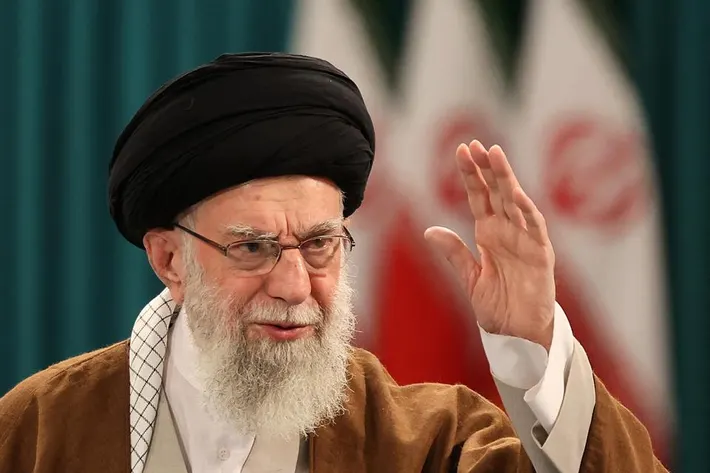
BREAKING NEWS: Iran’s Supreme Leader Killed in U.S-Israeli Strikes, Region on Edge
Ali Khamenei, Iran’s supreme leader since 1989 and the country’s highest authority, has died following U.S.–Israeli strikes, according to Iranian state media.
The development follows coordinated U.S. and Israeli airstrikes on Iranian military sites. Washington and Tel Aviv said the operation targeted strategic infrastructure.
U.S. President Donald Trump and Israeli officials acknowledged the strikes. Iranian authorities declared national mourning.
By Abdullahi Yusuf
Iran’s Supreme Leader Ayatollah Ali Khamenei, who led the Islamic Republic for nearly four decades, has died, Iranian state media confirmed Sunday, amplifying fears of a wider regional conflict after coordinated U.S. and Israeli military strikes.
The announcement was carried by state television and later confirmed in reports by The Guardian and Reuters. The 86-year-old was killed following a major wave of attacks by the United States and Israel that targeted Tehran and other sites earlier in the weekend. The broadcaster declared a 40-day period of national mourning and seven days of public holidays, and described Khamenei as having been killed “while performing his assigned duties.”
President Donald Trump confirmed the strikes and said the operation had eliminated Iran’s top leader, calling it a “major blow” to Tehran’s leadership and nuclear infrastructure. The death was also indicated by Israeli officials before Iran’s official announcement.
Khamenei rose to power in 1989 after the death of Ayatollah Ruhollah Khomeini and became the ultimate authority in Iran’s political, military and religious hierarchy. Under his guidance, the Islamic Republic pursued a confrontational foreign policy, expanded ties with allied armed groups across the Middle East, and defied Western pressure over its nuclear program.
Analysts say the leadership vacuum could reshape Iran’s foreign and domestic trajectory. The country’s constitution gives the clerical Assembly of Experts the responsibility to choose a successor, and no immediate replacement has been named.
The strikes and subsequent confirmation of Khamenei’s death have heightened regional tensions, triggering retaliatory missile and drone attacks by Iran against U.S. forces and drawing calls from global leaders for restraint. Governments in the Gulf and Europe have expressed alarm over the escalation, urging a return to diplomacy to prevent a wider war.
The United Nations also voiced concern. Secretary-General António Guterres told an emergency Security Council session that the escalation posed grave risks to civilians and that all sides must seek de-escalation through diplomatic channels.
Iran’s death sets off a period of uncertainty for the Islamic Republic as both regional partners and rivals assess the implications for Middle East stability and international relations.
Under Iran’s constitution, the 88-member Assembly of Experts is responsible for appointing the country’s next supreme leader.
Resul Serdar Atas, reporting from Doha, Qatar, said two potential succession scenarios are being discussed among analysts and officials.
One possibility is that Khamenei may have provided a shortlist of four names before his death, which the Assembly could consider during deliberations.
Another scenario under discussion involves the formation of a temporary leadership council of four figures to oversee state affairs during an interim period until a permanent successor is formally chosen.
No official confirmation has been issued by Iranian authorities regarding a preferred candidate or interim arrangement.
SPONSORED

SPONSORED
