
Trump’s Iran gamble may be backfiring
Analyst Vali Nasr argues war has strengthened Tehran’s resolve and rallied public support instead of weakening the regime
By Abdullahi Yusuf
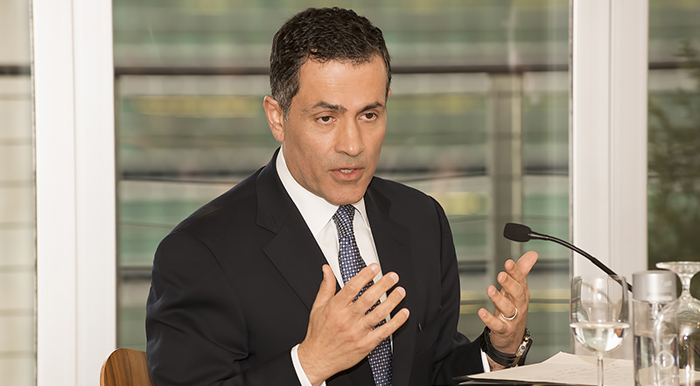
President Donald Trump appears to have miscalculated in expecting military pressure to quickly bend Iran to Washington’s will or trigger a popular uprising against the Islamic Republic, according to Vali Nasr, the prominent Iranian-American scholar.
Nasr, who is also a professor and Iran expert, said the war has instead hardened Tehran’s resolve and pushed many Iranians, including regime critics, toward rallying around the country.
In an interview with Bloomberg, Nasr said Trump had hoped for a short, decisive war that would produce a major strategic win, eliminate Iran’s supreme leader, strike key sites, and open the way for a new leadership in Tehran.
But instead, he said, the conflict has become “far longer, far messier” and has imposed costs not only on Iran but also on the United States, including damage to its regional position and wider disruption to energy markets and the global economy.
Nasr’s central argument is that Iran is fighting this war not as a contest of superior firepower, but as a test of endurance. Tehran, he said, had already calculated that it would suffer heavily against two militaries with overwhelming air power. Yet its leaders believe the real question is not who has the bigger bomb, but who has the higher threshold of pain.
“They think the United States and Israel can dash a lot faster, but they’re not really long-distance runners,” Nasr said, explaining why Iran believes it can absorb punishment for longer and still shape the outcome.
That belief, he suggested, now underpins Tehran’s refusal to seek a quick exit, even after severe losses. Iran, he said, has already “suffered a lot” and is “prepared to suffer more,” because it wants to come out of the war having changed Washington’s calculations rather than simply restoring the old status quo.
According to Nasr, Iran’s war aims go beyond survival. He said Tehran sees this as a struggle that must end the cycle in which the United States and Israel believe they can strike Iran repeatedly and at will.
In his reading, Iranian leaders want to impose such a high cost that Washington loses its appetite for another war. They also want any eventual settlement to include sanctions relief, an end to maximum pressure, and a broader change in the regional order that has kept Iran strategically boxed in for decades.
Message to Gulf states
Nasr said Iranian officials also want Gulf states to see that U.S. military bases on their soil do not protect them, but instead expose them to war.
One of the most significant parts of Nasr’s assessment was his explanation for why the Iranian public has not risen against the regime, despite the unrest seen in January and the deep frustration that still exists over sanctions, repression, and economic hardship.
Nasr said the anger that fueled those protests has not disappeared. “Nobody wants to live under a theocracy or economic isolation,” he said.
But he argued that the war had changed the political equation inside Iran. The old binary, he said, of being for or against the regime has now been complicated by a more immediate question: are you for war or against war, and are you prepared to risk the destruction of Iran itself?
That shift, he said, explains why even anti-regime Iranians are turning up at rallies and supporting the country’s defense.
“At this particular moment is not the time to have our internal fight over politics, but to actually support the country,” he said.
For that reason, Nasr argued, the uprising that both the United States and Israel appear to have counted on “is not happening and it won’t happen” until the war’s dust settles. For now, he said, the Iranian public is not the decisive factor Washington hoped it would be.
Nasr also said the war is transforming Iran’s leadership in ways opposite to what Trump may have intended. Rather than causing fragmentation at the top, he said, the conflict has accelerated the rise of a younger generation of Revolutionary Guard commanders and strengthened the standing of Mojtaba Khamenei, the new supreme leader and son of the slain ayatollah.
For Trump, the options now appear narrower than they may have looked at the start of the war. Nasr said the U.S. president may want the war to end soon, but “it’s not that simple” because Iran is not ready to stop without being offered something much bigger.
Nasr argued that years of U.S. policy helped produce the harder Iran Washington now faces. He said Trump’s withdrawal from the nuclear agreement and the reimposition of maximum pressure did not moderate the regime.
He said Trump misread both the Iranian state and Iranian society. He expected pressure to fracture the leadership and ignite revolt. Instead, the war has strengthened nationalist feeling, rallied even many critics around the country’s defense, and given Tehran a narrative of endurance that draws on decades of isolation, sacrifice, and resistance.
For a global audience trying to understand why Iran has not broken, Nasr’s answer is blunt: the war has made this about more than the regime. It has made it, for many Iranians, about the country itself. And that, he suggests, is where Trump’s gamble has so far gone wrong.
SPONSORED

SPONSORED
