
The 5 pillars of Islam: The Fundamentals of a Muslim’s Life
culled from Islamic Information centre
Introduction
Every sound structure must have a solid foundation in order to remain strong. Islam’s foundation is the 5 pillars it was built upon, forming the basis of Islamic teachings as taught by Prophet Muhammad (peace be upon him), wherein he said:
Islam is built upon 5 pillars and These five pillars are a cornerstone of a Muslim’s life
- Declaration of Faith SHAHADAH

The declaration of faith is bearing witness (testifying) that there is no deity worthy of worship but Allah (God), and that Muhammad (peace be upon him) is His Servant and Messenger. It must be based on a sincere and firm belief in the heart, as well as being uttered verbally.
The first part of the declaration implies that:
- No person, object, or being has the right to be worshipped except Allah alone. The Arabic name “Allah” refers to The One True God of all mankind and everything that exists.
- Allah alone is the Creator and Sustainer of all that exists, and He has power over all things.
- Allah has no partner, equal, father, mother, or son.
The second part of the declaration is that Muhammad (peace be upon him) is Allah’s Servant and Final Messenger. He is the final Prophet in a long chain of Prophets sent to call the people to the obedience and worship of Allah alone. Some of these prophets include Adam, Noah, Abraham, Ishmael, Isaac, Jacob, Joseph, Moses, David, Solomon, and Jesus (peace be upon them all).
The prophet Muhammad (peace be upon him) was sent with the Qur’an (final revelation) in order to teach the people Allah’s message and serve as an example for us to follow.
Some benefits of the declaration of faith.
- Complete surrender to the will of Allah and becoming His true servant and subject.
- Produce a high degree of self-respect and confidence while also remaining humble and modest
- Produces strong determination, patience and perseverance, making aa person brave and courageous as well as dutiful and upright
- Makes a person obey and observe Allah’s command
- The Prayer SALAH
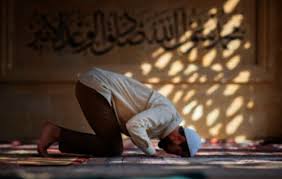
The five daily prayers form the most important ritual of worship in a Muslim’s life: one each at dawn, noon, mid-afternoon, sunset, and nightfall. Prophet Muhammad (peace be upon him) said, “Prayer is a pillar of the religion (Islam). Whoever establishes it, establishes religion; and whoever destroys it (e.g., neglects it), destroys religion.”
Prayer establishes a personal and spiritual connection between a Muslim and his Creator, based on faith, love, hope, and reverence. When prayer is performed correctly with complete concentration, humility, and sincerity, it will have an enduring effect on the person, filling his heart with contentment, peace, and closeness with Allah.
“Indeed. I am Allah; there is none worthy of worship but I, so worship me and offer the prayers for My remembrance.” Surah Taa-Haa 20:14
Prayer is the center of a Muslim’s life and the best way to achieve submission to Allah. It can be offered almost anywhere clean, such as in fields, offices, factories or universities, and takes only a few minutes to perform. It consists of recitation from the Holy Qur’an, supplicating to and praising Allah, with various body postures such as standing, bowing, prostrating, and sitting. Through prayers, the Muslim remembers the greatness of his Creator and supplicates to Him for his needs and wishes.
Repeatedly humbling oneself before Allah prevents a person from falling into sin and is a type of purification for one’s soul, as mentioned in the Quran: “Verily, the prayer prevents one from shameful and evil deeds.” Surah Al-Ankaboot 29:45. Prayer is also an opportunity for repentance and seeking forgiveness from Allah.
The Messenger of Allah (peace be upon him) asked his companions, “If one of you had a river by his door in which he bathed five times a day, would any filth remain on him?” They replied, “No.” Then the Prophet added, “Likewise, Allah wipes away sins with five daily prayers.”
- The Prescribed Charity ZAKAH

All things belong to Allah, including wealth, which is considered as a trust. The prescribed charity (zakah) is an obligation on every Muslim who meets certain criteria (e.g., has attained maturity, is sane, and has wealth above a certain threshold). A small portion of wealth (includes 2.5% and may include other assets) which must be paid annually to those who are eligible, as prescribed in the Qur’an (e.g. the poor and needy)
The Prophet (peace be upon him) said, “Allah has made zakah obligatory simply to purify your remaining wealth.”
The meaning of the word ‘zakah’ is both purification and growth. This is similar to the pruning of plants, whereby regular trimming provides balance and encourages growth. By fulfilling this obligation, Muslims purify their remaining wealth, as well as ensure both financial and spiritual growth.
Some benefits of zakah
- Purifies one from selfishness, arrogance, and a greedy heart.
- Trains one to be sympathetic and compassionate towards the poor and needy.
- Reminds one of the blessing of Allah and encourages one to be grateful
- Bridges the gap between different socio-economic classes and groups and is a form of social security.
- Reduce poverty and ensure equality by making it obligatory upon the rich to share some of their wealth with the less fortunate “…so that this (wealth) may not circulate solely among the rich from among you.” Surah Al-Hashr 59:7
A person may also give as much as they please as additional voluntary charity. “Those who establish prayer (salah) and give the charity (zakah) …. These are the ones who will prosper.” Surah Luqman 31:4-5
- Fasting SAWM

“Fasting is prescribed for you as it was prescribed for those before you, that you may attain piety.” Surah Al-Baqara 2:183
As with any act of worship, fasting requires obedience and submission to Allah’s command through the highest degree of commitment and sincerity. Every year during the Month of Ramadan (the 9th month of the lunar calendar), Muslims fast from dawn until sunset, abstaining from 3 key human needs—food, drink, and sexual relations. One should also abstain from all sinful actions.
Fasting during Ramadan is obligatory for every physically and mentally capable adult Muslim. Children, the sick, the mentally unfit, the elderly, menstruating women, and travelers are exempt.
Some benefits of fasting:
- Promotes spiritual self-purification and growth.
- Scientifically proven health benefits.
- Sympathy for those less fortunate, prompting more charity.
- A means of learning self-restraint and patience.
- Purifies the soul and helps it acquire the habit of obeying Allah by restraining desires and promoting steadfastness.
- Creates an increased feeling of unity and collective identity amongst those fasting.
- Creates an increased awareness about the state of affairs across the globe and the hardship endured.
- Forgiveness of sins. The Prophet (peace be upon him) said, “He who fasts Ramadan with faith and hoping for reward (from Allah), then his past sins are forgiven.”
- Pilgrimage HAJJ
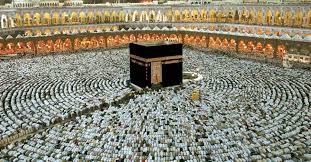
“And Hajj (pilgrimage to Makkah) to the House (Ka’bah) is a duty that mankind owes to Allah for those who can afford the expenses (for one’s transportation, provision, and residence).” Surah Aal-Imran 3:97
Pilgrimage to the Holy City of Makkah (in Saudi Arabia) and other sacred sites must be performed at least once in a person’s life, if they are physically and financially capable.
Performing the pilgrimage is a temporary suspension of all worldly activities and is a time for one to reflect, worship, seek the forgiveness of Allah, and attain His closeness.
The pilgrimage is an annual event in the 12th month of the lunar calendar (Dhul-Hijjah in Arabic), which unifies people of every colour race, status, and age as they join in worship of the One True God. All pilgrims wear simple and similar clothing, which strips away distinctions of class and culture so that all stand equal before Allah.
Prophet Muhammad (peace be upon him) said, “Whoever performs hajj and does not utter any obscenity or commit sin, will come back just like the day his mother bore him (i.e., pure of sins).”
Hajj involves following in the footsteps of Prophet Abraham, as taught to us by Prophet Muhammad (peace be upon them). This great act of worship consists of many components, including sacrificing animals, supplicating, visiting and praying at various sites, circling the Ka’bah, and walking between two mountains, as well as many other rituals, all of which are performed over a period of 6 continuous days.
Such an experience is life altering and humbles a person, making them more patient and thankful to Allah. Brotherhood is increased, as is the sense that all Muslims, regardless of their differences, are one nation.
Conclusion
The five pillars of Islam have been prescribed by Allah, and a Muslim is required to believe and act according to them. They are practical as well as easy, and the blessing and wisdom behind them are manifold. When put into perspective, they contribute to the well-being of both the individuals and the society, enhancing the character and manners of the individual and the society, enhancing the character and manners of the individual, and making both society and individuals accountable and closer to Allah.
These noble pillars of Islam are purely for the benefit of His creation, as Allah (Glory be to Him!) is free of all needs. These five pillars provide the solid structure and ‘training program’ for the betterment and success of all humanity.
SPONSORED

SPONSORED
