
Ramadan drives surge in Saudi Arabia’s water and energy demand
Seasonal peaks highlight the kingdom’s reliance on energy-intensive desalination and the growing role of renewables
By Abdullahi Yusuf
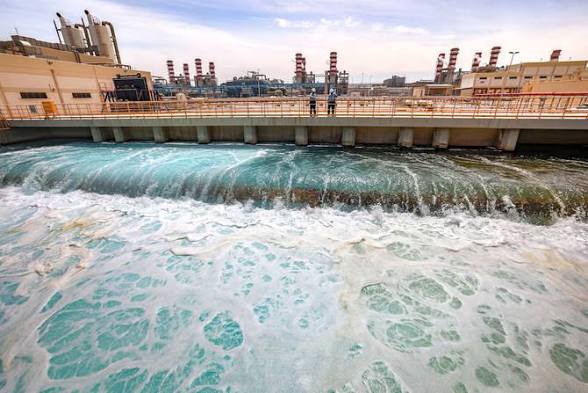
Water consumption in Saudi Arabia rises sharply during Ramadan as households, mosques, and restaurants increase usage around iftar and suhoor, placing added strain on the kingdom’s energy-intensive desalination systems.
The National Water Company reported that it plans to distribute roughly 11 million cubic meters of water daily across the country this Ramadan, up from 10 million cubic meters per day last year. Officials say they have prepared to maintain reliable service despite the surge in demand.
Experts say the seasonal spike underscores the strong link between water production and energy use in Saudi Arabia, where most drinking water is supplied through desalination.
“Ramadan intensifies both energy and water demand simultaneously,” Ahmed Al-Nashrey, an environmental and sustainability engineer at Saudi Aramco Base Oil Company Luberef, told Arab News. “When water use spikes, energy systems must also ramp up to supply and distribute that water.”
Demand patterns also shift during the holy month, he explained. “Peak daily water use often moves to late night and early morning hours, because people consume more water around suhoor and iftar. Overall daily consumption increases, particularly for household activities like cooking, cleaning, hydration, and for mosques boosting ablution facilities.”
The energy-intensive nature of desalination makes the spikes particularly challenging, highlighting the potential role of cleaner and more flexible energy sources. Al-Nashrey said renewable technologies could support growing water demand: “Solar power aligns with daytime peaks, especially for desalination and cooling, while energy storage, batteries or thermal storage can shift renewable output to evening hours when Ramadan demand peaks.”
Saudi Arabia’s solar capacity currently stands at around 11.9 gigawatts across 14 projects, according to the King Abdullah Petroleum Studies and Research Center. Hybrid systems combining conventional and renewable energy could provide greater flexibility for utilities navigating fluctuating loads.
Broader market trends also favour integration of renewables and storage. Battery costs have fallen sharply, with the International Energy Agency reporting an 8 percent decline in 2024 and average prices in 2025 estimated at roughly a third of 2020 levels.
“Solar-powered desalination particularly when paired with storage, offers a pathway to reduce costs, emissions, and grid pressure during seasonal peaks,” Al-Nashrey said.
Seasonal demand patterns pose operational challenges for desalination facilities, which often run near maximum capacity. “Desalination plants must operate longer or less efficiently during peak demand. Electric grids experience shifting peak loads, especially in the evenings when people use water, cook, and cool homes simultaneously,” Al-Nashrey added.
As Ramadan consumption patterns continue to grow, Saudi Arabia’s water-energy nexus illustrates both the operational pressures of seasonal demand and the potential for renewable solutions to ease strain on energy and water infrastructure.
SPONSORED

SPONSORED
