
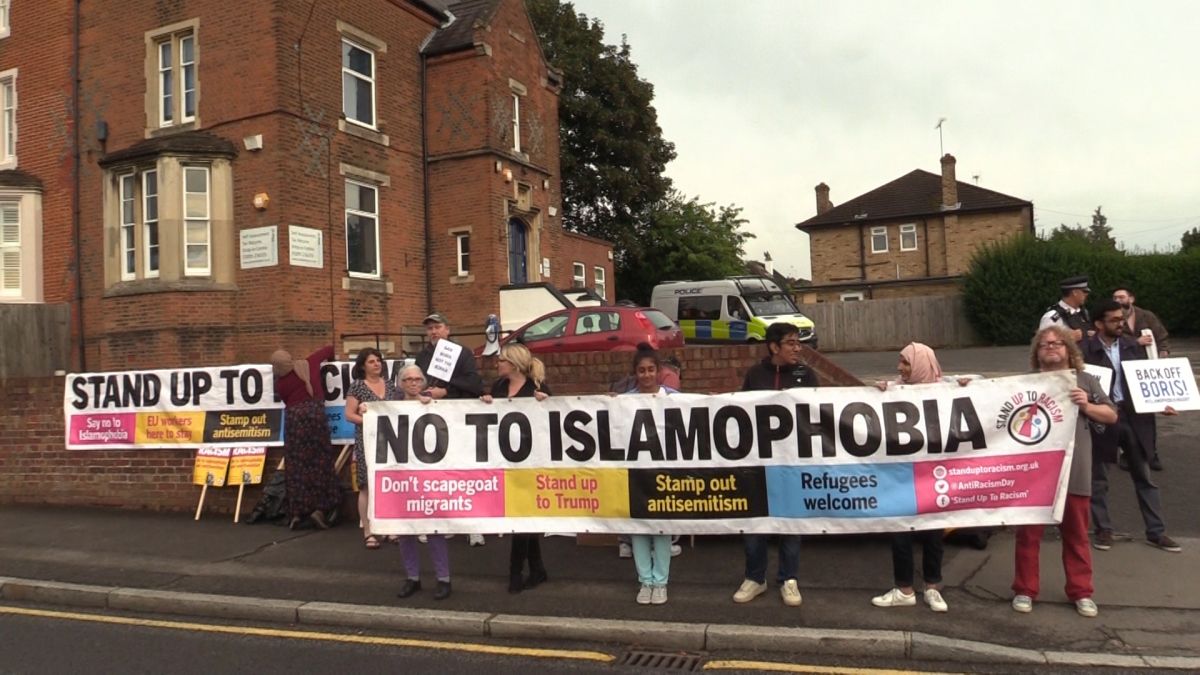
Islamophobia’s rising tide is putting British Muslims at risk
Attacks on mosques and a surge in hostile rhetoric raise questions about the climate facing Muslim communities in the UK
By Abdullahi Yusuf
When a man walks into a mosque during Ramadan carrying an axe, the country should pause. Such moments should not be brushed aside as isolated incidents. They should force a deeper examination of the climate that allowed such a threat to emerge in the first place.
That question resurfaced recently after an alarming incident at Manchester Central Mosque, where a man reportedly entered the premises during the holy month armed with weapons, including an axe. Worshippers had gathered for prayers.
Volunteers intervened swiftly and the situation did not escalate into violence. Yet the fact that it could have done so remains deeply unsettling.
Only days later, another security incident was reported at a Muslim community centre in Worcester. Once again, a space intended for community gathering became the focus of concern.
Taken individually, such events might be dismissed as anomalies. Viewed together, however, they appear to reflect a broader atmosphere that many British Muslims say has grown increasingly hostile.
A climate shaped by rhetoric
Public language matters. The tone adopted by political leaders and media commentators often shapes the boundaries of acceptable public discourse.
In recent years, critics argue that inflammatory rhetoric about Muslims and immigration has become more common in political debate and sections of the media. They warn that such narratives risk normalising prejudice and legitimising hostility toward Muslim communities.
Supporters of this view say that repeated negative framing of Muslims in public debate contributes to an environment where suspicion and discrimination can flourish.
The concern is not simply about language itself, but about the social consequences that language can create.
The Britain many recognise
For many observers, the reality of modern Britain stands in sharp contrast to the divisive narratives sometimes presented in national debates.
Across the country, Muslims form part of the everyday fabric of society. They work in hospitals, teach in schools, run businesses on high streets and volunteer in charities and community organisations.
Cities such as Bradford illustrate this history of coexistence. The northern city is often described as one of Britain’s most diverse urban centres, where communities of different ethnic and religious backgrounds have lived and worked alongside one another for decades.
The story of migration and contribution stretches back generations. Many families arrived to work in factories and foundries that powered Britain’s industrial economy. Their labour helped shape the country’s industrial cities and their communities have since become integral to local life.
Britain’s cultural landscape has also been shaped by Muslim contributions in visible ways. Olympic champion Mo Farah is widely celebrated as one of the country’s greatest athletes. Television personality Nadiya Hussain became a household name after winning The Great British Bake Off.
Even the nation’s culinary identity reflects this history of exchange. Curry, widely considered one of Britain’s favourite foods, became popular through restaurants opened by migrants, many of them from Bangladeshi Muslim backgrounds who settled in the UK after the Second World War.
The hostility many report
Despite these realities, many Muslims say they increasingly encounter hostility in everyday life.
Much of this hostility now plays out online. Public figures and community representatives frequently report receiving large volumes of abusive messages and racist commentary on social media platforms.
The scale of the hostility has become a growing concern for researchers and campaigners monitoring hate speech and discrimination.
Critics argue that such rhetoric feeds a wider narrative in which Muslims are blamed for broader social anxieties, from immigration pressures to economic uncertainty.
This process of scapegoating, they warn, risks entrenching suspicion and deepening divisions.
A longstanding issue
Discrimination against British Muslims is not new. Studies have long highlighted disparities in areas such as employment, housing and representation.
However, many observers believe the tone of public discourse has hardened in recent years.
The concern is that repeated negative portrayals can gradually normalise prejudice, creating what some describe as a “hostile environment” for Muslim communities.
When hostility becomes routine, critics argue, it becomes easier for more serious threats to emerge.
Drawing a line
The recent incidents involving places of worship have sharpened the urgency of the debate.
A mosque is a place of prayer and reflection. When worshippers feel unsafe in such spaces, the issue moves beyond politics and into questions about the country’s social fabric.
For many commentators, the challenge now facing Britain is whether it can confront rising hostility while preserving the pluralism that has long defined its society.
Britain’s modern identity has been built on communities living side by side, contributing to shared national life.
The question raised by recent events is whether that spirit can withstand the pressures of increasingly polarised public debate.
For those who believe in that tradition of coexistence, the answer must be yes.
SPONSORED

SPONSORED
