
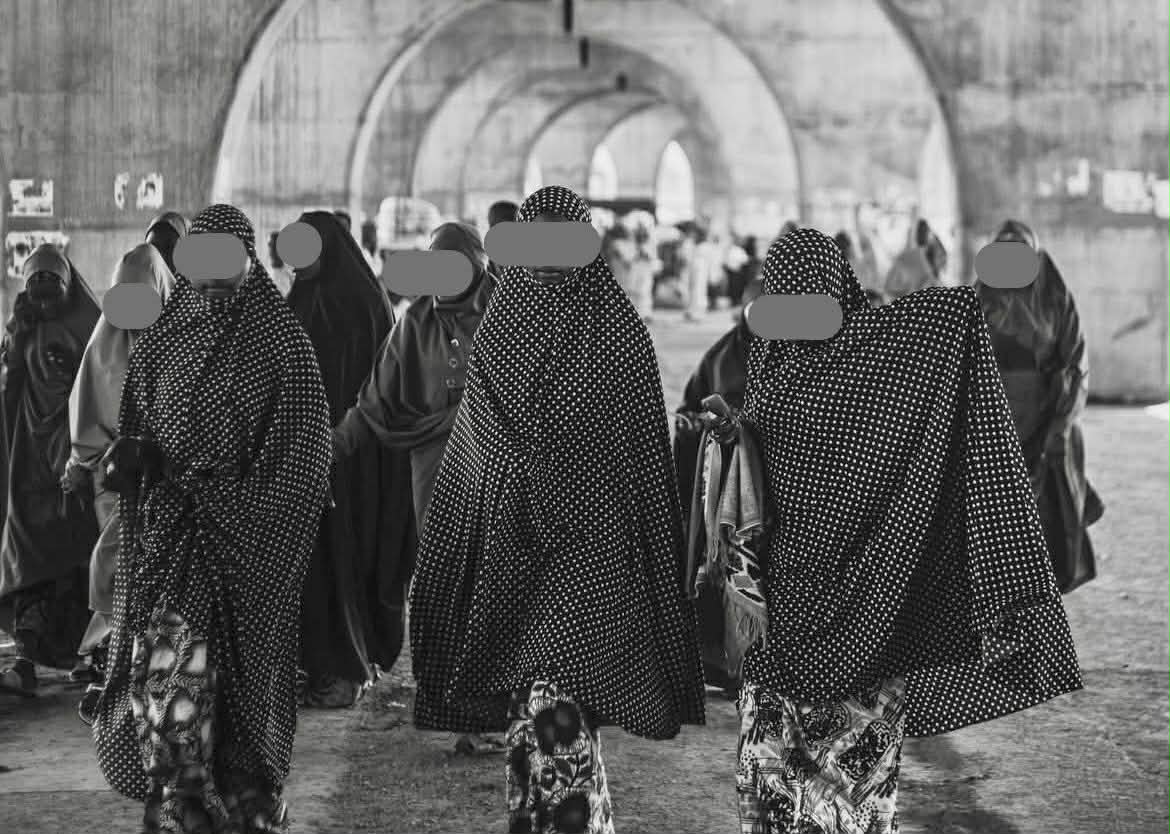
HIJAB: A Reflection of Devotion and Dignity
Hijab symbolizes a woman’s autonomy and control over her body, challenging societal norms that often objectify women.
By Dr Adebayo Tajudeen
Understanding the directives from the Qur’an regarding the hijab and the differentiation between hijab and khimar is crucial in grasping its significance in Islam. These garments, including the hijab, jilbab, khimar, abaya, and nigab, serve more than a cultural or traditional role; they are expressions of faith, modesty, and identity for Muslim women.
This article will guide you through the meaning and significance of hijab in Islam, shedding light on the Quranic verses and interpretations that advocate for this practice.
The article also presents a comprehensive narrative that distinguishes hijab as a symbol of faith, modesty, and to foster a deeper appreciation inherent in the Islamic way of life, underpinned by teachings from the Qur’an on the subject.
The importance of hijab extends beyond mere piece of clothing. It embodies the principles of modesty and respect in the Islamic faith. It stands as a symbol of faith and a testament to a Muslim woman’s commitment to her beliefs.
Hijab intertwines the threads of modesty, identity, spirituality, reflecting a deep-rooted aspect of Islamic dress code and harmonizes devotion with dignity. The term
“khimar,” on the other hand, refers specifically to a headscarf that covers the head, neck, and bosom. The Qur’an instructs the ends of the khimar to be drawn over the chest, ensuring a modest appearance.
The term hijab was originally used to denote a partition or a curtain. The practice of veiling did not originate with the advent of Islam. Statuettes depicting veiled priestesses date back as far as 2500 BC, indicating that elite women in ancient Mesopotamia and in the Byzantine, Greek, and Persian empires wore the veil as a sign of respectability and high status. Veiling gradually spread to upper-class Arab women, and eventually, it became widespread among Muslim women. Under Ottoman rule, veiling of Arab Muslim women became especially pervasive as a mark of rank and exclusive lifestyle.
However, for Muslims the concept of hijab is deeply rooted in the teachings of the Quran and the practices of Prophet Muhammad (peace be upon him), who advocated for the protection of women’s honour and their modesty in society.
In Islamic teachings, it acts as a visual, physical, and ethical barrier that symbolizes a Muslim woman’s faith and commitment to her religion. This practice has evolved over time and taken on different forms in various Muslim-majority countries, but the underlying principles of modesty and dignity remain consistent.
By wearing hijab, Muslim women signify their devotion to faith and their desire to be recognized for their values rather than their physical appearance. This aligns with the Quranic verse which states, “O Prophet, tell your wives and your daughters and the women of the believers to bring down over themselves [part] of their outer garments.
That is more suitable that they will be known and not be abused” (Qur’an 33:59). This directive from the Qur’an highlights the significance of hijab as a means to achieve modesty and respect in society, ensuring that women are recognized for their morals and faith.
The Qur’an emphasizes modesty for both men and women through verses that encourage lowering the gaze and guarding one’s modesty. Surah an-Nur (24:30-31) provides clear guidance for both believing men and believing women to act and dress modestly, highlighting the importance of drawing veils over their bosoms as a sign of modesty. Surah 33:59 further advises Muslim women to lengthen their garments, a directive aimed at ensuring their recognition and protection in society.
A prevalent myth is that hijab is forced upon women, particularly in Muslim-majority countries. However, true Islam does not advocate the forced wearing of the hijab.
That does not represent the ethos of Islam. Rather, Hijab is a part of one’s personal faith and not a definitive marker of identity. It is also a beautiful expression of faith and a testament to women’s roles in society beyond their physical appearance.
Often, the hijab is mistakenly associated with extremism. This stereotype is harmful and inaccurate. Extremism and radicalism are not exclusive to any one religion or culture. Some argue that the hijab is not modern or that it opposes feminism. On the contrary, the hijab can be a symbol of feminism, as it represents a woman’s right to choose how she expresses her faith and identity. Similarly, the assumption that all hijab-wearing women are conservative or have homogeneous views is incorrect. Women who wear the hijab have diverse perspectives and lifestyles.
In today’s world, the hijab is a profound symbol of a Muslim woman’s faith and her commitment to modesty and a conscious choice to follow a path of modesty prescribed by the Qur’an. Hijab is fundamentally a reminder to the wearer of her commitments to her beliefs. It is a physical manifestation of a spiritual commitment to God, encouraging modesty in behaviour and interactions with others. This commitment is seen as a path to spiritual and moral development, where the focus shifts from external appearances to internal qualities and virtues.
In conclusion, the hijab is more than just a veil. It is a complex and multifaceted symbol deeply woven into the fabric of Islamic faith, cultural identity, and personal empowerment. It stands as a testament to the resilience and strength of Muslim women who choose to embrace it, despite varying societal pressures and misconceptions.
Hijab underlines the essential teachings of Islam regarding dignity and modesty while celebrating the autonomy of Muslim women in expressing their devotion and identity through this choice. It stands as a testament to the interweaving of tradition, spirituality, and individuality within the Islamic faith, as exemplified by both the Quranic verses and the practices of the Prophet Muhammad (peace be upon him which advocate for modesty and respect.
Moreover, the hijab symbolizes a woman’s autonomy and control over her body, challenging societal norms that often objectify women. It empowers her to define how she wants to be seen, where her value is not judged by her physical attributes but by her character and actions. Hijab is a tool of empowerment rather than oppression.
SPONSORED

SPONSORED
