

Gbajabiamila, Aliu, Zulum, Bello, Ganduje, Belgore, Shagaya, Mustapha and others patronise Imam Olaofe’s book
Launched Entrepreneurship in Islam: Balancing Profit and Purpose at high-profile event in Abuja
By Abdullahi Yusuf
Nigeria’s political, business and religious elites converged in Abuja on Saturday as Chief of Staff to the President, Rt. Hon. Femi Gbajabiamila, former Kano State Governor Dr. Abdullahi Umar Ganduje, energy magnate Engr. Abdulkabir Adisa Aliu, representative of Borno State governor, Hon (Dr) Maina Yaumi, and several other prominent figures gathered for the public presentation of a new book by Islamic scholar Professor Musa Adeyemi Olaofe, underscoring growing interest in faith-based approaches to entrepreneurship and economic self-reliance.

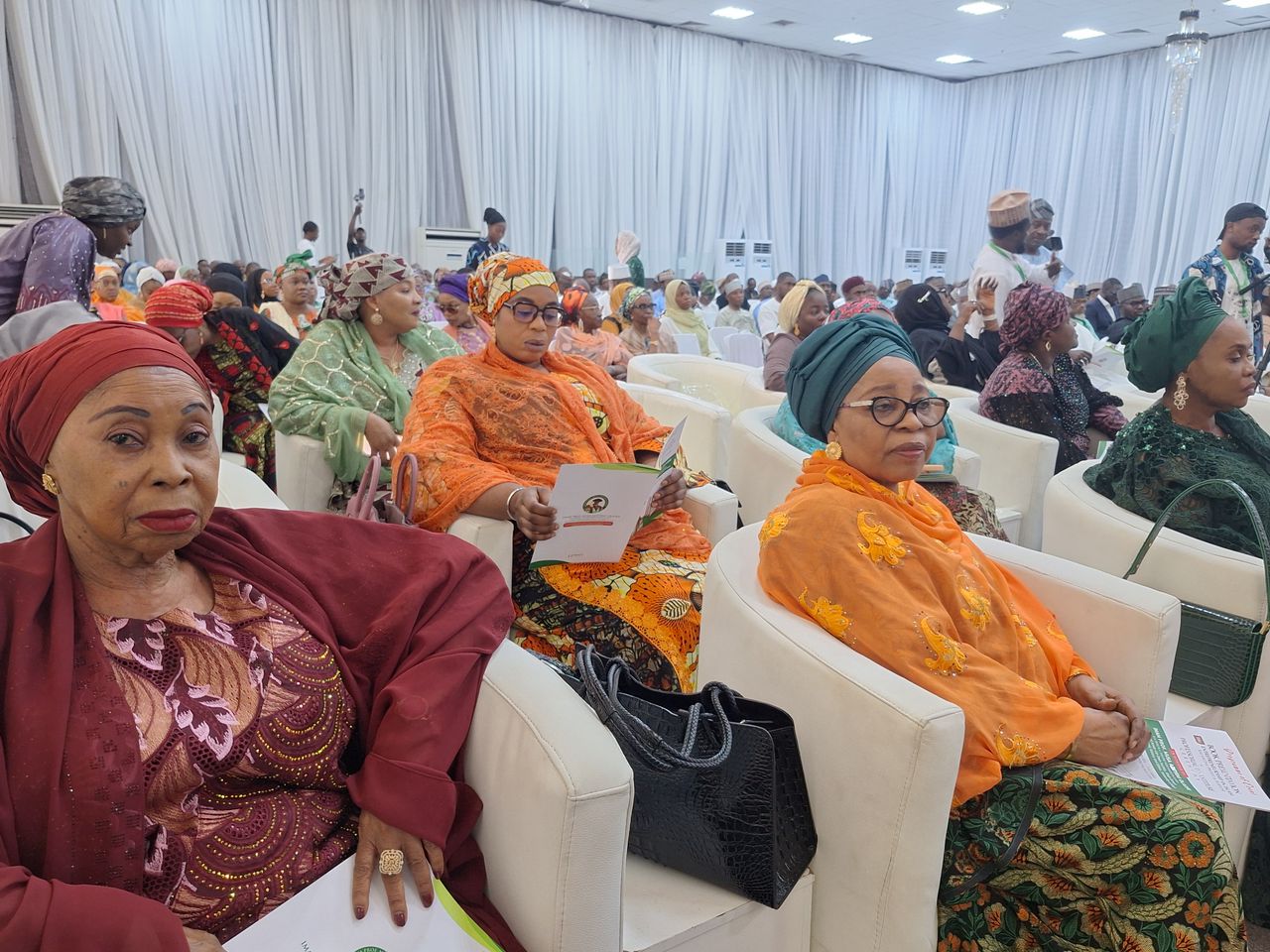
The book, titled “Entrepreneurship in Islam: Balancing Profit and Purpose,” was unveiled at the Nigerian Air Force Conference Centre, Abuja, in a ceremony that also celebrated Professor Olaofe’s elevation to the rank of professor. The event drew Governors’ Representatives, Captains of industry, Academics, Diplomats and leaders of the Ansar-Ud-Deen Society of Nigeria, where Professor Olaofe serves as Imam of the Abuja branch.
The book was formally unveiled by Gbajabiamila, who said his presence at the event was both personal and symbolic. He traced his family’s long-standing ties to the Ansar-Ud-Deen Society, noting that his great-grandfather was among the organisation’s founding figures and its first secretary-general.
“The reason I forced myself to be here is because of the man, the Imam is a man who inspires us spiritually,” Gbajabiamila said. He added that the values of Ansar-Ud-Deen had shaped his family across generations, citing the recent conferment of an honorary doctorate on his 96-year-old mother by Summit University as further evidence of that legacy.
Invoking Islamic tradition, Gbajabiamila formally unveiled the book, describing it as a timely contribution to ongoing conversations about morality, purpose and productivity in contemporary society. He later launched the book with a personal donation of ₦10 million.
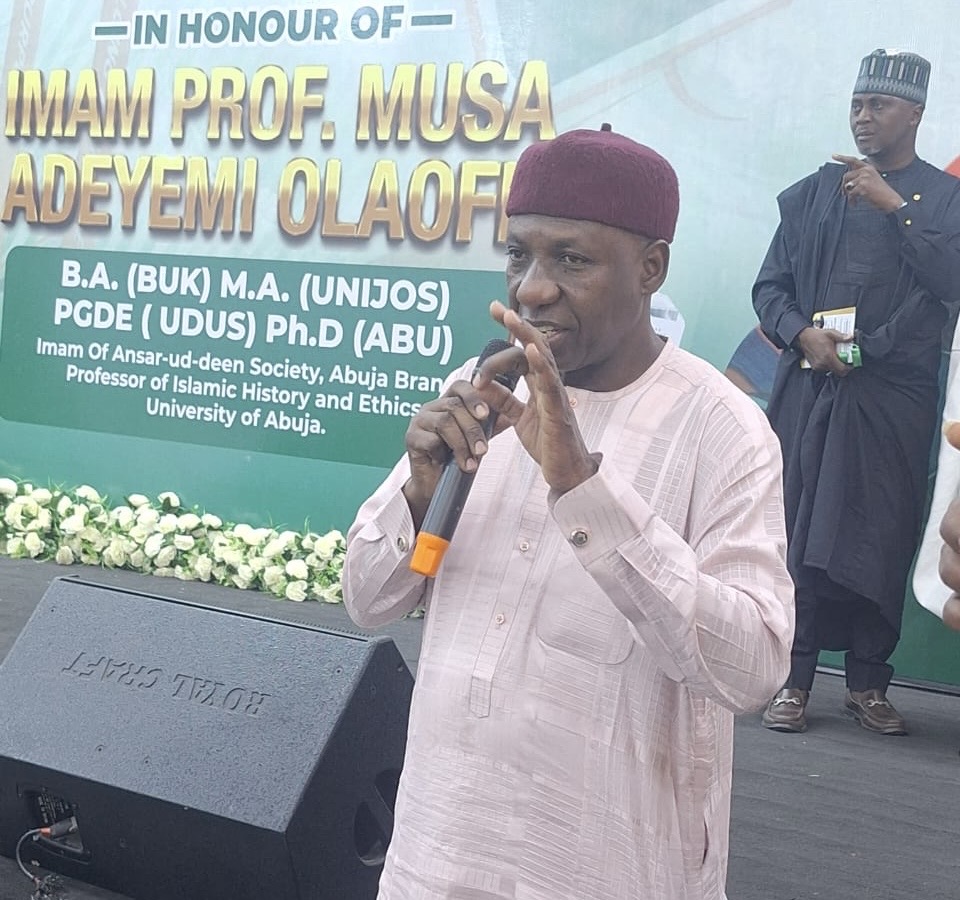
Speaking on behalf of Borno State Governor Prof. Babagana Umara Zulum, the Executive Secretary of the Borno State Education Trust Fund, Hon. (Dr.) Maina Yaumi, tendered an apology for the governor’s absence due to a condolence visit to the government and people of kwara state over the recent bandit attack. He announced a sum of ₦10 million naira on behalf of the governor for copies of the book.
He said the governor identified strongly with the theme of the book, describing entrepreneurship as a critical pathway for social stability, youth empowerment and post-conflict recovery.
Yaumi added that the Governor Zulum administration views faith-guided enterprise as a tool for rebuilding communities, particularly in fragile and conflict-affected regions, where education, skills acquisition and economic self-reliance are essential to long-term peace and development. He noted that the governor’s support for the book reflects his broader commitment to scholarship, ethical leadership and policies that promote dignity of labour and self-sufficiency.

In his remarks, former Kano State Governor Abdullahi Ganduje, CON, described the occasion as significant for the Muslim community and the wider Nigerian society, stressing that entrepreneurship is central to addressing the country’s socio-economic challenges.
Ganduje linked the book’s theme to President Bola Ahmed Tinubu’s Renewed Hope Agenda, particularly the introduction of student loan schemes, which he said had expanded access to education and increased the number of graduates entering the labour market.
“The challenge now is how to absorb these graduates,” Ganduje said, arguing that entrepreneurship and skills acquisition must take centre stage. He highlighted what he described as a mismatch between university education and labour market demands, warning that without curriculum reform to prioritise skills and enterprise, unemployment pressures would persist.
Drawing from personal experience, Ganduje recounted a conversation with a Nigerian Imam in London who lamented the economic vulnerability of many religious leaders at home. He said the book directly addresses that reality by encouraging self-reliance and productive engagement among clerics and community leaders. Ganduje donated ₦2 million to support the publication.

The event’s chief host, Engr. Abdulkabir Adisa Aliu, founder and Group Managing Director/CEO of Matrix Energy Group, made the largest contribution, launching the book with whopping 20 million naira for 2000 copies on behalf of Ansar-Ud-Deen Society, himself and friends alongside other financial commitments, towards the success of the book launch.
Also co-launching the book was Alhaji Asiwaju Abdulhakeem Bello, Chief Executive Officer of Briscoe Holdings Nigeria Ltd., who launched the book with a sum of ₦10 million naira.

In a brief interview with PEACE Magazine, Olaofe said the book was inspired by persistent misconceptions about Islamic clerics and productivity.
“In Nigeria today, people look at every Imam as if they have nothing to do,” he said. “But the Qur’an and the sayings of the Prophet teach that a person should engage in lawful work, avoid begging and live with dignity. Entrepreneurship is essential to that.”
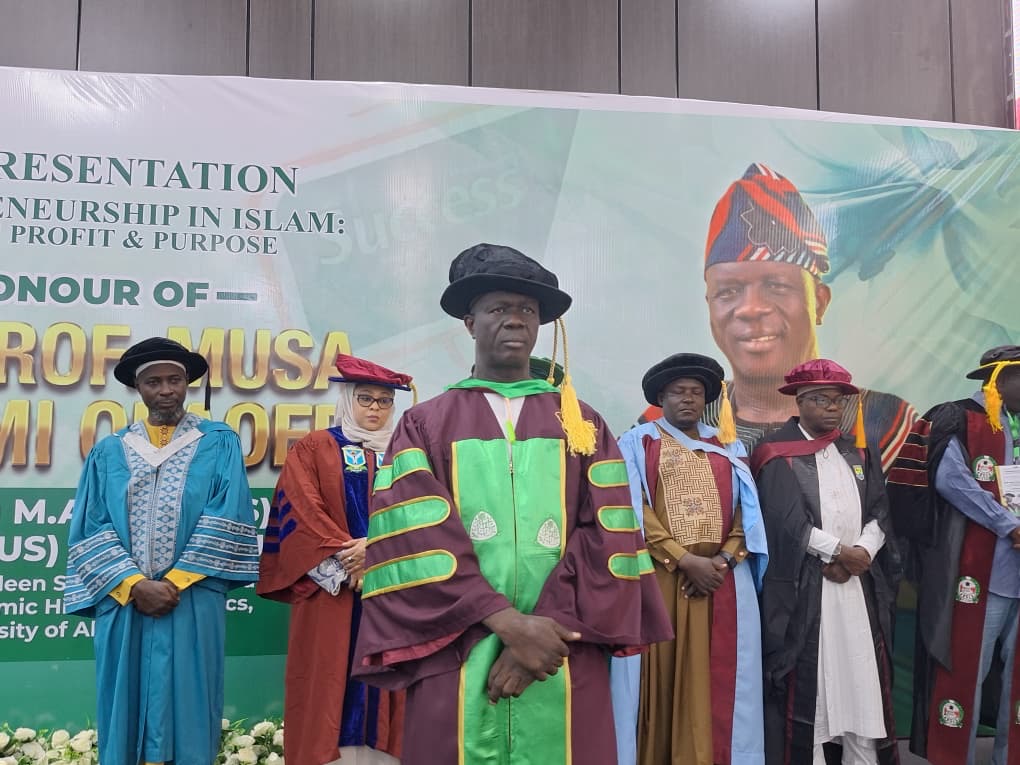
Olaofe disclosed that the book is his fifth, in addition to 43 published academic journal articles, and expressed gratitude to friends, associates and leaders of the Ansar-Ud-Deen Society for their support. He singled out Alhaji Ibrahim Adebayo Yusuf, Deputy National President of the society, and its National President for their encouragement and contributions.

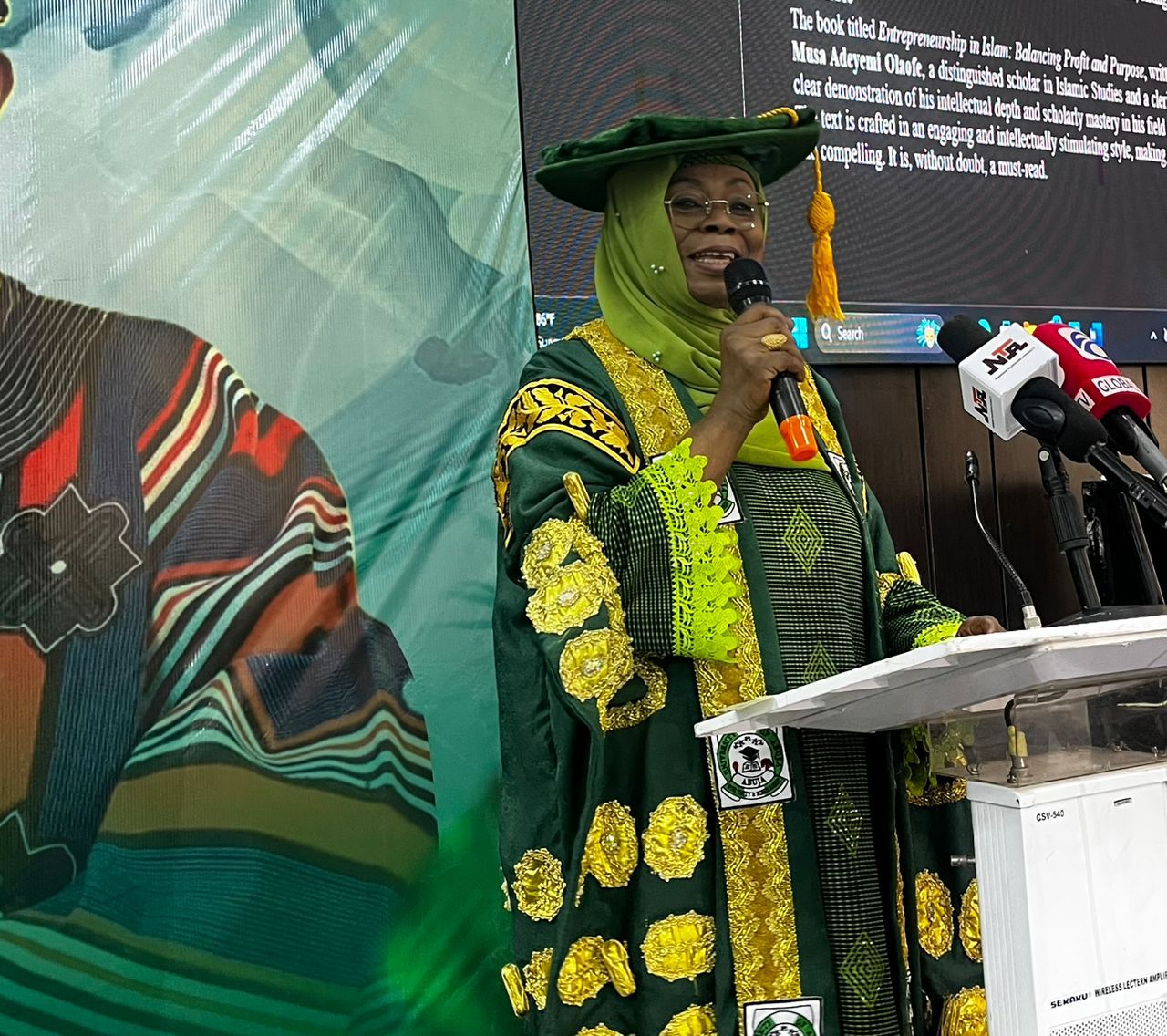
The event attracted a wide array of dignitaries, including former Federal Capital Development Authority director Alhaji Kabiru Badamasi, diplomat Amb. Sanusi Abubakar Gandi, the Vice-Chancellor of the University of Abuja Professor Hakeem Babatunde Fawehinmi, business leader Hajia Bola Muinat Shagaya, founder and CEO of Bolmus Group International, legal luminary A.U. Mustapha of Mustapha & Co., the book was reviewed by Professor Hauwa Imam of the University of Abuja, and Many other prominent figures from government, business, academia and the Muslim community were also in attendance, reflecting the broad appeal of the book’s message and the personality of the writer.
Structured in ten chapters, Entrepreneurship in Islam: Balancing Profit and Purpose explores how wealth creation can be pursued within Islamic ethical, legal and social frameworks, addressing issues of social responsibility, gender inclusion, financial ethics and community development.
MORE PHOTOS:









SPONSORED

SPONSORED
