

Wike’s Restriction Shuts Down Taraweeh, Tafsir, Iftar and Ramadan Lectures
FCT lockdown sidelines Ramadan worship in push for council elections
By Abdulfattah Abdussalam
The decision by the Minister of the Federal Capital Territory, Nyesom Wike, to declare a work-free day and impose a restriction of movement across FCT, from 8 p.m. Friday to 6 p.m. Saturday ahead of the Area Council elections has generated unease within segments of the Muslim community observing Ramadan.
While the FCT Administration says the measure is intended to ensure smooth and secure elections, the timing of the restriction during the holy month of Ramadan, has had unintended consequences for religious activities central to Muslim life during this period.
Ramadan is not merely a month of fasting from dawn to sunset. It is also a time marked by nightly Taraweeh prayers, daily Tafsir sessions (Qur’anic exegesis), communal iftar gatherings and religious lectures that often require movement across neighborhoods and area councils.
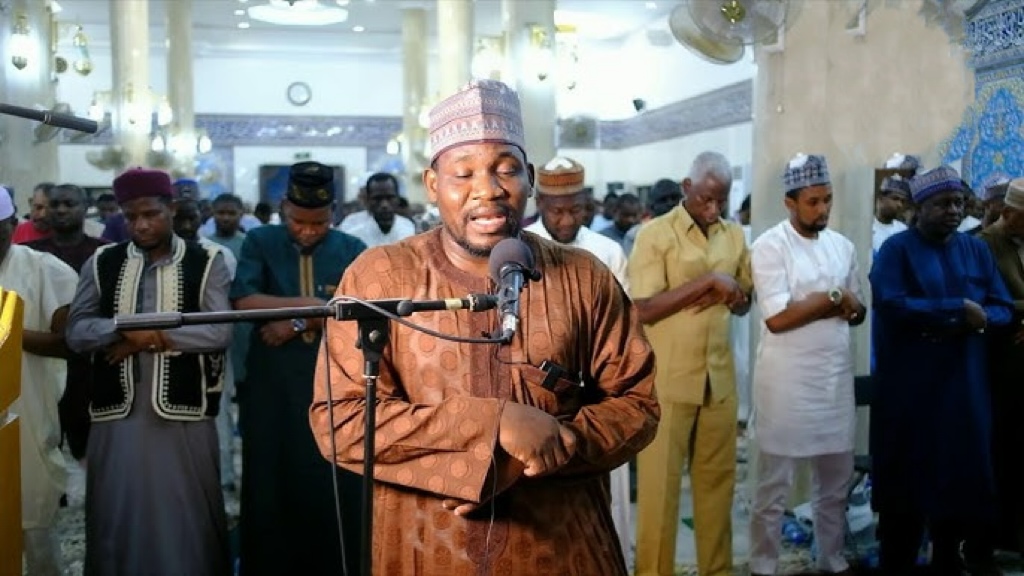
The 22-hour restriction, beginning at 8 p.m., directly overlaps with key Ramadan observances, including post-iftar Taraweeh prayers and nightly Tafsir sessions. These late-evening congregational activities are central to the spiritual rhythm of the holy month, allowing Muslims to pray, reflect, and engage with the Qur’an after breaking their fast. For many, these are not optional social gatherings but essential religious commitments, now constrained by the movement order.
Several clerics and community leaders say the directive has disrupted planned activities.
An Imam in Kuje told PEACE Magazine that he travels daily to lead Tafsir sessions and fears the restriction will prevent him from reaching his congregation. A faith-based group in Gwagwalada that organizes free iftar meals for large numbers of fasting residents expressed concern about potential financial losses, especially where perishable food items had already been prepared.
A resident in Abuja who planned to host more than 100 guests for a communal iftar said many invitees may be unable to attend due to the restriction order.
The Islamic organization Istijabat ul Dua also indicated that its annual Ramadan lecture, traditionally held on the first Saturday of the month, now faces uncertainty.
For many Muslims,Taraweeh, Iftar, Tafsir are not optional social gatherings but spiritual commitments observed annually with consistency and devotion.
In a statement, Wike urged residents to approach the elections “with a sense of purpose and responsibility,” emphasizing that the restriction was approved by President Bola Ahmed Tinubu to ensure orderly participation in the polls.
However, no serious democracy dismisses the importance of electoral security. Yet, governance also requires sensitivity, particularly in a plural society where religious observance carries deep communal meaning.
The question many residents are asking is whether alternative security arrangements could have achieved the same objective without overlapping so directly with established religious routines during Ramadan.
Democracy and religious freedom are not opposing values. Both are constitutional rights. The challenge for public authorities is to manage one without unnecessarily constraining the other.
In an entity as religiously diverse as the Federal Capital Territory, decisions affecting movement inevitably carry social and spiritual implications.
Many Muslims suggest authorities may need to consider more consultative approaches in future instances where civic processes intersect with sacred observances. They conclude, the strength of a democracy is measured not only by how well it conducts elections, but also by how carefully it protects the rights and rhythms of its people.
Some other Muslims questioned the rationality, why Area Council Elections will warrant a total lock down, except for the insensitivity of the Minister to an Important religious rites affecting millions of Muslims in FCT. Some suggest a 3pm termination of the restriction would have been considered.
Ramadan, is an important pillar of Islam as ordained by Allah. It gives room for many Muslims to obey Allah’s command and earns extra rewards through, Taraweeh, Tasfir, Iftar and listen to lectures for spiritual cleansing and uplift.
SPONSORED

SPONSORED
