

Why Iran’s martyrdom narrative shapes its resilience
An analysis of how Shia theology, history and politics intertwine and why some warn the West risks misreading Tehran
By Abdullahi Yusuf
There is a persistent assumption in some Western policy circles that sustained military pressure can force Iran’s leadership into rapid retreat. But that view, according to Michael Nazir-Ali, risks overlooking a deeper and more enduring force: a religious worldview shaped by centuries of Shia martyrdom.
Writing in the The Daily Telegraph, Nazir-Ali argues that Iran’s political behaviour cannot be fully understood without examining the theological and historical ideas that underpin it, particularly the elevation of suffering and sacrifice as spiritual virtues.
A theology of sacrifice
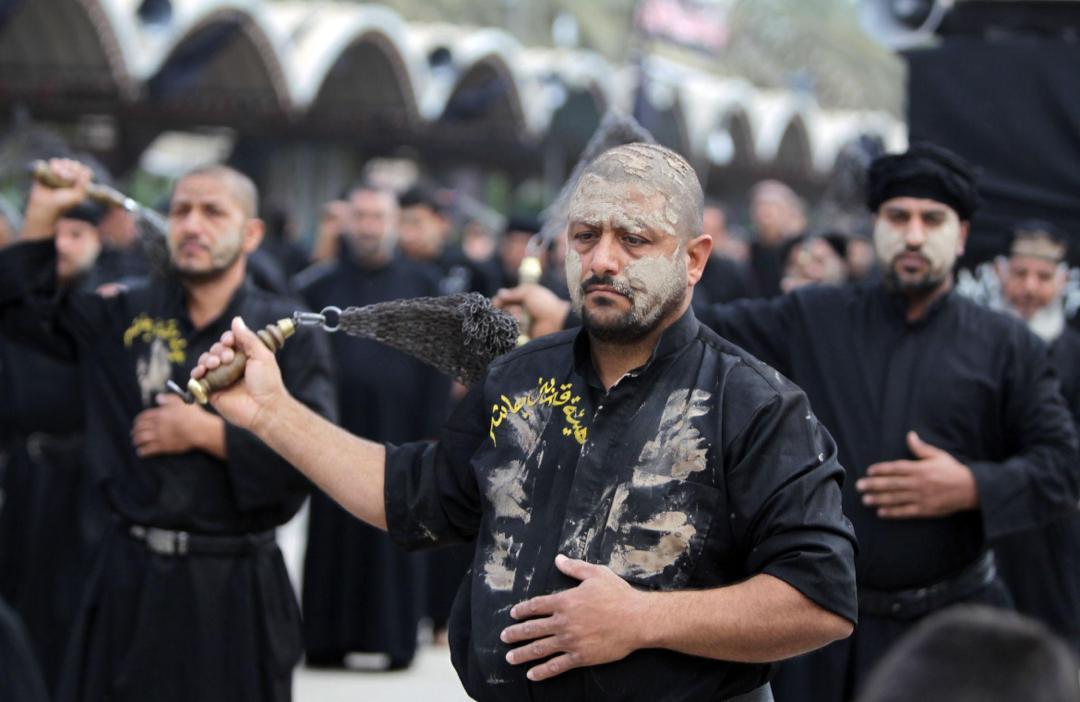
At the centre of this argument lies a defining episode in Shia Islam: the killing of Hussein ibn Ali in 680 CE at Karbala. His death, along with those of his father Ali ibn Abi Talib and brother Hasan ibn Ali, is commemorated annually in rituals marked by mourning, reflection and acts of solidarity with suffering.

For many Shia Muslims, these events are not simply historical. They form a moral framework in which injustice is resisted and sacrifice is sanctified. Nazir-Ali suggests this has evolved into what he describes as an “entrenched understanding of the virtue of suffering,” one that continues to shape collective identity.
From history to state ideology
This worldview, he argues, has not remained confined to religious life. It has been actively mobilised by the Iranian state, particularly since the Iranian Revolution.
Nazir-Ali recalls accounts from the Iran-Iraq War, where young volunteers were reportedly given symbolic “keys to paradise” before being sent into battle. In death, their sacrifice was publicly commemorated, transforming private grief into communal affirmation.

Institutions such as the Islamic Revolutionary Guard Corps and its affiliated Basij militia are seen as inheritors of this ethos, embedding martyrdom into narratives of national defence and resistance.
The role of belief in political strategy
A further dimension lies in eschatology. Within Twelver Shiism the dominant sect in Iran, there is a belief in the eventual return of the Mahdi, a messianic figure expected to establish justice.
Nazir-Ali notes that some within Iran’s leadership interpret struggle, and even large-scale sacrifice, as part of a divine timeline that hastens this return. In this reading, conflict is not merely geopolitical, it acquires spiritual significance.
This, he argues, helps explain why external pressure may not produce the expected political outcomes. Actions interpreted in the West as escalation or risk-taking may be understood domestically through a lens of duty, endurance and faith.
A warning against miscalculation
The analysis ultimately raises a strategic question: what happens if these assumptions are wrong?
Nazir-Ali cautions that dismissing Iranian rhetoric as bluff could lead to serious misjudgment. If the current system were to collapse under external pressure, he suggests elements within it particularly ideological and paramilitary networks, could sustain prolonged resistance.
Conversely, if the system endures, survival itself may be framed as vindication, potentially reinforcing the very structures critics hope to weaken.
Between ideology and reality
There is, however, an acknowledged tension. While Iranian officials often frame their policies as a struggle for justice, critics point to internal repression and restrictions on political and religious freedoms.
Nazir-Ali argues that any long-term approach to Iran must grapple with both realities: a deeply rooted ideological framework and a complex, diverse society that does not always align with it.
The broader picture
What emerges from this analysis is not a prediction, but a reframing. Iran’s actions, it suggests, cannot be assessed solely through conventional political or military logic.

Instead, they sit at the intersection of history, belief and power, where theology informs strategy, and where narratives of martyrdom continue to shape the choices of a modern state.
SPONSORED

SPONSORED
