
US jet shot down over Iran in first major air loss of the war
One crew member rescued, another missing as US faces first confirmed fighter jet loss of the war
By Abdullahi Yusuf
The United States has lost a fighter jet over Iran for the first time in the war, a development that cuts through weeks of official confidence and raises urgent questions about control of the skies.
A US F-15E Strike Eagle was brought down inside Iranian territory, triggering a high-risk search-and-rescue operation for its two crew members. One has been recovered. The other remains missing. For Washington, the implications are immediate and serious.
Until now, the air campaign had proceeded without the loss of a manned fighter aircraft. That record has been broken and with it, the assumption that US air power could operate with near impunity over Iran.
The downing of the jet is more than a battlefield incident. It signals that Iran retains the capability to contest American air operations in ways that had not been publicly acknowledged.
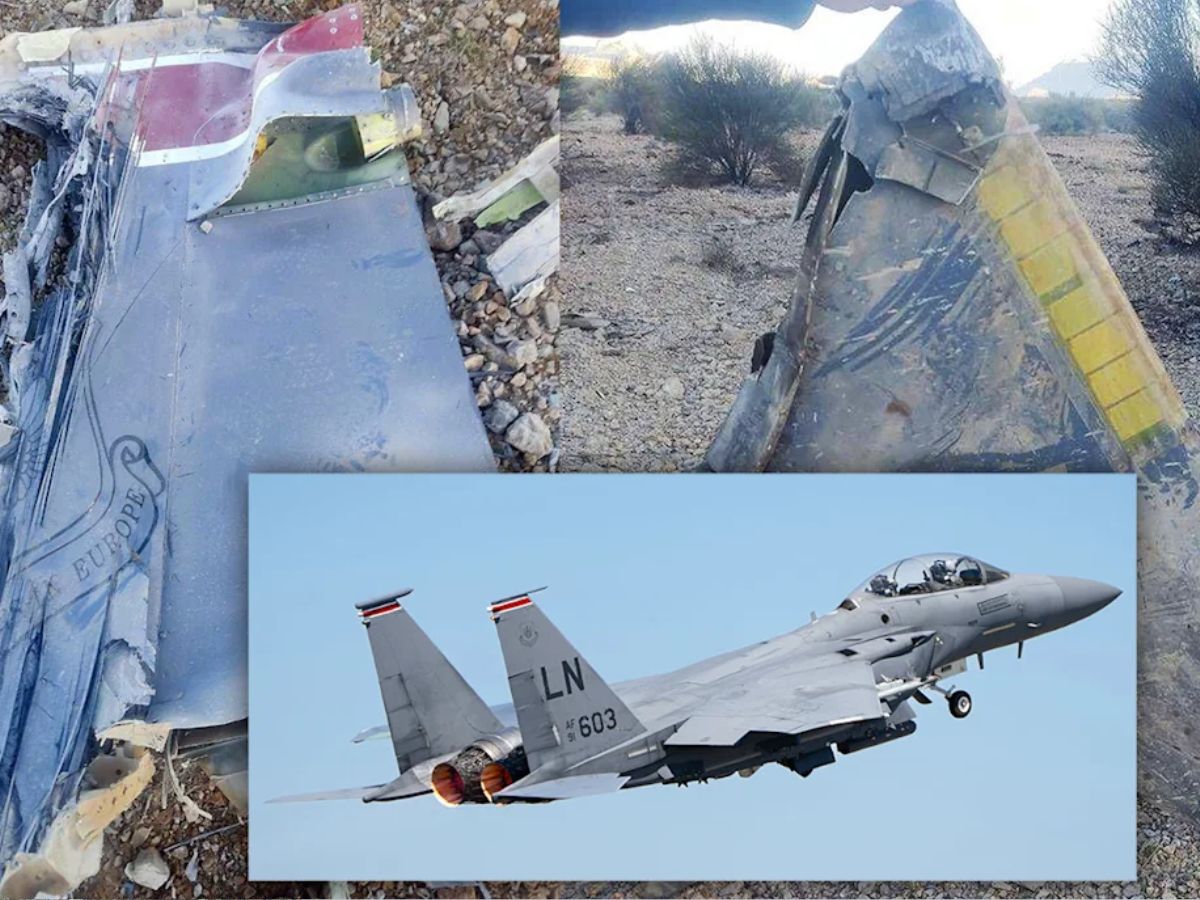
Images broadcast by Iranian media showed fragments of the aircraft scattered across terrain, initially misidentified as a more advanced platform before analysts confirmed it as an F-15E, a long-serving strike aircraft central to US operations. Washington has yet to issue a full public account.
At the White House, press secretary Karoline Leavitt confirmed that Donald Trump had been briefed, but declined to provide operational details, a silence that reflects both the sensitivity and the uncertainty surrounding the incident.
Behind the scenes, the priority has been clear: recover the crew before Iran does.
Footage circulating from within Iran appears to show US rescue aircraft, including a C-130 and a HH-60 Pavehawk helicopter flying low and refuelling mid-operation, consistent with a combat search-and-rescue mission.
Such missions are among the most dangerous in modern warfare. Aircraft must enter hostile territory, often without full air superiority, to extract personnel under threat of capture or attack. The fate of the second crew member remains unclear.
Iranian outlets have issued conflicting reports, including claims of capture. None have been independently verified.
For weeks, the United States and its allies have carried out sustained strikes across Iran, hitting military and strategic targets in a campaign designed to degrade Tehran’s capabilities.
It suggests that Iran’s air defence network whether through mobility, adaptation, or sheer persistence, is capable of inflicting losses on even advanced Western aircraft. That does not shift the overall military balance. But it does narrow the margin of safety. And in war, that margin matters.
The shootdown comes amid intensifying military activity across the region. Strikes have continued in and around Tehran, while Israel has expanded its operations, including attacks on infrastructure. At the same time, missile and drone exchanges persist across multiple theatres. The conflict is no longer contained. It is spreading geographically and strategically.
Beyond the battlefield, scrutiny is growing. More than 100 international legal experts have warned that elements of the campaign may breach international humanitarian law, particularly in relation to threats against civilian infrastructure.
At the same time, the financial cost of the war is escalating sharply, with billions already spent and losses mounting, including high-value assets like the F-15E.
Wars are often defined not just by major offensives, but by moments that shift perception. This may be one of them. The loss of a US fighter jet over Iran introduces a new reality: that the airspace is contested, the risks are rising, and the trajectory of the conflict is becoming harder to predict.
SPONSORED

SPONSORED
