
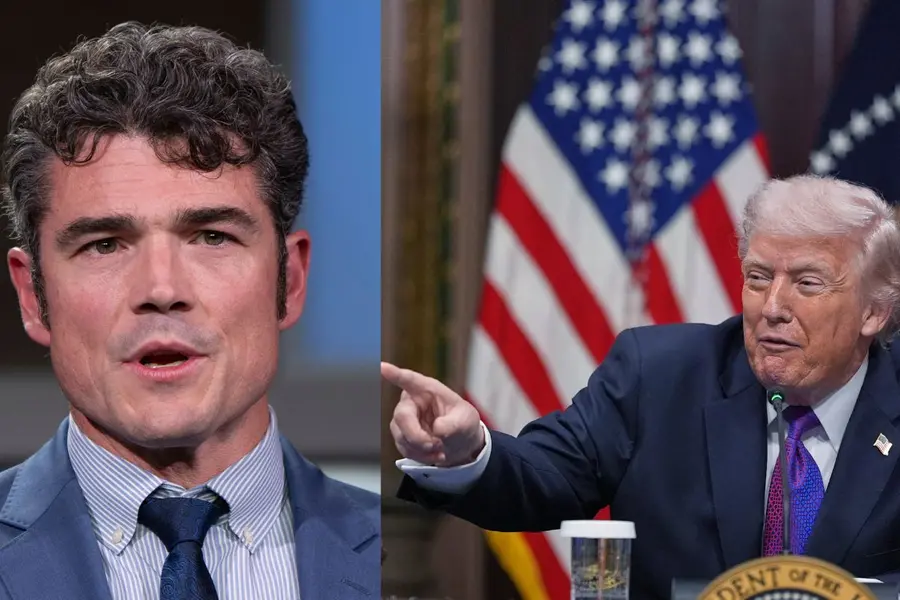
US counterterrorism chief quits over Iran war stance
Joe Kent says he cannot back conflict, contradicting Donald Trump as tensions escalate
By Abdullahi Yusuf
The head of the United States’ National Counterterrorism Center has resigned, citing deep disagreement with the government’s position on the ongoing conflict with Iran.
Joe Kent announced his decision in a statement posted on social media, saying he could no longer support what he described as a war lacking clear justification.
“After much reflection, I have decided to resign from my position effective today,” he said, adding that Iran posed “no imminent threat” to the United States.
Kent’s departure marks a rare public break from within the upper ranks of the US national security establishment, and comes as the conflict now entering its third week, continues to intensify.
In his statement, he challenged the rationale behind the military campaign, suggesting it had been influenced by external pressure and flawed intelligence assessments. He also warned against what he described as the risks of repeating past US interventions in the Middle East.
Addressing Donald Trump directly, Kent said he had supported the president’s earlier foreign policy approach, which he characterised as avoiding prolonged wars while using targeted force when necessary.
He pointed to the 2020 killing of Qasem Soleimani and the campaign against the armed group ISIS as examples of what he described as decisive but limited military action.
However, he said the current conflict with Iran represented a departure from that approach, warning it could draw the United States into a prolonged and costly war.
Kent, a military veteran who said he had served multiple combat deployments, also cited personal reasons for his resignation. He referred to the loss of his wife during a previous conflict and said he could not support sending more Americans into what he viewed as an unnecessary war.
His comments come amid continuing US and Israeli strikes on Iranian targets, which officials in Washington say are aimed at countering Tehran’s regional activities and security threats.
According to US officials, thousands of targets have been hit since the start of the campaign, while Iran has responded with missile and drone attacks across the region, including threats to key shipping routes such as the Strait of Hormuz.
The escalation has raised concerns about a broader regional conflict and its potential impact on global energy supplies.
Kent, who was confirmed to the role in July, urged the president to reconsider the current strategy, warning that the direction of the conflict could have lasting consequences for the United States.
SPONSORED

SPONSORED
