

Truth Is Bitter Series (Ep 8)
Short satirical reflections on faith, society and the uncomfortable truths we avoid. First published in the Rabi’al-Awwal/Rabi’al-Thani 1446AH (2025) print edition of The PEACE Magazine.
By Abdulfattah Abdussalam

Petition to where?
Recently, a group of Muslims took to social media to circulate an e-peltion. Their aim? to rally support for establishing an independent Sharia arbitration court in Oyo State. This move, they claim, stems from a viral post on X (formerly Twitter), which reignited debates about Sharia law in the Southwest. Nigeria’s Constitution is unambiguous: no court can function without government approval. Yet, this group seems to believe that a petition signed in cyberspace will somehow override constitutional provisions and compel the Oyo State Governor, Engr. Seyi Makinde, to oblige their demands. A closer look reveals the motive is to create an Islamic panel for resolving disputes between willing Muslims. Its decisions, however, would not carry the weight of legally binding judgments as seen in proper courts. Unfortunately, before one could complete the recitation of Surah Al-Fatiha, some Muslims came up with an innocuous e-petition mechanism to force the establishment of a Shariah court in Oyo State. At this point, one might ask which competent law enforcement authority would accept a petition of such kind and implement it? Under what basis is this type of petitioning allowed in Nigerian laws? Therefore, this is an exercise in futility and a sordid act for the Muslims of South West Nigeria. The circulation and signing of such e-petition is a misplaced priority. Muslims of South West Nigeria have much more to do to protect Islam and their well-being than a petition module.
JAPA to Iraq
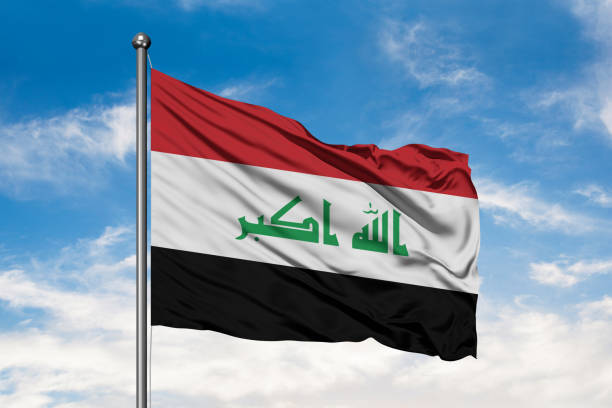
Like a thunderbolt, news broke across Nigerian media space, the odyssey of a young Nigerian woman, who perhaps was cajoled by a dubious travel agent, to Iraq in search of so-called greener pastures. Her story is a mixture of desperation and naivety that ended in a nightmare. While her ordeal evokes pity, it also serves as a stark reminder that ignorance in law, is not an excuse. A reasonable person must think deeply before diving into a crocodile-infested waters. This reasoning, however, seems absent in the decisions of many young Nigerians and their parents today. Desperate to escape the country’s economic challenges, some would accept a ticket to Siberia if it promised a glimpse of fortune. Unfortunately, unscrupulous travel agents exploit this desperation for their selfish gains, sending vulnerable individuals to places that are not just unsuitable but outright hostile. Take Iraq, for instance, Nigeria is an English-speaking country, yet this woman embarked on a journey to a nation where she neither understands Persian nor Arabic, Worse, Iraq and many Arab countries are known to treat dark-skinned foreigners with disdain and racism. For her to travel to Iraq, a country with wel-documented challenges fornon-citizens, was akin to sending a cow to the slaughterhouse. This tragic tale should be a wake-up call for the Nigerian government to crack down on the travel agents orchestrating these journeys of no retum. it also calls for parents lo exercise vigilance before sponsoring their children to embark on these risky ventures. Nigerian youth must know that the grass is not always greener on the other side of the Allantic especially when that side is a barren, hostile desert.

Stampedes for Peanuts
In recent months, Nigeria has witnessed a spate of tragic stampedes that underscores the state of the nation’s living standards. In Ibadan, Oyo State, Abuja, the Federal Capital Territory, and Okija, Anambra State, desperate citizens lost their lives scrambling for peanuts. These events, which organizers Iikely intended as benevolent gestures, turned deadly due to the overwhelming turnout of hungry citizens. In Ibadan, chaos erupted at a charity event where 5,000 naira was to be given to participants. The crowd surged, barriers crumbled, and over fift (50) young Nigerians met untimely deaths. Similarly, in Abuja, at a church-sponsored food drive, ten (10) lives were crushed underfoot as people struggled to collect food items. Also, in Okija, (3) individuals paid the ultimate price in their quest for freebies. Such tragedies are not new. Recall the stampede at Nasarawa State University, Keffi, where students lost their lives over the distribution of rice. These incidents are pitiful reminders that an empty stomach knows no caution and that the desperation bred by poverty can turn charity into catastrophe. Yet, the blame cannot rest solely on these events’ organizers. Since the inception of President Bola Ahmed Tinubu’s administration, the average Nigerian has grown poorer. Economic policies, touted as reforms, have left many gasping for air under their suffocating weight. Hunger drives people to risk their lives, and the result is the tragic loss of potential, productivity and most heartbreakingly lives. If these deaths teaches us anything, it is this; government must address the root causes of poverty, not merely its symptoms
Editor’s Note: Truth Is Bitter is a weekly reflective and satirical column drawn from the “Front of the Book” pages of PEACE Magazine. It seeks to provoke introspection, not hostility; reform, not ridicule.
SPONSORED

SPONSORED
