
JNI Rejects Foreign Intervention, Advocates Local Solutions to Plateau Conflict
By Sadiq Abdulfatah
Amid renewed concerns over insecurity and recurring ethno-religious tensions in Plateau State, the Jama’atu Nasril Islam (JNI) has firmly opposed calls for foreign involvement in resolving the State’s protracted conflicts, warning that such moves could deepen complexities rather than bring lasting peace.
This is in response to the unfounded allegations of Christian genocide in the State as well as appeals by certain individuals and groups for foreign intervention, particularly by countries such as the United States in Nigeria’s domestic affairs.
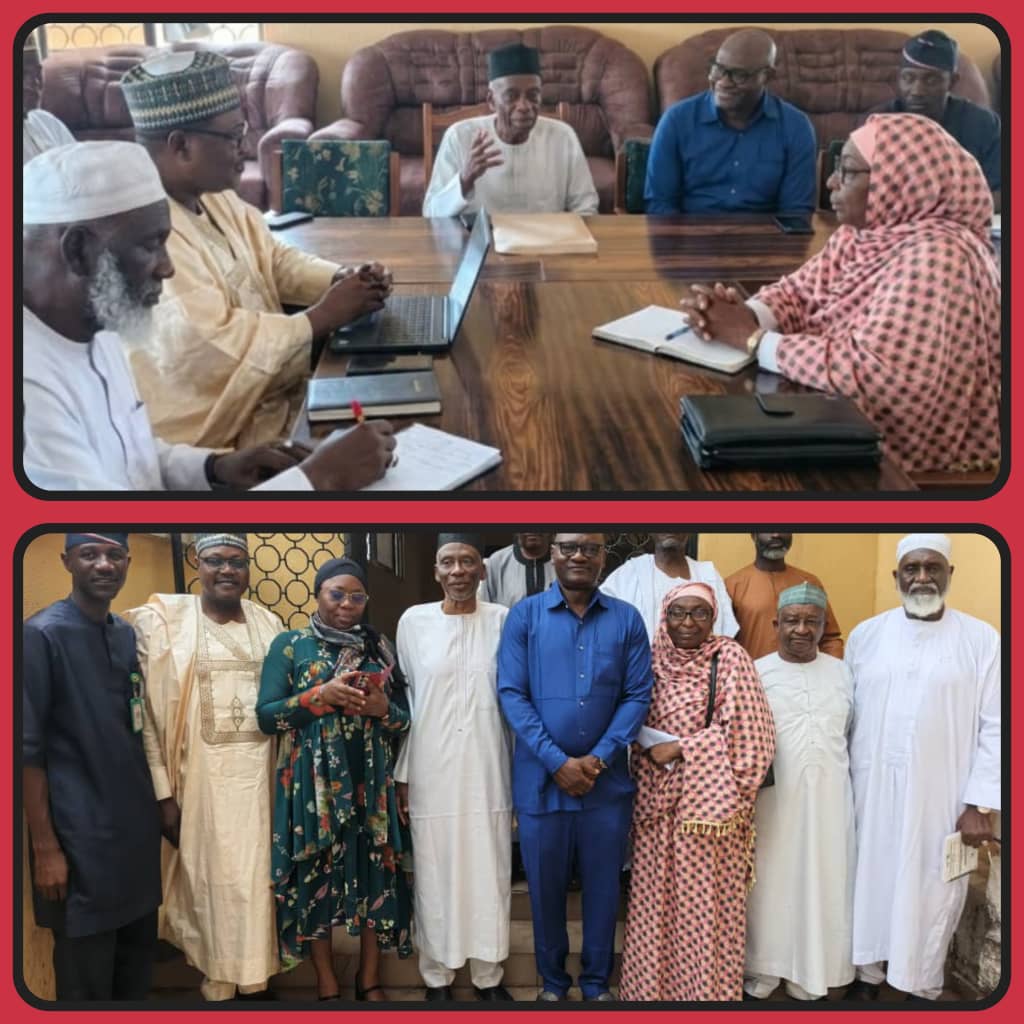
The Plateau State Chairman of JNI and Emir of Wase, His Royal Highness Alhaji Muhammad Sambo II, made this position clear while receiving a delegation from the Institute for Peace and Conflict Resolution (IPCR), Abuja, during a courtesy visit to the JNI headquarters in Jos.
Represented by the Vice Chairman of JNI, Engr. Hassan Husseini, mni, the Emir emphasized that sustainable peace in Plateau State must be rooted in local realities, driven by indigenous strategies and supported at the national level, not outsourced to external actors who may lack a nuanced understanding of the underlying issues.
He cautioned that foreign intervention, risks complicating the fragile social fabric of affected communities and could lead to unintended and far-reaching consequences.
According to him, “The pathway to enduring peace in Plateau must be locally conceived, nationally supported and firmly anchored on truth, justice and mutual respect among all communities.”
The JNI leadership, however, welcomed the initiative of the IPCR to engage critical stakeholders through dialogue and consultations, describing it as a timely and constructive step towards peacebuilding. The organisation reiterated its readiness to collaborate with government institutions, civil society groups, and traditional authorities to deepen dialogue and strengthen mechanisms for conflict resolution.
Speaking on behalf of the visiting delegation, the Director General of the Institute, Dr. Joseph Ochegwu, commended JNI for its longstanding role in promoting peace and mediating conflicts across Plateau State. He recalled the significant contributions of the late Emir of Wase between 2001 and 2003, noting that traditional leadership has historically played a stabilizing role during periods of crisis.
Dr. Ochegwu aligned with JNI’s stance against foreign intervention, stressing that local conflicts are best resolved through inclusive dialogue, sustained consultation and collaboration among stakeholders who understand the socio-cultural dynamics at play.
He further advocated for strengthening traditional institutions, urging that they be empowered constitutionally to take on more proactive roles in peacebuilding and conflict management within their respective communities.
Adding a critical socio-economic dimension to the discourse, the Director of Women Affairs of JNI and National Amira of FOMWAN, Hajiya Summaya Hamza, highlighted youth unemployment and restiveness as key drivers of instability in the State. She called for a holistic response that goes beyond security measures to include targeted welfare programmes.
According to her, initiatives such as scholarships, skills development and social support systems would not only reduce vulnerability among young people but also foster a sense of inclusion and shared responsibility in maintaining peace.
In his remarks, the Makama of Jos North and member of JNI EXCO, Alhaji Sani Mu’azu, described the visit by IPCR officials as both timely and strategic, particularly as JNI is currently undergoing internal reorganisation aimed at revitalising its local government chapters.
He explained that the restructuring effort is designed to enhance the responsiveness and operational capacity of JNI at the grassroots level, enabling it to better address emerging challenges and contribute more effectively to conflict prevention and resolution.
As Plateau State continues to navigate its complex security landscape, the consensus among key stakeholders at the meeting underscores a critical message: lasting peace cannot be imported. Rather, it must be carefully built from within, through trust, inclusion and sustained local engagement.
SPONSORED

SPONSORED
