
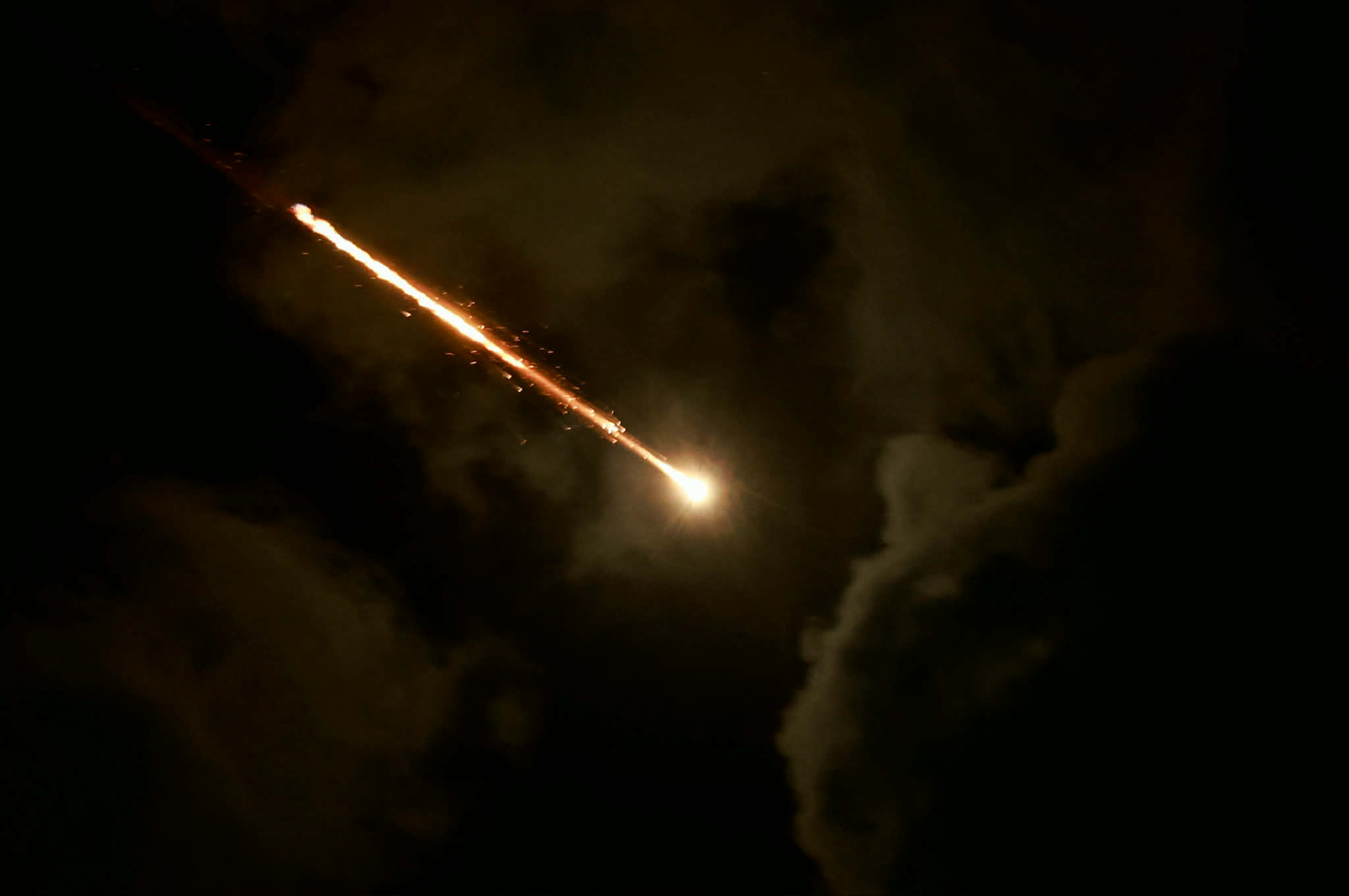
Iran launches destructive missiles on Israel
Coordinated strikes by Iran and allied groups target major cities and military sites as regional conflict widens
By Abdullahi Yusuf
A new and more dangerous phase of the Middle East conflict appears to be unfolding, after Iran announced a wave of heavy missile strikes targeting Israel’s largest cities and key military infrastructure.
In a statement released late Thursday, the Islamic Revolutionary Guard Corps (IRGC) said it had launched what it described as “Wave 91” of its ongoing campaign, Operation True Promise 4, striking what it called the “heart” of Tel Aviv and Haifa.
The claims, which could not be independently verified in full, suggest a масштаб escalation in both scale and coordination, involving not only Iran but allied groups across the region.
According to the IRGC, the strikes forced millions of Israelis into shelters, with air raid sirens reportedly sounding across major population centres.
Explosions were reported in and around Tel Aviv and Haifa, with emergency services said to be struggling to respond to multiple incidents occurring simultaneously.
Iranian officials described the attacks as sustained and sequential, suggesting a deliberate effort to overwhelm air defence systems and emergency response capabilities.
Israeli media, including public broadcaster KAN, reported that at least one ballistic missile carrying a large warhead struck several locations, causing significant damage.
What distinguishes this latest escalation is the apparent level of coordination across multiple fronts.
A spokesperson for Ansarullah in Yemen said that forces there had joined the offensive, launching attacks towards southern Israeli territories, including areas near Dimona, a location widely associated with Israel’s nuclear infrastructure.
The spokesperson described the operation as a joint effort involving Iran and the Lebanese group Hezbollah, emphasising what was presented as a unified regional campaign.
Such coordination, if confirmed, would mark a significant shift transforming what had been a bilateral confrontation into a broader, multi-front conflict.
Beyond civilian centres, the strikes appear to have focused heavily on military infrastructure.
Reports indicate that several Israeli airbases, including Tel Nof and Palmachim were targeted, alongside Ben Gurion Airport, the country’s main international gateway.
Other areas reportedly hit include Eilat in the south, Beersheba, and the Negev region, suggesting a geographically dispersed campaign aimed at stretching Israeli defences.
Iranian statements also claimed attacks on concentrations of Israeli and US forces across the region, though details remain limited and difficult to verify independently.
The conflict’s regional dimension is further underscored by reported strikes on US-linked military facilities.
According to Iranian accounts, bases in Kuwait including Ahmed al-Jaber and Ali al-Salem, as well as a site in Saudi Arabia’s al-Kharj region, were hit by ballistic missiles.
In the United Arab Emirates, an early warning radar system at al-Dhafra air base was said to have been destroyed — a development that, if accurate, would represent a significant blow to regional missile detection capabilities.
Such claims highlight the extent to which the conflict now reaches far beyond Israel’s borders, drawing in a network of military assets across the Gulf.
The language used by Iranian officials suggests that these strikes are intended not only as retaliation, but as strategic signalling, demonstrating both reach and coordination.
By targeting high-value military infrastructure alongside major urban centres, Iran appears to be projecting a dual message: one of deterrence, and one of escalation readiness.
At the same time, the involvement of allied groups points to a broader doctrine, one in which regional partners act in concert, complicating any military response.
As with much of this conflict, the full extent of the damage and the number of casualties remains unclear.
Iran has indicated that further details will be released, while Israeli authorities have yet to provide a comprehensive public assessment of the attacks.
What is clear, however, is that the pace and scale of events are accelerating.
A conflict that once appeared containable is now showing signs of expanding across multiple theatres, raising fears of a wider regional war with global implications.
With additional information from Press tv
SPONSORED

SPONSORED
