

IDFP Raises Alarm Over Insecurity, Politicization, Social Decay in Nigeria
Urges leaders to embrace dialogue, inclusivity and responsible governance
By Abdullahi Yusuf
The Interfaith Dialogue Forum for Peace (IDFP) has expressed deep concern over what it described as Nigeria’s worsening peace and security challenges, blaming rising insecurity, unemployment, cybercrime, cultism, and youth restiveness on poor governance and reckless politicization of national issues.
The group, which is made up of 120 high-level Christian and Muslim leaders across the country, warned that the disturbing trends threaten to undermine Nigeria’s fragile unity if not urgently addressed.
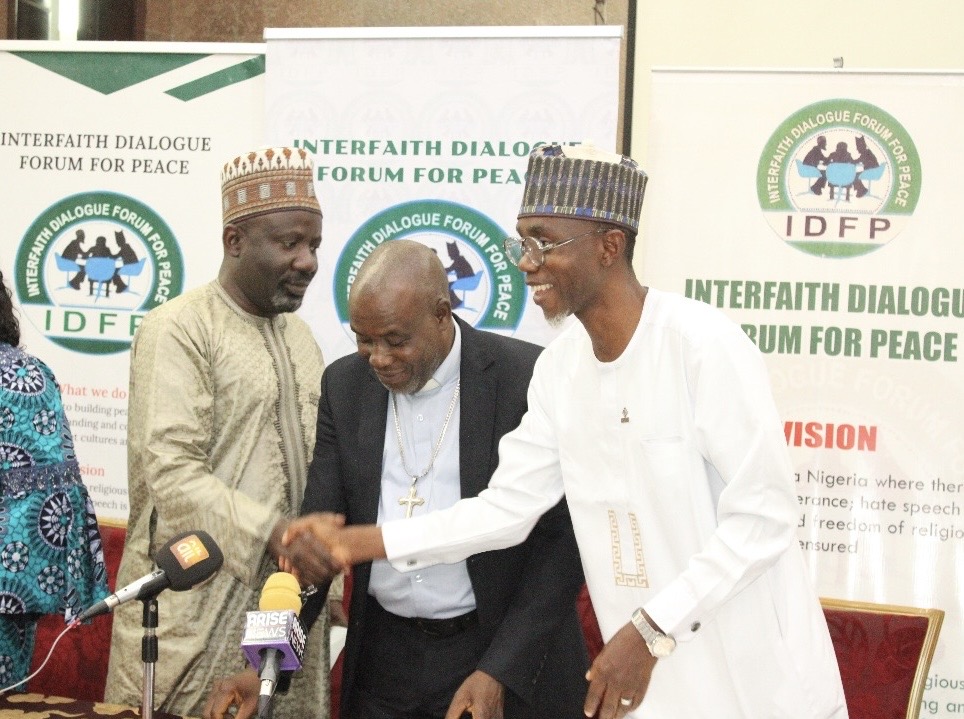
In a press briefing held in Abuja on Thursday, August 21, 2025, the Co-Chairs of the forum, Rev. Abainitus Akila Hamman and Dr. Yussuf Yakub Arrigasiyyu, said the country is facing a triple crisis of insecurity, socio-economic hardship, and political toxicity which is fueling divisions among citizens.
According to the IDFP, behind the growing wave of insecurity lies a deeper socioeconomic crisis. Rising unemployment, high inflation, and limited opportunities, it noted, have pushed millions of Nigerians into despair.
“Unless addressed holistically, these hardships will remain fertile ground for radicalization, violent extremism, and conflicts,” the group warned, stressing that peace cannot be sustained without economic justice, social inclusion, and good governance.
While commending the Federal Government and security agencies over the arrest of leaders of the Islamic State in West Africa Province (ISWAP), the IDFP said insecurity in the country goes beyond armed groups.
“Insecurity today is about the weaponization of Nigeria’s most vulnerable population,” the forum said. “This has become a silent enabler of violence, fueling crime, communal clashes, and extremist recruitment.”
The religious leaders also decried the rising politicization of national issues, warning that Nigeria’s political discourse has been reduced to “soundbites of division rather than strategies for development.”
They cautioned that toxic political competition, inflammatory rhetoric, and blame games among leaders across divides undermine social cohesion and risk inflaming ethnic and religious tensions.
Emphasizing the need for moral leadership, the forum said Nigeria’s religious, cultural, and ethnic diversity should be seen as a strength, not a weakness.
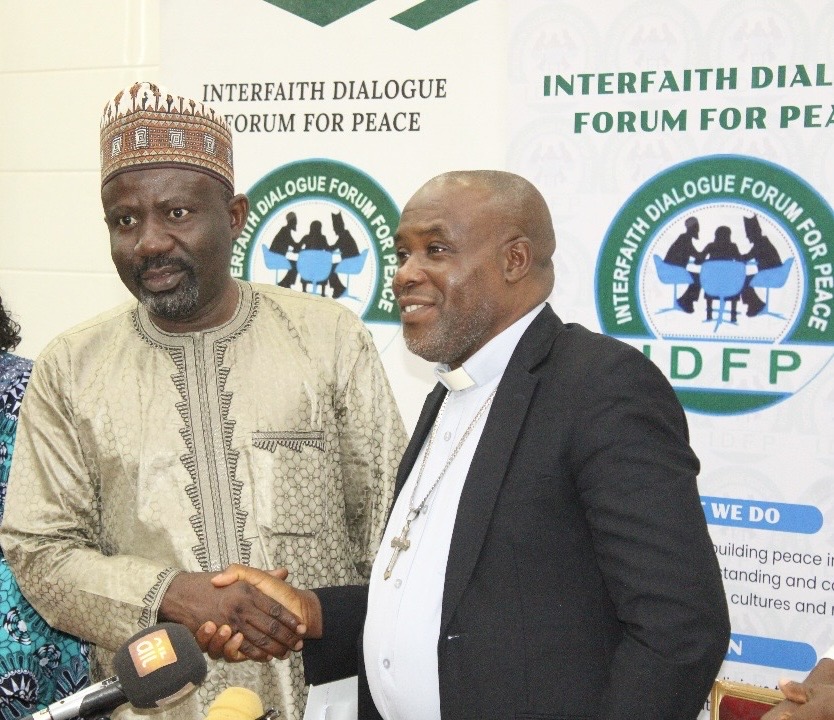
“Faith leaders and traditional rulers remain uniquely positioned to heal divides, provide moral guidance, and foster resilience within communities. Religion must not be politicized or manipulated for narrow gains,” the forum said.
The IDFP urged:
- Political leaders to tone down divisive rhetoric and prioritize people-centered policies that guarantee security, justice, and inclusivity.
- Government and security agencies to intensify peacekeeping efforts, prosecute perpetrators of violence, and ensure accountability in conflict prevention.
- Faith leaders, traditional rulers, and civil society to continue building bridges of trust and resist attempts to exploit religion or ethnicity for political gain.
Reiterating its mission to promote tolerance and peaceful coexistence, the forum said peace is a shared responsibility.
“Nigeria cannot afford deeper fractures at this critical juncture. What is required now is courageous leadership rooted in collaboration, compassion, and the protection of every citizen’s dignity,” it said.
The IDFP reaffirmed its commitment to amplifying voices of moderation, countering extremism, and urging all stakeholders to rise above partisan or personal interests for the survival and prosperity of the country.
SPONSORED

SPONSORED

SPONSORED
