
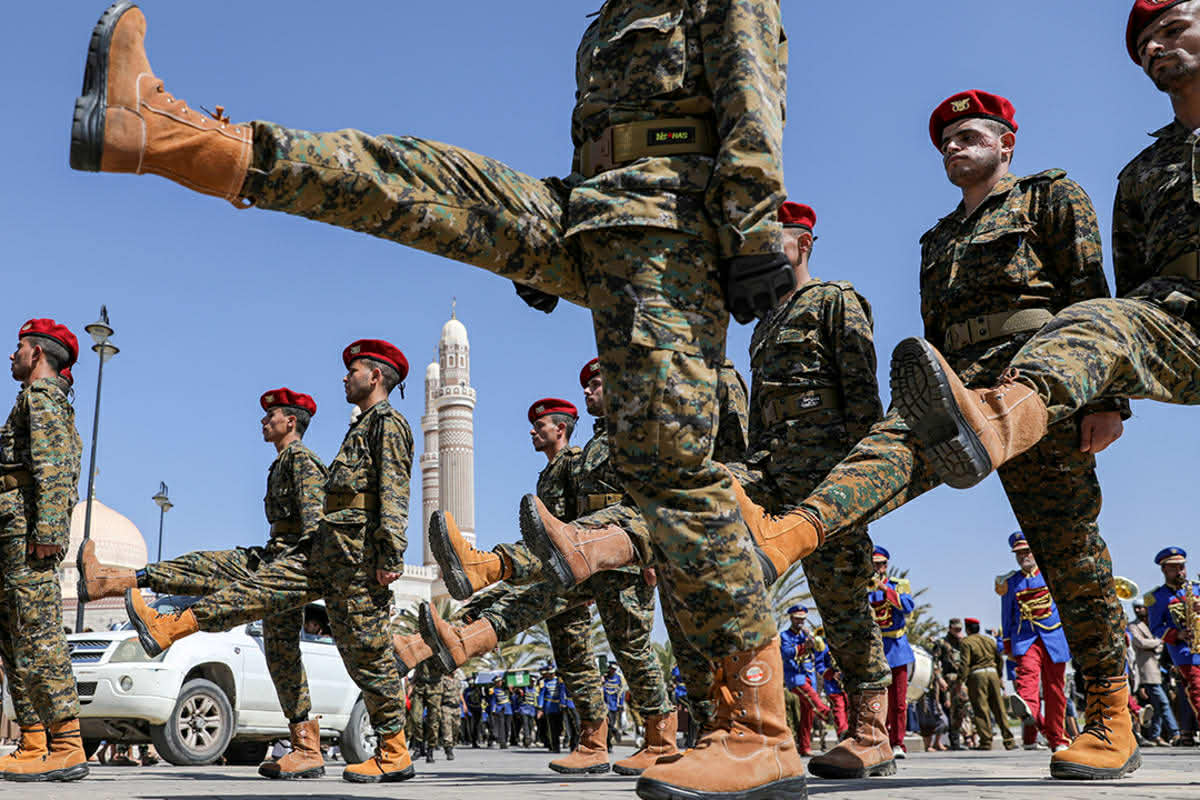
Houthis open new front with missile strike on Israel
Yemen’s rebels enter widening regional war, raising fears of a broader conflict and disruption to global trade routes
By Abdullahi Yusuf
Yemen’s Houthi movement has launched its first missile attack on Israel since the escalation of the United States-Israeli war with Iran, signalling a potentially dangerous expansion of a conflict already stretching across the Middle East.
The group said it fired a barrage of ballistic missiles at what it described as “sensitive military sites” in southern Israel, with sirens sounding in and around Beersheba overnight. The Israeli military said at least one missile was intercepted, with no immediate reports of casualties or damage.
In a televised statement, Houthi military spokesman Brigadier-General Yahya Saree said the strikes marked the beginning of a sustained campaign. “Operations will continue until the declared objectives are achieved… and until the aggression against all fronts of the resistance ceases,” he said.
The attack came just hours after the group hinted it would join the conflict, which has intensified following large-scale strikes by the United States and Israel on Iran, triggering retaliatory attacks across the region.
A conflict widening by the day
Until now, the Houthis who control large parts of Yemen, including the capital Sanaa, had remained outside the direct confrontation. Their entry into the war opens what analysts describe as a new and volatile front.
Sirens were reported multiple times overnight across southern Israel, as Iranian and Hezbollah fire continued in parallel, underscoring the multi-front nature of the conflict.
Israel has not yet announced a direct response to the Houthi strike, but previous attacks from Yemen during the Gaza war were met with retaliatory air strikes, raising expectations of a similar reaction.
Strategic waterways in focus
The Houthis have already demonstrated their ability to disrupt global commerce. Between late 2023 and early 2025, they targeted more than 100 commercial vessels in the Red Sea, sinking two ships and killing several sailors, attacks that forced major shipping companies to reroute.
Now, officials within the group are signalling a broader strategy.
Mohammed Mansour, the Houthis’ deputy information minister, said operations would be conducted “in stages”, adding that closing the Bab al-Mandeb Strait a critical maritime chokepoint linking the Red Sea to the Gulf of Aden, remains an option.
Any move to block the passage could have far-reaching consequences. The waterway carries a significant share of global trade, including energy supplies, and is vital to Israel’s imports.
Global implications and military risks
Analysts warn that the Houthis’ entry into the conflict could have consequences well beyond the region.
Mohamad Elmasry, a media studies professor, described the development as “very significant”, noting that a disruption of multiple maritime chokepoints including the Bab al-Mandeb and the Strait of Hormuz, could severely impact international trade.
Others point to the growing risk for US naval forces in the region. American aircraft carriers deployed near the Red Sea have previously faced sustained drone and missile attacks from Houthi forces, raising concerns about renewed exposure if the conflict deepens.
Pressure mounting on Israel
The opening of another front comes as Israel is already engaged in hostilities with Iran and Hezbollah, prompting questions about the sustainability of its military operations.
Regional observers say the expanding scope of the conflict could strain Israel’s defensive systems and complicate its strategic calculations.
At the same time, violence along Israel’s northern border continues. Israeli media reported that several soldiers were wounded in rocket fire from southern Lebanon, underlining the intensity of fighting on multiple fronts.
A region on edge
The Houthis’ intervention marks another step in the transformation of the Iran-Israel confrontation into a broader regional war, one that now spans multiple countries, armed groups and strategic waterways.
With threats of further escalation from all sides, and key global trade routes increasingly at risk, the conflict is rapidly becoming not only a regional crisis, but one with far-reaching international consequences.
SPONSORED

SPONSORED
