
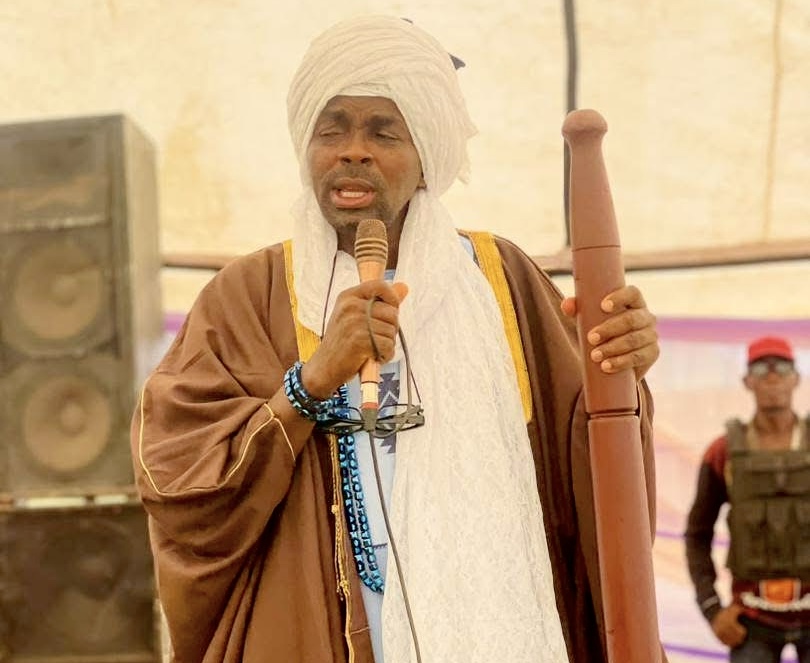
Professor Aikulola-Aibinuomo gifts Olodo Garage Central Mosque
Historic first Jumu’ah prayer marks the inauguration of the mosque, following a 17-year community effort rooted in personal loss, memory and a long-standing pledge to provide a permanent place of worship for traders in Olodo Garage, Ibadan
By Abdullahi Yusuf
On Friday, March 20, 2026, the first day of Shawwal, worshippers gathered for what many described as a historic milestone: the first Jumu’ah prayer at the Aikulola-Aibinuomo Central Mosque in Olodo Garage.
Behind the ceremony lies a story shaped by grief and a promise made years earlier. For the newly installed Baba Adinni of Olodo Land, Musa Aikulola-Aibinuomo, the mosque represents more than a place of worship. It is the fulfilment of a long-held vow rooted in the loss of his mother, Madam Raliatu Apeke Aibinu, who suffered a fatal injury while on her way to Friday prayers many years ago. Her death, he says, marked a turning point.
From that moment, he carried a quiet determination, that no trader or artisan in the growing Olodo Garage Market would have to choose between safeguarding their livelihood and answering the call to prayer. At the time, the market was little more than a sparse trading post. He recalls standing alone on some days, selling goods alongside family members, in what would later become a thriving commercial hub.
Over the years, that vision grew alongside the market itself. What began as a personal resolve evolved into a collective effort, drawing support from family members, local traders and the wider Muslim community. Land was contributed by his father, while generations of market women and early settlers helped sustain the environment that would eventually host the mosque.
Names like Iya Muji Oniresi, Iya Kafayat Eleja and Iya Baki Alamala remain part of that early history, figures remembered not in official records, but in lived memory. Seventeen years on, that promise has taken physical form. “This moment is not mine alone,” Musa said in a written reflection after the event, having struggled to deliver his remarks in person due to emotion. “It belongs to the traders, the artisans, and everyone who believed this day would come.”
The gathering drew a wide cross-section of attendees from local residents to family members and associates who travelled from across Nigeria. Among them were representatives of regional Islamic bodies, including local leagues of imams and clerics, underscoring the broader significance of the development within the community.
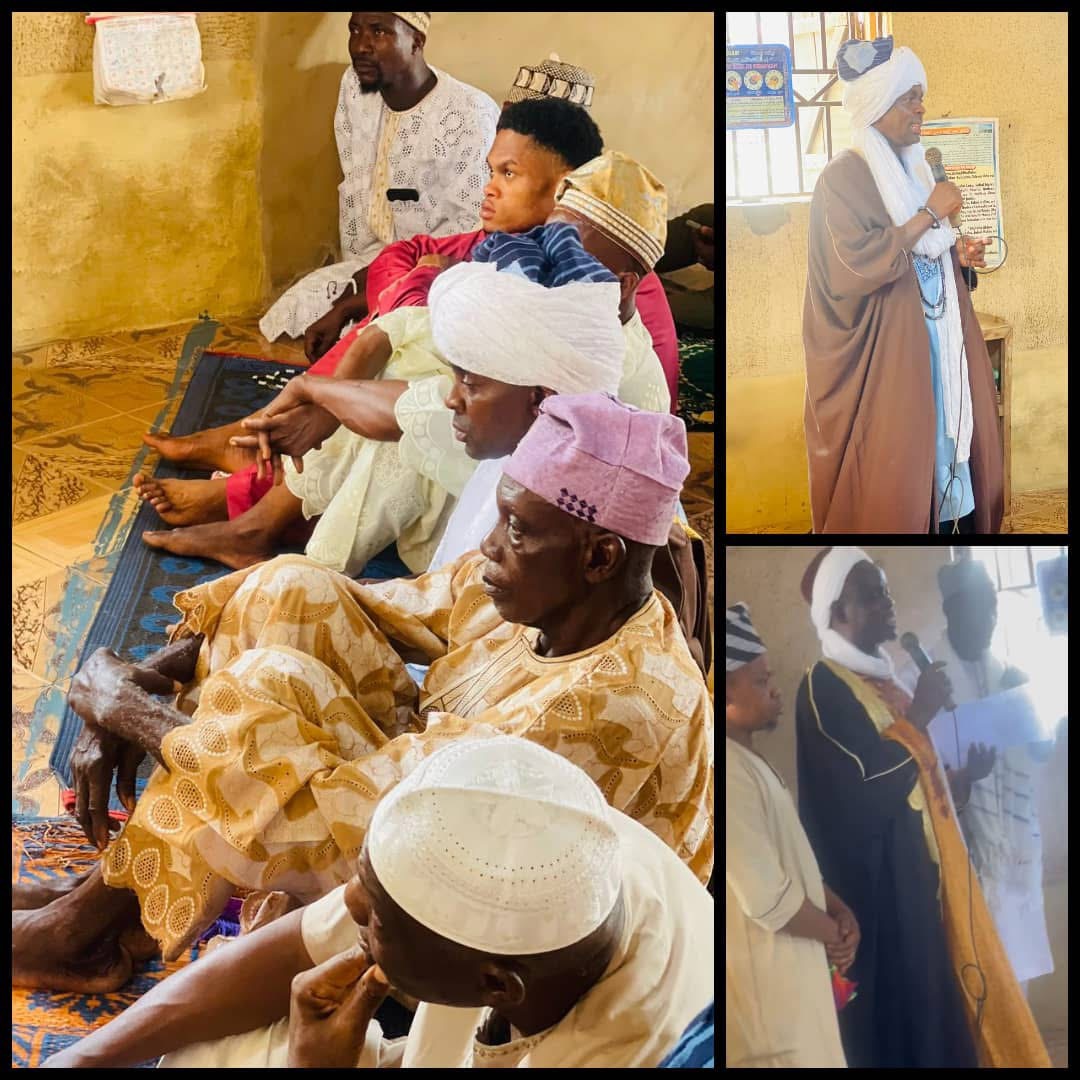
The mosque itself is expected to serve not just as a place of worship, but as a social anchor in a busy commercial area where daily routines often clash with religious obligations. For many traders, Friday prayers had long posed a dilemma, leave their goods unattended or miss congregational worship. Now, that balance may be easier to strike.
The emotional weight of the moment was evident. Musa, who had intended to deliver a formal address, was unable to continue after becoming overwhelmed, a response he later described as the culmination of years of memory, loss and perseverance. “I tried to hold back,” he wrote. “But no strength can silence a heart filled with so much feeling.”
Beyond the personal narrative, the development reflects a broader pattern seen across parts of Nigeria, where community-driven religious infrastructure often fills gaps left by formal planning. Such projects frequently rely on informal networks of support l, donations, land contributions and voluntary labour, rather than institutional funding.
He described each future call to prayer from the mosque as a continuation of a legacy, one tied not only to the community, but to the memory of his mother. “This moment is not mine alone,” he said. “It belongs to everyone who believed it could happen.”
Background Briefing:
At the helm of Abiodun Musa Aibinu is a newly elevated Baba Adinni of Olodo Land and university leader whose role reflects a blend of religious recognition and academic responsibility within Nigeria’s evolving higher education landscape.
Professor Aibinu currently serves as Vice-Chancellor of Summit University Offa, a private institution founded by the Ansar-ud-Deen Society of Nigeria, one of the country’s oldest Islamic reform movements, established in 1923.
The university itself is part of a long-term educational vision that sought to extend the organisation’s historic involvement in primary and secondary education into the tertiary sector. That ambition, conceived in the early 2000s, followed years of internal planning, regulatory engagement and infrastructure development before formal approval was secured.
In 2015, the institution was licensed by Nigeria’s National Universities Commission, marking its official entry into the country’s higher education system. Academic activities commenced shortly afterwards.
Located in Offa, Kwara State, Summit University positions itself as a faith-based but inclusive institution, combining conventional academic disciplines with moral and ethical instruction. Its programmes span the sciences, social sciences and humanities, with a growing focus on technology, innovation and entrepreneurship.
Under Aibinu’s leadership, the institution has increasingly emphasised research-driven education, digital skills and innovation, while maintaining its founding commitment to discipline and values-based learning.
The Vice-Chancellor’s tenure has coincided with broader efforts to reposition newer private universities in Nigeria as competitive players in a rapidly changing global education environment.
Together, the leadership and institution reflect a wider national trend in which faith-based organisations are expanding their footprint in higher education, seeking to balance religious heritage with modern academic and technological demands.
SPONSORED

SPONSORED
