
Conditions for a Legal Marriage
“And marry those among you who are single and also marry the Salihun of your (male) slaves and maid-servants. If they be poor, Allah will enrich them out of his Bounty. And Allah is All-Sufficient for His creatures’ and needs, All-knowing.” [Q 24:32).
By Abdullahi Yusuf
Careful consideration of Quranic injunctions and the ahadith of the Prophet (SAW) clearly show that marriage is compulsory for a man who has the means to easily pay mahr (dowry) and to support a wife and children, and is healthy. It is also imperative for a woman who has no other means of maintaining herself. Essentially it is to prevent both the man and the woman from engaging in fornication. “And marry those among you who are single and also marry the Salihun of your (male) slaves and maid-servants. If they be poor, Allah will enrich them out of his Bounty. And Allah is All-Sufficient for His creatures’ and needs, All-knowing.” [Q 24:32).
In Shariah, apart from the fact that the man has the capability to pay mahr, and he is healthy, there are conditions that must be fulfilled before a marriage can be consummated.
The consent of both the man and the woman is an essential for marriage, and the Qur’an gives the woman a substantial role in choosing her own life partner: “Do not prevent them from marrying their husbands when they agree between themselves in a lawful manner.” (2:232). Ibn Taymiyyah stated in Majmu’ al-Fataawa /32/39-407 that: “it is not acceptable for anybody to marry off a woman without her consent, as order by the Prophet (SAW). If she is force to marry, she is not obligated to marry unless she is a virgin under puberty, as her father can marry her off there is no consent from her.
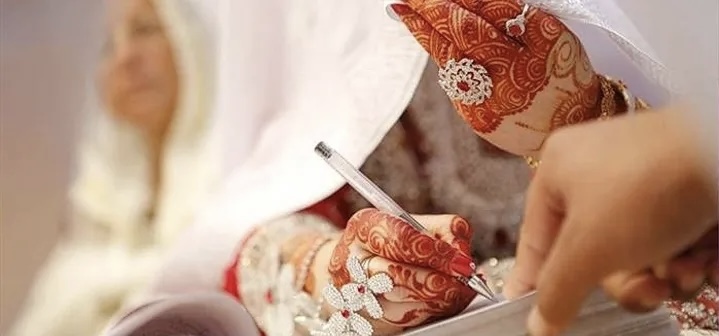
As for a woman who is not a virgin, it is not permissible for her to be married off without her consent, either by her father or anybody else. In the same way, it is not permitted to give an adult virgin in marriage by other than her father and her grandfather, without her consent. It is appropriate that her father or grandfather seek her consent.”
However, Imam Maliki opines that the choice of partner by a Muslim girl is subject to the over-ruling power or Ijbar of her father or guardian in the interest of the girl herself. It may sometimes happen that in her gullibility and or over-zealousness, a girl may decided to marry someone who does not possess good characters, or means of livelihood or is no even a Muslim.
In such case, it is better, or rather, incumbent on the girl’s father or guardian, that, in the wider interest of the girl, he restrains her from marrying such a person. The case of Abu Juham bin Hudhaifah and Mu’awiyah in Sufyan is relevant her. They both proposed to Fatimah bint Ghaith. The Prophet (SAW) advised Fatimah not to marry them on the grounds that Mu’awiyah was then a pauper and Abu Juham was cruel and harsh. Instead, she married Usamah.
Giving the woman the right to choose a husband who is suitable does not mean she has complete freedom to marry whomever she wants, even if this was to cause harm for her family and relations. Instead, she is bound by her Wali, who supervises her decision, advises her, and undertakes the contract of the marriage. She does not conduct the marriage herself. If she does without the permission of her Wali, the marriage contract is void. “Any woman who marries herself off without the permission of her Wali, then her marriage is void…” /Tirmidhi/ Some scholars add that it is incumbent on both the man and the woman to provide two Walis each before the marriage can be consummated. However, the man has the right to choose without guidance.
Another factor that needs to be taken into consideration when contracting marriage is the relationship between the man and the woman. The Qur’an forbids a man to marry a woman who is related to him in some certain ways: And marry not those women whom your father married, except what has already happened (of that nature) in the past. Lo! It was ever lewdness and abomination, and evil way. Forbidden unto you are your mothers and your daughter, and your sisters and your father’s sisters and your mother’s sisters, and your brother’s daughters and your sister’s daughters, and your foster mothers, and your foster sisters, and your mothers-in-law and your step-daughters who are under your mother-in-law and your step-daughters who are under your protection (born) of your women unto whom you have gone into… but if you have not gone into them, then it is no sin for you (to marry their daughters).. and the wives of your sons from your own loins, and that you should have two sisters together, except what has already happened (of that nature) in the past. Allah is ever-forgiving, Merciful.” [Q4:22-24]
SPONSORED

SPONSORED
