
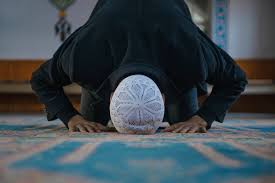
7 Common mistakes in Salat
Salat is one of the five pillars of Islam and is a fundamental act of worship for Muslims. It involves the obligatory act of praying 5 times a day at set times and is a direct means of communication with Allah.
Muslims perform Salat as an essential part of their daily lives to seek guidance, forgiveness, and blessings from Allah and to fulfill their rights to Him. It involves performing specific physical movements and recitations whilst facing the Qiblah (direction of the Ka’bah in Makkah). The key in Salah is to be focused and concentrate on the presence of Allah.
As humans, we all make mistakes in Salat, but still we ought to try our best to stay focused while observing the Salat in order for us to observe the prayers as they have been prescribed to us by Allah (S.W.T.).
Mistake 1: Reciting Surat al-Fatiha fast without pausing after each verse.
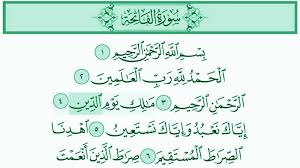

The Prophet (SAW) used to pause after each verse of this surah. (Abu Dawood)
Mistake 2: Sticking the arms to the sides of the body in rukoo’ or sujood and sticking the belly to the thighs in sujood.
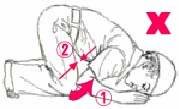
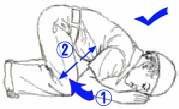
The Messenger of Allah (SAW) said, ‘Let not one of you support himself on his forearms (in sujood) like the dog. Let him rest on his palms and keep his elbows away from his body’ (Sahih Muslim). The Messenger of Allah (SAW) used to keep his arms away from his body during rukoo’ and sujood so that the whiteness of his armpits could be seen (Sahih Muslim).
Mistake 3: Gazing upward during prayer.
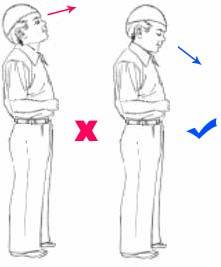
This may cause loss of concentration. We are commanded to lower our gaze and look at the point at which the head rests during sujood. The Prophet (SAW) warned: ‘Let those who raise their gaze up during prayer stop doing so, or else their sight will not return to them. i.e., lose their eyesight].’ (Muslim)
Mistake 4: Resting only the tip of the head on the floor during sujood.
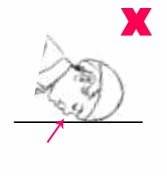
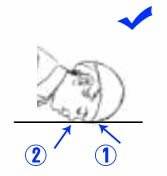
The Prophet (SAW) said: ‘I am commanded to prostrate on seven bones: the forehead and the nose, the two hands [palms], the two knees, and the two feet.’ (Sahih Muslim) Applying the above command necessitates resting the forehead and the nose on the ground during sujood.
Mistake 5: Hasty performance of prayer, which does not allow repose and calmness in rukoo’ or sujood.
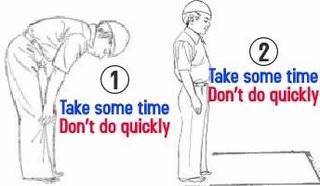
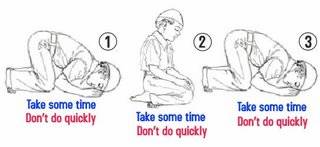
The Messenger of Allah (SAW) saw a man who did not complete his rukoo’ [bowing] and made a very short sujood [prostration]; he (SAW) said: ‘If this man dies while praying in this manner, he would die upholding a religion other than the religion of Muhammad.’ Abu Hurairah (RA) said,
‘My beloved friend, Muhammad (SAW), forbade me to perform postures of prayer copying the picking of a rooster (signifying fast performance of prayer), moving eyes around like a fox and the sitting like monkeys (i.e., sitting on thighs).‘ (Imam Ahmad & at-Tayalisi) The Messenger of Allah (SAW) said, ‘The worst thief is the one who steals from his own prayer.’ People asked, ‘Messenger of Allah! How could one steal from his own prayer? ‘ He (SAW) said, ‘By not completing its rukoo’ and sujood’ (At Tabarani & al-Hakim).
To complete rukoo’ is to stay in that posture long enough to recite ‘Subhana rabbiyal Adtheem’ three times, SLOWLY, and ‘Subhana Rabbiyal-a’ala’ three times, SLOWLY, in sujood. He (SAW) also announced: ‘He who does not complete his rukoo’ and sujood, his prayer is void.’ (Abu Dawood & others)
Mistake 6: Counting tasbeeh with the left hand
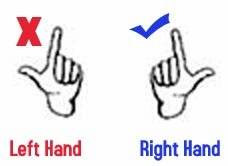
The Prophet (SAW) used to count tasbeeh on the fingers of his right hand after salah. Ibn Qudamah (RA) said, ‘The Messenger of Allah (SAW) used his right hand for tasbeeh’ (Abu Dawood). The above hadeeth indicates clearly that the Prophet (SAW) used only one hand for counting tasbeeh. No Muslim with a sound mind would imagine that the Prophet (SAW) used his left hand for counting tasbeeh. Aa’ishah (RA) said that the Prophet (SAW) used his left hand only for Istinjaa’, or cleaning himself after responding to the call of nature. He never used it for tasbeeh. Yasirah (RA) reported: The Prophet (SAW) commanded women to count tasbeeh on their fingers.
The Messenger of Allah (SAW) said, ‘They (the fingers) will be made to speak and will be questioned (on the Day of Resurrection. )’ (At-Tirmidhi). The above Hadeeth indicates that it is preferable to count tasbeeh on the fingers of the right hand than to do so on masbahah (rosary).
Mistake 7: Crossing in front of a praying person.
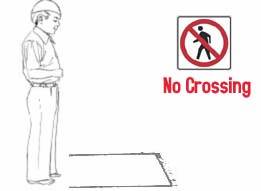
The Messenger of Allah (SAW) warned: ‘Were the one who crosses in front of a praying person to know the consequences of doing so, he would have waited for *forty better than to cross in front of him’ (Sahih Bukhari and Muslim). *The forty in the tradition may be days, months, or even years. Allah knows best.
Source: Islamic Research Foundation International, with additional information. Iwit.g
SPONSORED

SPONSORED
