
20-Day Holiday: CAN Silence is Loud
…If a Muslim Governor Had Done This, Outrage Would Have Followed…
By Abdullahi Yusuf
The Cross River State Government’s decision to declare a 20-day public holiday for Christmas and New Year has gone largely unquestioned across Nigeria’s media landscape. In a circular signed by the Head of Service, Mr. Orok Okon, civil and public servants were instructed to proceed on leave from December 15, 2025, to January 5, 2026, to “fully participate” in Christmas festivities, including the Carnival Calabar street parade, the largest in Africa. Only essential duty officers are exempt. In several states, workers have also been promised a 13th-month salary to enhance the celebration.
Yet amid the cheer, it is impossible to ignore a deeper national contradiction. At the start of 2025, when Northern Muslim governors adjusted their school calendars for Ramadan and later extended Eid-el-Kabir breaks, many headlines framed the decisions as reckless indulgence, proof of religious overreach, or a failure to prioritise education. Governors in Kano, Kebbi, and Bauchi were accused of sacrificing national standards on the altar of religious convenience. Social media outrage followed predictable lines: that such actions were “irresponsible,” “backward,” or “incompatible with modern governance.”
This week, however when Cross River State announces almost three weeks of government shutdown for Christmas, longer than any Eid holiday declared in the North, the tone is strikingly different. Coverage has been celebratory, almost promotional. The holiday is presented as cultural, economic, and tourism-friendly. It is framed as generosity towards workers, an opportunity for families and a boost to seasonal festivities. No alarm over productivity. No accusations that government institutions are submitting themselves to a religious calendar. No suggestions that a Christian-majority state is undermining the secularity of Nigeria’s political framework.
This contrast reveals a deeper discomfort: in Nigeria’s public discourse, Christian cultural practices are often treated as national culture, while Muslim religious practices are interpreted as sectional, negotiable, or excessive. When Northern states adjust schedules for Ramadan or Eid, they are portrayed as bending institutions to religion. When Southern states close down for Christmas, it is seen as a harmless extension of festivity.
The debate becomes even more relevant in a country grappling with inflation, hunger and economic strain. A 20-day work stoppage in any region should trigger a serious conversation about productivity and governance. Yet criticism is muted, almost non-existent. It is hard to imagine a Muslim governor declaring a 20-day holiday for Ramadan and expecting to escape national outrage. There would be editorials lamenting the decline of public service, complaints of religious dominance, and arguments about the urgent need for secular discipline. The double standard is so entrenched that many Nigerians barely recognise its presence.
Cross River’s holiday may well be convenient for the Christian population and beneficial for the tourism economy built around Calabar Streets Carnival. But fairness demands that Nigerians interrogate religious privilege wherever it appears, not only when the North is involved. If the country is truly secular, then both Christian and Muslim observances should attract the same level of scrutiny, the same questions about public sector efficiency, and the same conversation about national cohesion.
The question, then, is not whether Christmas should be celebrated, it should, just as Ramadan and Eid should be. The real question is why one set of holidays is treated as cultural heritage while the other is viewed as a disruption. Until we confront that imbalance, Nigeria will continue to operate on two parallel moral scales, one indulgent and the other punitive, depending entirely on which religion is in question.
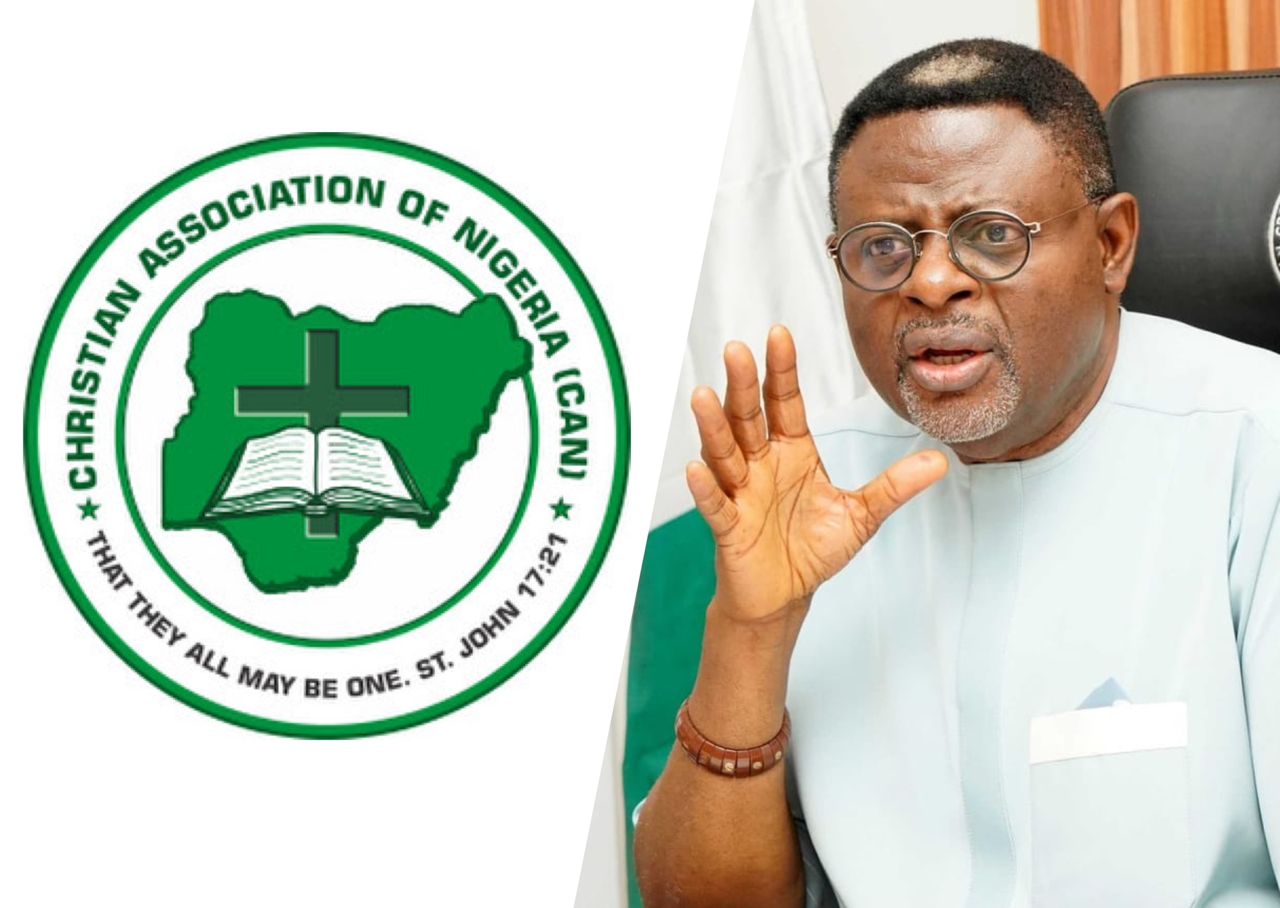
Yet the silence of the Christian Association of Nigeria (CAN) on Cross River’s 20-day shutdown speaks louder than any statement. This is the same CAN that routinely raises alarms whenever Muslim-majority states adjust school calendars for Ramadan or extend Eid breaks. The same organisation that cries “Islamisation” at the slightest policy perceived to favour Muslims now finds nothing worrisome about an extended work stoppage designed explicitly for Christian festivities. If a Muslim governor announced a comparable 20-day closure for Ramadan or the last ten days of fasting, CAN and several loud social media voices would already be calling press conferences, issuing emergency alerts and framing it as a national threat.
This double standard is reinforced by the media’s selective amplification, a concern recently highlighted by the Muslim Rights Concern (MURIC). As MURIC noted, when Christian leaders push exaggerated claims, such as the so-called “Christian genocide,” they are given uninterrupted airtime, while Muslims are excluded from responding. This asymmetry shapes public perception: Muslim observances are painted as disruptive, while Christian practices are repackaged as culture and tourism. Until Nigeria confronts this imbalance in public discourse, media framing, and institutional reactions, the country will continue to operate two separate moral codes, one indulgent and one punitive, depending solely on whose religion is involved. Victory for Nigerian Muslims.
SPONSORED

SPONSORED

SPONSORED
